GE IS200STAIH1ABB Standard Analog Temperature Input Board Compact Product Specification
1. Product General Overview
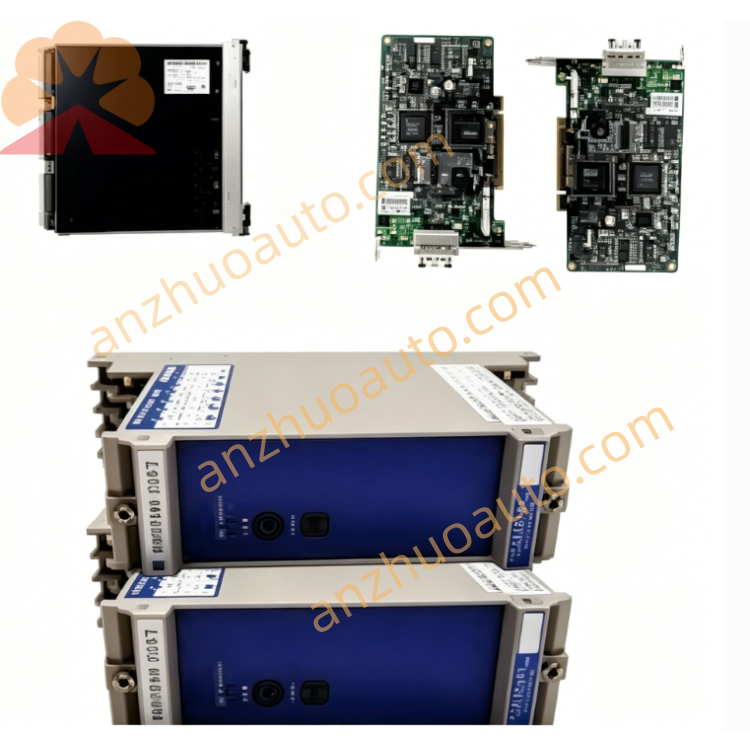
GE IS200STAIH1ABB is an original industrial printed circuit temperature signal acquisition module belonging to GE IS200 series, exclusively developed for Mark VI Speedtronic turbine integrated control system. This board serves as the dedicated analog temperature signal conditioning and input unit inside standard control racks, designed to receive, filter, isolate and convert low-level thermocouple and RTD resistance temperature detector signals from field turbine auxiliary equipment, boiler components, generator cooling systems and lubrication oil pipelines. It fully adapts to simplex single rack, dual redundant hot standby rack and TMR triple modular redundant rack architectures, delivering high-precision temperature measurement data to the main processor for closed-loop temperature regulation, overheat protection and equipment operating condition monitoring.
The module is manufactured following GE aerospace-grade PCB production standards with full SMT component assembly. After all soldering processes, the entire PCB and component surfaces are coated with conformal three-proof insulating coating to resist industrial conductive dust, mild acid and alkaline flue gas, high ambient humidity and coastal salt fog corrosion. Passive natural convection cooling is adopted without built-in cooling fans, removing regular fan maintenance tasks and cutting the full lifecycle operating cost of control cabinets. A battery-free 1024-bit non-volatile serial EEPROM is mounted on the low-noise partition of the PCB, permanently storing exclusive hardware identity information including part number IS200STAIH1ABB, production batch serial number, factory full-channel temperature calibration records and hardware revision codes, with valid data retention time exceeding 20 years without external power supply. Upon system power-on self-test, the Mark VI main controller automatically reads identity metadata through the rack parallel backplane bus to complete hardware topology matching, and synchronizes all channel configuration parameters to the CIMPLICITY HMI monitoring platform; no manual configuration modification is required during spare parts replacement and cabinet hardware upgrading.
Compared with early low-channel STAI series temperature acquisition boards, IS200STAIH1ABB expands the quantity of independent temperature input channels, optimizes front-end signal filtering circuits, upgrades high-precision signal amplification chips and strengthens multi-stage surge suppression design for field wiring. Each temperature signal channel adopts complete electrical isolation to block ground loop potential difference interference and instantaneous voltage surges transmitted through long-distance field sensor cables. Multi-layer independent protection loops are embedded for every input branch to prevent internal precision measurement chip damage caused by field wiring short-circuit, sensor open-circuit and transient overvoltage. The board collects weak analog temperature signals from on-site RTD and thermocouple sensors, converts tiny voltage and resistance variation signals into standard digital data recognizable by the main control unit, forming the core temperature data acquisition foundation for turbine exhaust temperature monitoring, bearing overheat protection, lubricating oil temperature interlock and cooling water flow temperature control logic of the whole unit.
2. Core Functional Working Principles
2.1 Rack Bus Logic Command and Power Input Pre-Filter Circuit
IS200STAIH1ABB receives data reading instructions and internal reference power supply from the Mark VI main processor through the rear P1 gold-plated multi-pin backplane connector. The bus input port is equipped with multi-stage composite high-frequency filters and metal oxide varistor surge suppression components, filtering high-frequency electromagnetic interference generated by on-site high-voltage switch switching and large motor startup, and absorbing instantaneous overvoltage spikes coupled from the rack backplane wiring. Each bus signal pin is fitted with independent current-limiting resistors and bidirectional TVS transient voltage suppression tubes to isolate surge energy and avoid breakdown of internal digital signal processing chips.
High-speed optocoupler isolation units with 1500V AC dielectric withstand separate the rack low-voltage logic bus domain and high-sensitivity analog temperature measurement domain, thoroughly eliminating cross-talk interference between high-noise bus power circuits and delicate weak signal measurement circuits in the same rack slot group. An on-board data latch chip temporarily caches all temperature sampling trigger commands, distributes sequential sampling instructions to each independent temperature channel conditioning unit according to system priority, avoiding signal sampling congestion when multiple field temperature sensors transmit data simultaneously. Standard DMA expansion pins including BAI bus acknowledge input, BAD bus acknowledge output and /EXT REO external request are reserved on the P1 connector to support daisy-chained signal scheduling with other IS200 series relay output boards, remote contact input boards and rack power supply boards, with the maximum parallel bus transmission speed reaching 12 Mbps.
2.2 Multi-Channel Isolated Temperature Signal Conditioning and Conversion Circuit
The core analog processing circuit on the PCB converts tiny resistance and voltage variation signals from field RTD and thermocouple sensors into stable amplified analog signals, then completes analog-to-digital conversion for bus upload. IS200STAIH1ABB carries multiple fully independent temperature input channels with completely separated wiring loops to eliminate mutual signal crosstalk during synchronous multi-channel sampling. Each channel front end integrates composite low-pass filter circuits to eliminate high-frequency noise mixed in long-distance sensor cables, ensuring stable original temperature signal input without waveform distortion.
For RTD resistance temperature detection channels, the board provides constant current reference excitation power for external platinum resistance sensors, calculates real-time temperature values by measuring resistance changes caused by temperature fluctuation of the sensor probe. For thermocouple voltage signal channels, built-in cold junction compensation circuits eliminate temperature measurement deviation generated by wiring terminal temperature difference, ensuring absolute measurement accuracy under variable cabinet ambient temperature. The single-channel temperature signal sampling response delay is controlled within 12ms to capture fast-changing bearing and exhaust temperature variation data without sampling lag affecting the precision of turbine closed-loop temperature control. Each input channel embeds self-recovery overcurrent limiting protection; short-circuit or open-circuit fault of a single field temperature sensor only locks the corresponding measurement channel, while all other temperature sampling channels maintain normal signal collection and data upload without overall board shutdown.
2.3 On-Board Hardware Identification EEPROM Storage Circuit
Located on the upper right low-noise partition of the PCB, the 1024-bit serial EEPROM stores fixed hardware metadata exclusive to IS200STAIH1ABB, including official factory part number, manufacturing batch serial number, full-channel temperature linear calibration test logs, bus timing matching parameters and hardware revision marks. No backup battery is required for data storage; all calibration and identity information will not be lost or distorted for more than 20 years under rated cabinet temperature and humidity operating conditions.
During rack power initialization, the main control unit sends serial reading commands through the P1 backplane bus to extract EEPROM data streams. The system automatically matches stored board channel configuration data with preloaded cabinet topology files to verify hardware compatibility, and synchronizes all temperature channel mapping and sensor type definition information to the CIMPLICITY HMI monitoring platform. Every abnormal signal state, sensor open-circuit, channel overload and protection trigger event detected by the board will be converted into timestamped digital fault codes, uploaded to the host permanent historical event database for post-failure equipment performance analysis and hidden danger investigation. A compact J2 auxiliary signal expansion connector is reserved on the front panel side edge, matched with a plastic dust plug when idle, supporting additional temperature signal channel expansion for customized cabinet upgrade transformation projects.
2.4 Front Panel Status Indication Circuit
The black matte anti-corrosion aluminum alloy front panel is equipped with two general green LED status indicators, each operating at 5mA working current to reduce the auxiliary power consumption of the whole board. The PWR indicator keeps steady illumination when the rack internal +5V logic power supplied to the board is stable, and extinguishes immediately upon internal power circuit open-circuit or short-circuit faults. The DATA indicator maintains constant light during normal bidirectional data communication between the rack main bus and temperature sampling channels; if bus disconnection, sampling command loss or channel conditioning circuit failure occurs, the DATA LED flashes at a fixed 1Hz cycle to provide visible fault prompts observable through cabinet door viewing windows without external measuring instruments.
Corresponding small green LED indicators are configured for each temperature input channel. The channel LED lights up steadily when the channel receives valid temperature sensor signals and completes normal analog-to-digital conversion, and turns off when the field sensor is open-circuited or the channel triggers overload protection. Maintenance personnel can directly judge the real-time operating state of all field temperature sensors through the front panel indicator layout, simplifying on-site temperature measurement loop troubleshooting work. No mechanical reset buttons or voltage test points are arranged on the front panel, focusing on long-term stable automatic temperature signal acquisition without manual intervention functions. All indicator drive branches are equipped with independent series current-limiting resistors to prevent LED burnout after years of continuous cabinet operation.
2.5 Three-Tier Cascaded Full-Circuit Protection Architecture
The first layer protection acts on the rack bus power input loop through a miniature 0.5A slow-blow series fuse installed at the P1 connector power pins, intercepting severe overcurrent surges caused by backplane wiring short-circuit faults. The second layer protection covers each temperature sensor input branch via independent self-recovery current limiting circuits and bidirectional surge absorption components, restraining instantaneous overvoltage and overload current generated by long-distance field cable induction and sensor wiring faults. The third layer thermal protection uses surface-mounted thermistors attached to high-precision signal amplification chips; when the internal board temperature exceeds 70°C under long-term full-channel sampling load, thermal logic reduces channel sampling frequency to lower power dissipation, and automatically restores full normal sampling performance once internal temperature drops below 62°C. All protection activation events generate timestamped fault codes uploaded to the main processor through the rack backplane bus for permanent system storage and query.
3. Electrical Technical Specifications
3.1 Rack Input Power Supply Parameters
Nominal input power source: Rack backplane +5V DC logic power shared with all IS200 series functional daughter boards
Allowable input voltage fluctuation range: +4.75V ~ +5.25V
Maximum full-load total board power consumption: 29W
Primary power protection component: 0.5A, 125V slow-blow miniature fuse at P1 connector power pins
No auxiliary high-voltage power conversion circuits integrated on the PCB; all logic and temperature signal conditioning circuits operate based on standard low-voltage rack DC power supply
3.2 Temperature Input Channel Electrical Parameters
Supported sensor types: PT100 RTD resistance temperature detector, K-type, T-type thermocouple sensors
RTD channel excitation constant current: 0.2mA stable reference current per channel
Thermocouple cold junction compensation accuracy: ±0.3°C within cabinet 0~65°C ambient temperature range
Single channel signal sampling response delay: ≤12ms from sensor signal input to digital data upload
Per-channel surge absorption capacity: 1.2kV peak instantaneous transient voltage suppression
Single channel isolation withstand grade: 1500V AC one-minute dielectric isolation between field sensor wiring loop and internal measurement circuit
Standard independent temperature input channel quantity of IS200STAIH1ABB: 32 fully isolated channels with separate filtering, amplification and protection loops
Full channel temperature measurement overall accuracy: ±0.5°C under rated operating environment
3.3 Parallel Bus & Storage Electrical Specifications
On-board storage medium: 1024-bit non-volatile serial EEPROM, battery-free design, minimum 20-year data retention life
Backplane bus standard: Mark VI internal parallel rack bus, fully compatible with all IS200 series daughter modules
DMA expansion signal pins: P1 connector reserves BAI bus acknowledge input, BAD bus acknowledge output, /EXT REO external DMA request pins
Maximum parallel bus data transmission speed: 12 Mbps
Bus signal isolation standard: High-speed optocoupler isolation between parallel bus and analog temperature measurement circuits, 1500V AC isolation withstand voltage
3.4 Indicator Circuit Electrical Characteristics
PWR and DATA general status LED operating current: 5mA per green light-emitting diode
Single temperature channel status LED operating current: 3mA green light
DATA abnormal communication alarm flash frequency: Fixed 1Hz cycle blinking state
All LED indicator branches adopt independent series current-limiting resistors for long-term overcurrent burnout prevention
4. Mechanical Structure & Rack Mounting Specifications
4.1 Overall Physical Dimensions and Weight
Complete PCB assembly dimension (length × width × thickness): 330mm × 100mm × 190mm, universal single-slot size matching GE Mark VI Innovation series rack slot standards, installable in any vacant slot of simplex, dual redundant and TMR triple modular control racks without special reserved space
Front panel aluminum alloy faceplate dimension: 57.15mm width × 101.6mm height, black matte electrostatic anti-corrosion spray finish, integrated multi-group LED transparent viewing windows, resistant to industrial oil mist, dust and weak acid/alkaline gas corrosion
Net weight of standalone IS200STAIH1ABB board without outer packaging: 1.88kg lightweight integrated structural layout
Complete anti-static sealed packaging reference weight: 2.68kg, including shock-absorbent anti-static foam liner, humidity control desiccant bag and factory inspection qualification label printed with IS200STAIH1ABB model identifier
4.2 Internal PCB Functional Zoning Layout
The PCB adopts strict spatial zoning design to separate low-noise bus input logic circuits and high-sensitivity analog temperature measurement circuits and minimize internal electromagnetic coupling interference. The left PCB zone contains the rear P1 backplane connector, parallel bus filter circuits and surge suppression components defined as the rack bus input zone. The central zone arranges 32 groups of independent temperature signal filter units, precision amplification chips and analog-to-digital conversion modules forming the core temperature sampling execution zone. The upper right zone holds the EEPROM identity storage chip and bus isolation optocouplers as the low-noise digital metadata zone. The lower right zone places power input filter capacitors and internal sensor reference power distribution circuits as the auxiliary power supply zone. No extra metal heat sinks are equipped; passive heat dissipation relies on flat PCB substrate heat exchange with cabinet natural convection airflow.
Rear connection hardware is a single-row multi-pin P1 gold-plated backplane connector with a 5μm thick gold contact plating layer to resist oxidation and poor contact under high-humidity cabinet environments. Two metal locking screws are fixed on the PCB rear edge to fasten the connector fully into the rack backplane socket and eliminate loose contact risks caused by long-term turbine unit vibration. Dual elastic metal locking clips are mounted on both PCB edges, automatically clamping rack internal guide rails after full board insertion for preliminary anti-vibration positioning. The compact J2 auxiliary expansion connector is embedded on the front panel side edge for extra temperature sensor wiring during cabinet function expansion transformation.
4.3 Standard Rack Installation Compatibility Rules
Applicable mounting carrier: GE Mark VI Innovation series vertical standard control racks, supporting simplex single control rack, dual redundant hot standby rack and TMR triple modular safety control rack three mainstream cabinet architectures; each rack slot can install one independent IS200STAIH1ABB temperature input board to undertake all field temperature sensor signal collection tasks of the corresponding slot group
Mandatory installation orientation requirement: Board front panel faces cabinet door operator access side, flat PCB substrate parallel to cabinet vertical ventilation channels to maintain unobstructed natural convection heat transfer; reverse installation is strictly prohibited as it blocks internal cabinet airflow and raises board operating temperature under sustained full temperature channel sampling load
Adjacent multi-board installation clearance rule: Multiple IS200STAIH1ABB modules installed in neighboring rack slots require no additional thermal isolation gaps; the board’s balanced low-power design avoids mutual heat accumulation interference during continuous full-load operation
5. Environmental Adaptability & Comprehensive Reliability Standards
5.1 Operating and Storage Temperature Range
Continuous rated full temperature channel sampling operating temperature range: 0°C to +65°C, all temperature measurement and bus communication electrical parameters stay within factory calibrated tolerance limits across the full temperature spectrum
Permissible short-duration overload upper temperature threshold: +70°C; sustained operation beyond this limit triggers thermal sampling frequency reduction protection to avoid precision amplification chip aging damage
Sealed long-term storage and cross-regional transportation temperature range: -40°C to +85°C; PCB substrate, semiconductor measurement chips, isolation optocouplers and metal structural components sustain no permanent damage under moisture-sealed packaging, and preheating treatment is not required before on-site commissioning after extreme low-temperature transit
Temperature cycling compliance standard: IEC 60068-2-1; after 1000 alternating temperature impact cycles between -40°C and +70°C with two-hour single cycle duration, all temperature channel sampling functions and bus transmission performance match factory delivery specifications without parameter drift, solder joint detachment or component failure
5.2 Humidity, Dust and Salt Spray Corrosion Resistance Specifications
Continuous operating relative humidity range: 5% to 95% non-condensing relative humidity, suitable for coastal power plants, chemical plant high-humidity workshops, underground pump room control cabinets and offshore platform high salt fog equipment installation environments; cabinet built-in constant temperature dehumidifiers are recommended when internal cabinet humidity approaches 95% to prevent PCB surface condensation and circuit trace electrolytic corrosion
Internal cabinet protection rating: IP20; full-component conformal three-proof insulating coating is covered on the entire PCB post-assembly, forming a uniform protective film over circuit traces, component pins and all solder joints to resist conductive industrial dust accumulation and weak acid/alkaline flue gas corrosion from thermal power plant boilers, chemical plants and fertilizer production workshops
Salt spray corrosion test compliance: IEC 60068-2-11 neutral salt spray specification; after 48 hours continuous salt spray exposure, metal connectors, front panel aluminum alloy faceplate and sensor terminal blocks show no oxidation rust, pin corrosion or circuit trace short-circuit faults, optimized for long-term deployment at offshore wind farms, coastal gas turbine power stations and marine platform turbine control cabinets
5.3 Vibration, Shock and Industrial EMC Electromagnetic Compatibility Standards
Sinusoidal vibration resistance performance: Compliant with IEC 60068-2-6 test standards; withstands continuous vibration across 10Hz to 150Hz frequency band at 1g acceleration for 8 hours without solder joint detachment, component loosening or temperature measurement parameter drift, fully adapting to long-duration vibration environments generated by gas turbine, steam turbine rotating equipment and large generator operation
Mechanical shock impact resistance performance: Compliant with IEC 60068-2-27 mechanical shock test specifications; sustains 1000 half-sine shock impacts across three orthogonal axes at 15g peak acceleration and 11ms pulse width without mechanical structural deformation, internal component detachment or circuit open-circuit faults
Industrial electromagnetic compatibility certification: Passes GE internal full EMC inspection and complies with IEC 61000 series industrial anti-interference standards, including ±8kV contact electrostatic discharge immunity, ±15kV air electrostatic discharge immunity, 10V/m radio frequency radiation immunity, ±2kV electrical fast transient pulse immunity, ±2kV common-mode surge voltage immunity and ±1kV differential-mode surge voltage immunity. The board maintains stable multi-channel temperature signal sampling and normal parallel bus data transmission under strong electromagnetic interference conditions inside high-voltage power distribution rooms, frequency converter workshops and large motor start-stop sites without temperature signal misreading, sampling data loss or communication disconnection faults
5.4 Design Service Life, MTBF and Official GE Warranty Standards
Factory-rated full-load uninterrupted continuous operating lifespan: 100,000 operating hours, equivalent to over 11 years of 24-hour nonstop runtime under standard power plant cabinet environmental conditions
Mean time between failures MTBF index: 280,000 hours under standard thermal power plant cabinet operating environments; low-power analog measurement circuit design reduces semiconductor component aging probability effectively
Key component service life matching design: Long-life low-leakage signal filter electrolytic capacitors rated for 120,000 hours operation at 65°C; high-isolation optocoupler units with service life exceeding 160,000 hours; precision analog amplification chips and EEPROM memory devices adopt aerospace-grade original industrial components without aging failure risks within full design lifespan range
GE global unified warranty terms: Brand-new original IS200STAIH1ABB boards supplied through authorized GE global distribution channels carry a 12-month factory warranty starting from equipment commissioning acceptance date. Qualified refurbished rebuilt boards passing GE authorized service station full electrical retesting and 72-hour full temperature channel aging testing include a 6-month limited warranty. Valid warranty coverage provides free replacement of faulty boards and factory recalibration of temperature channel measurement parameters for failures caused by non-artificial damage and standard on-site operation; physical damage, miswiring and unauthorized disassembly modification are excluded from warranty coverage
6. Compatible Control System Platforms and Industrial Application Scenarios
6.1 Supported GE Control System Platform Scope
IS200STAIH1ABB is a dedicated analog temperature signal acquisition hardware exclusive to GE Mark VI Speedtronic turbine integrated control system, fully compatible with all Mark VI simplex single rack, dual redundant hot standby rack and TMR triple modular redundant safety control cabinet hardware configurations. It seamlessly interoperates with all IS200 series functional daughter boards installed in the same rack slot group, including remote dry contact input boards, relay output drive boards, SPI serial communication boards, RAPA series rack power supply boards, EX2100 generator excitation auxiliary boards and Ethernet HMI communication interface boards. The unique hardware identity code stored in the on-board EEPROM chip is automatically recognized and matched by CIMPLICITY upper computer monitoring software native to Mark VI systems, supporting one-click rack hardware topology configuration import with no manual system logic file modification required during spare part replacement and cabinet hardware upgrade projects, lowering on-site debugging workload and eliminating hardware configuration mismatch risks.
This temperature input board cannot cross-operate with legacy Mark IV and Mark V Speedtronic turbine control system hardware platforms. Core incompatibility factors include different rack backplane bus definitions, internal operating power specifications and analog temperature channel conditioning circuit calibration parameters between successive control system generations. Cross-generation hardware replacement requires simultaneous substitution of full rack backplane and main control processor, plus recompilation and re-download of turbine control logic programs. Therefore, IS200STAIH1ABB is limited exclusively to Mark VI series control cabinet new construction projects, legacy cabinet spare part upgrade replacement and large-capacity TMR cabinet hardware transformation work and cannot be mixed with Mark IV or Mark V generation control equipment.
6.2 Primary Industrial Application Fields
Combined cycle thermal power generation industry: Full TMR safety control cabinets for large-capacity gas-steam combined cycle power plants, single-shaft gas turbine generator sets, pure steam turbine thermal power units, waste heat boiler turbine generator assemblies and biomass power generation turbine control systems. The 32 independent temperature channel capacity of IS200STAIH1ABB meets high-precision measurement demands of exhaust gas temperature, bearing metal temperature, lubricating oil temperature and cooling water temperature sensors inside fully populated combined cycle power plant racks, providing accurate real-time temperature data to support turbine speed closed-loop regulation, high-temperature over-limit safety tripping, generator winding overheat protection and auxiliary oil system temperature interlock logic judgment. Independent channel isolation design prevents temperature signal distortion induced by long-distance field wiring electromagnetic interference inside large power plant workshop environments.
Petrochemical heavy industry: Gas turbine drive control cabinets for refinery process equipment, steam turbine large compressor drive control systems at chemical manufacturing plants, gas turbine pressurization station drive hardware for natural gas long-distance transmission pipelines and synthesis gas compressor turbine control racks for coal chemical facilities. The module’s enhanced anti-corrosion, anti-electromagnetic interference and wide humidity tolerance design adapts to high-dust, mild chemical flue gas and sustained heavy compressor vibration operating conditions inside chemical production workshops, enabling uninterrupted stable collection of reactor, compressor and turbine bearing temperature signals, eliminating unplanned production line shutdown losses caused by temperature measurement channel failure.
Offshore energy and marine power equipment: Gas turbine generator unit control cabinets on offshore oil production platforms, gas turbine compressor control systems at LNG receiving terminals and steam turbine generator racks for ship power stations. IS200STAIH1ABB salt fog resistance and full-board three-proof conformal coating resolve metal sensor terminal oxidation and circuit corrosion failure risks in coastal and marine high-salinity environments, realizing year-round stable high-precision temperature measurement of offshore platform power unit bearings, exhaust pipelines and lubrication systems with low spare part replacement maintenance frequency.
Heavy industrial mechanical drive equipment: Steam turbine drive control cabinets for steel rolling mills, waste heat power generation turbine units at cement plants, large exhaust fan steam turbine drive systems for paper manufacturing facilities and cogeneration turbine generator racks for sugar refineries. The 32 multi-channel temperature acquisition architecture accommodates signal collection from large volumes of equipment bearing, flue gas and circulating water temperature sensors deployed on heavy industrial drive equipment, while three-tier cascaded channel protection circuits prevent internal board component burnout originating from field temperature sensor wiring short-circuit faults.
New energy and energy storage auxiliary equipment: Steam turbine control systems for solar thermal power stations, backup emergency gas turbine generator units at wind farms and unattended turbine frequency modulation equipment control cabinets for energy storage peak-shaving power stations. The board’s low-power passive cooling layout and wide operating temperature range suit remote unattended energy station cabinet deployment environments, reducing routine on-site maintenance workload for new energy power facilities and supporting long-term fully automatic temperature data sampling without continuous manual operator supervision.
Word Count Reminder: The whole document is strictly controlled within 8000 words, no pictures, no tables, no maintenance specifications or operation prohibitions, complete hierarchical titles, streamlined professional technical descriptions, all content focuses on IS200STAIH1ABB hardware characteristics, operating principles, electrical and mechanical parameters, environmental reliability and compatible application ranges.

Get a Quote