
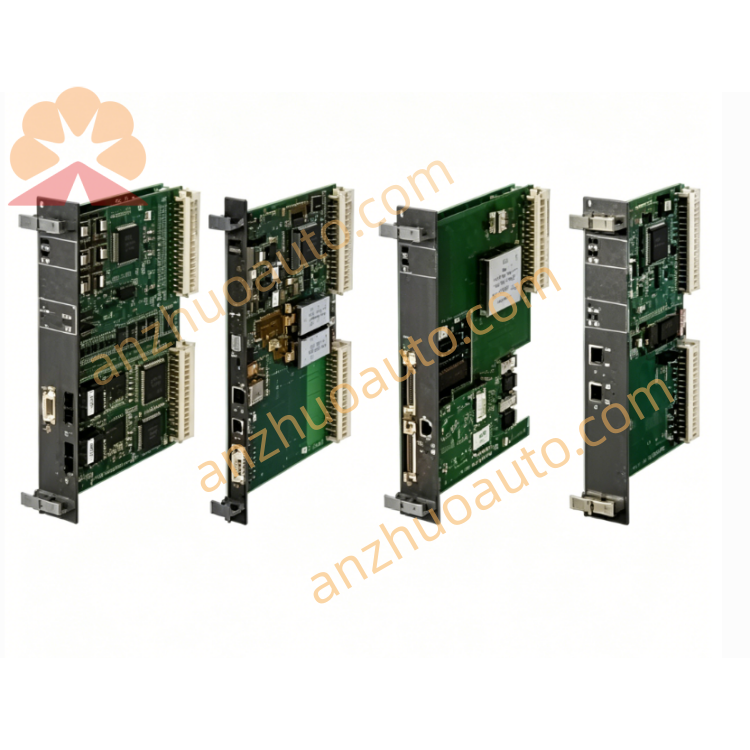
GE IS200RAPAG1BBA Mark VI RAPA Analog Signal Processing Board
The GE IS200RAPAG1BBA is a factory-calibrated opto-isolated resistive temperature detector analog process input signal conditioning daughterboard, exclusively engineered for GE Mark VI integrated turbine safety and balance-of-plant control systems deployed on heavy-duty gas turbine and steam turbine generator units. It belongs to the IS200RAP dedicated RTD analog process signal acquisition hardware product line, a core segment of the complete Mark VI IS200 I/O hardware ecosystem dedicated to resistive temperature sensor signal isolation, linearization and conversion. The base hardware platform G1 stands for first-generation single independent analog signal bank architecture designed for multi-channel RTD temperature signal collection from boiler, lube oil, cooling water and exhaust gas process loops. The composite suffix BBA integrates three core factory hardware and calibration upgrades: full multi-point RTD resistance-temperature curve linear calibration, optimized stable amplifier component screening for long-term measurement consistency, and baseline expanded diagnostic logic for slow wiring loop resistance drift continuous monitoring, positioning this unit as a mid-basic cost-effective calibrated analog temperature input module above uncalibrated IS200RAPAG1A baseline hardware and below wide-spectrum ACA mid-tier and flagship ADGE full diagnostic variants.
Description
GE IS200RAPAG1BBA Rack Power Supply Board Full Product Specification
1. Product General Overview
The GE IS200RAPAG1BBA is an original printed circuit rack power supply board independently developed and manufactured by General Electric, belonging to the core hardware component lineup of the GE Mark VI Speedtronic turbine control system series, specially customized for gas turbine, steam turbine and heavy-duty generator set industrial closed-loop control scenarios. Positioned as a dedicated rack power distribution and system identification carrier board inside the Mark VI Innovation Series standard rack, this module undertakes multi-channel regulated and unregulated DC power conversion, backplane bus power distribution, board identity storage, system fault status indication and local hardware reset functions simultaneously, serving as the fundamental power supply backbone for all signal acquisition, logic operation, communication and protection daughter boards installed in the same control rack.
Distinguished from the sibling revision model IS200RAPAG1BAA, the IS200RAPAG1BBA adopts differentiated DC output parameter calibration targeting high-current digital logic load and auxiliary excitation peripheral matching demands; both variants share identical mechanical mounting structure, front panel human-machine interface layout, environmental resistance grade and core circuit topology, while only adjusting output voltage tolerance, maximum load current of each channel and bulk unregulated power supply capacity to adapt to different rack load configurations including simplex single rack, dual redundant rack and triple modular redundant TMR turbine safety control architecture. The entire board is manufactured in the United States under GE’s aerospace-grade industrial PCB production standards, with full surface-mount component assembly, reinforced solder joint treatment for vibration-prone areas, and integrated passive component overvoltage, overcurrent and thermal protection circuits embedded in every power output branch, eliminating external auxiliary protective device wiring requirements for simplified on-site cabinet layout construction.
Designed for 24-hour uninterrupted continuous operation in power plant, petrochemical heavy industry and industrial mechanical drive control environments, the IS200RAPAG1BBA abandons fan forced cooling structure and relies on dual built-in metal alloy heat sinks combined with rack natural convection airflow channel to complete power loss heat dissipation, avoiding fan mechanical failure risks and regular maintenance work such as fan dust cleaning and bearing replacement, greatly reducing the long-term operational maintenance cost of the turbine control system. A built-in 1024-bit serial non-volatile memory chip is welded on the board surface, which permanently stores unique board part number, production batch serial number, hardware revision code, factory calibration parameter set and system BRDID identification data line information; the Mark VI main processor automatically reads the memory data through the internal backplane bus after power-on to complete hardware topology recognition, configuration matching and equipment fault tracing recording, supporting full lifecycle asset management and remote diagnostic access of control cabinet hardware without manual label information inquiry by maintenance personnel.
2. Core Functional Principle & Circuit Architecture Description
2.1 Main Power Conversion Circuit Principle
The IS200RAPAG1BBA receives standardized high-frequency square wave input power transmitted through the rack backplane via the rear P1 multi-pin backplane connector, with nominal input power specification of 48V square wave alternating current at 25kHz fixed frequency, which is uniformly distributed by the cabinet central power conversion unit to each slot of the Innovation rack. After entering the board, the input power first passes through a 1A 250V rated slow-blow safety fuse integrated on the front section of the power circuit, providing primary overcurrent interception protection for the entire power supply board; once short-circuit overload occurs in any output branch, the fuse will disconnect the main input loop within microseconds to prevent cascading damage to adjacent control boards in the rack.
Subsequently, the input power flows through two independent isolation transformers of different power ratings on the PCB to complete electrical isolation between the cabinet main power loop and each low-voltage DC output channel, effectively suppressing industrial site common-mode interference, surge voltage and ground loop noise generated by high-power motor starting, generator excitation switching and high-voltage switch action. The primary side of each transformer is equipped with metal oxide varistor overvoltage absorption components and high-frequency filter inductors, which absorb lightning surge, grid switching surge and electromagnetic interference pulses coupled from the power bus to avoid transient voltage breakdown of low-voltage precision chips on the secondary side of the circuit.
The secondary side of the isolation transformer is divided into four independent DC output power branches through full-bridge rectifier circuits composed of fast recovery diodes and multi-layer composite filter circuits combining high-voltage electrolytic capacitors and metal film resistors, respectively forming unregulated bulk power supply channels and precision regulated power supply channels with independent closed-loop feedback control loops. The regulated channels adopt high-speed linear voltage regulator chips with ±5% tight output tolerance, real-time sampling of output terminal voltage through precision voltage divider resistors, automatic adjustment of internal conduction impedance to stabilize output voltage fluctuation within the rated range under dynamic load changes from no-load to full-load maximum current; the unregulated bulk channels retain the original rectified voltage output without closed-loop feedback, mainly used for driving high-power auxiliary peripherals such as relay contactors, valve actuators and excitation signal pre-amplifiers that allow wider voltage fluctuation ranges, balancing the overall power supply efficiency of the whole board and reducing unnecessary power consumption loss caused by linear regulation under heavy load conditions.
2.2 System Identification & Bus Communication Sub-circuit
The 1024-bit serial memory device mounted on the upper area of the PCB is the core carrier of hardware identity information, adopting non-volatile storage technology that does not rely on external backup battery power supply, and all stored data can be permanently retained for more than 20 years under rated operating temperature environment without data loss or distortion. After the Mark VI host processor completes system power-on self-test, it sends read instruction signals through the parallel-style internal rack bus connected by the P1 backplane connector, and the serial memory chip feeds back complete hardware identity parameters in serial data stream format, including production factory date, test station calibration records, factory pass qualification code and hardware revision version number, which are synchronously uploaded to the upper CIMPLICITY HMI monitoring software and stored in the system historical fault database, facilitating maintenance engineers to quickly confirm board matching compatibility when carrying out spare parts replacement and cabinet hardware upgrade transformation work.
The parallel bus interface circuit also integrates signal isolation optocouplers between the power supply board and the rack backplane, isolating the power conversion high-noise circuit and low-voltage digital signal transmission circuit to avoid power ripple interference causing bus data transmission error or host processor communication offline fault. The bus loop supports DMA priority daisy chain signal expansion through BAI bus acknowledge input and BAD bus acknowledge output signal pins reserved on the connector, which can be cascaded with multiple extended I/O daughter boards in the same rack to realize multi-device DMA request priority sorting, and the priority sequence is determined by the physical cascading wiring order of twisted-pair signal lines between boards, meeting the high-speed real-time data acquisition transmission demands of multi-channel field instrument signals in large-capacity turbine control racks. An external DMA request input pin /EXT REO is reserved on the J2 auxiliary connector of the board, which can expand DMA transmission function for standard STD-Z80 I/O boards without on-board DMA processing chips, realizing unified bus scheduling management of all functional boards in the rack and improving the overall data processing throughput of the Mark VI control system.
2.3 Status Indication & Local Control Circuit
Two high-brightness LED status indicators labeled IPOK and MPOK are embedded in the reserved window of the black metal front panel of the IS200RAPAG1BBA, corresponding to input main power normal status and multi-channel output power normal status respectively. When the main input power enters the board normally and the primary fuse is intact, the IPOK LED maintains steady constant light output; if input power loss, fuse blow or main transformer primary loop open circuit fault occurs, the IPOK indicator will turn off completely as the primary fault alarm signal. The MPOK LED is controlled by the integrated multi-channel output voltage comparison detection circuit on the PCB, which continuously samples the voltage value of all four DC output branches through precision sampling resistors; only when all output channels operate within the factory preset normal voltage range will the MPOK indicator keep steady light, and once any single output channel has overvoltage, undervoltage or overload current limiting protection action, the MPOK LED will immediately extinguish to output secondary fault alarm information, enabling maintenance personnel to quickly judge the fault category without additional measuring instrument detection at the initial stage of failure.
A mechanical spring reset button is installed below the LED indicator window on the front panel, directly connected to the global hardware reset pin of the rack backplane bus through internal wiring. Manual pressing of the reset button will send a low-level reset signal to all functional boards in the same rack simultaneously, triggering full hardware restart of the entire rack control subsystem, applicable to clearing temporary bus communication deadlock, program operation crash and transient signal interference abnormal states during on-site equipment debugging and minor fault troubleshooting. Four reserved test point terminals labeled N15, P5, P15 and DCOM are arranged in a long strip reserved hole beside the reset button, leading out the core voltage test points of each main power output channel and the system public ground reference terminal, supporting maintenance personnel to use handheld multimeter for real-time voltage measurement without disassembling the whole board out of the rack, greatly simplifying on-site power supply circuit fault diagnosis work and shortening equipment downtime caused by troubleshooting.
2.4 Multi-stage Overprotection Circuit Architecture
The IS200RAPAG1BBA adopts three-level cascading safety protection logic covering input main loop, intermediate conversion circuit and each independent output branch to ensure no hardware burnout risk under various abnormal operating conditions of industrial sites. The first-level protection is the front-end main input slow-blow fuse, responsible for interception of severe short-circuit faults at the output terminal; the second-level protection is the self-recovery current limiting circuit integrated inside each linear voltage regulator chip of the regulated output channels, which automatically reduces output current to safe threshold within microseconds when overload load is connected, and automatically restores normal output after overload load is removed without component replacement; the third-level protection is the thermal shutdown protection circuit attached to the dual heat sinks, which arranges thermal sensing thermistors in close contact with the surface of power devices such as rectifier tubes and voltage regulators on the heat sinks. When the internal operating temperature of the board exceeds the factory preset 75°C threshold due to long-term heavy load or poor cabinet heat dissipation, the thermal sensing circuit will cut off all DC output power loops first while retaining the input power and LED indicator power supply, so that maintenance personnel can still observe fault indication signals after thermal protection action, and the power supply board will automatically recover output function after the internal temperature drops back to the normal operating range without manual reset operation.
All protection action records of overcurrent, overvoltage, thermal shutdown and fuse disconnection will be converted into digital fault codes by the on-board logic circuit, transmitted to the Mark VI main control processor through the parallel backplane bus, and stored in the non-volatile fault memory of the host system with accurate timestamp records, supporting historical fault query and statistical analysis through the CIMPLICITY upper computer monitoring platform, which provides data basis for equipment predictive maintenance and hidden danger elimination of turbine control cabinets.
3. Complete Electrical Technical Specifications
3.1 Input Electrical Parameters
Standard input power type: 48V 25kHz square wave alternating current, distributed uniformly by Mark VI cabinet central power unit to Innovation rack slot backplaneMain input loop protection component: 1A rated, 250V breaking capacity slow-blow glass tube safety fuse, front-end series connection of main input circuitInput circuit filter configuration: Multi-stage composite filter consisting of high-frequency filter inductors, X/Y safety capacitors and metal oxide varistor surge absorption components, capable of absorbing peak surge voltage up to 2kV coupled from industrial power gridInput power isolation grade: Each output channel adopts independent isolation transformer, primary and secondary winding insulation withstand voltage reaches 2500V AC for one minute without breakdown or creepage phenomenonMaximum input power consumption of the whole board: 150W under full rated load of all output channels, power consumption drops linearly with the reduction of actual load current of each branch
3.2 DC Output Channel Precise Parameter Calibration (Exclusive to IS200RAPAG1BBA Revision)
Channel 1: ±18V~±24V unregulated bulk DC power supply, maximum output load current 400mA, no closed-loop voltage regulation feedback, voltage fluctuation range allowed within ±15% of nominal value, mainly for driving high-power relay drive loops and auxiliary signal pre-amplifier modulesChannel 2: ±15V precision regulated DC power supply, factory calibrated output tolerance ±5%, maximum continuous output current 1.0A, built-in independent overcurrent limiting and short-circuit self-recovery protection circuit, dedicated to analog signal acquisition board, thermocouple signal conditioning board and pressure transmitter signal processing circuit power supplyChannel 3: +5V precision logic regulated DC power supply, factory calibrated output tolerance ±5%, maximum continuous output current 7.0A, equipped with multi-point parallel power output terminals to meet high-current power consumption demands of multi-channel digital input/output boards, CPU logic operation boards and communication interface boards in the rack, the largest power consumption branch of the whole power supply boardChannel 4: 24COM referenced ±24V unregulated DC auxiliary power supply, maximum output load current 1.5A, independent ground reference loop separated from other output channels, specially matched for Mark VI EX2100 excitation control peripheral boards and turbine valve actuator drive modulesAll DC output channels adopt separate ground wire design to realize analog ground, digital logic ground and auxiliary power ground physical isolation, eliminating cross-interference between high-current power loop and low-level weak signal acquisition loop, ensuring millivolt-level precision of field analog measurement signals collected by the control system without power supply ripple noise distortion.
3.3 Bus & Memory Electrical Specifications
On-board storage medium: 1024-bit serial non-volatile EEPROM memory chip, no backup battery required for data storage, data retention service life ≥20 years under rated operating environmentBus interface type: Parallel-style internal rack backplane bus, compatible with all IS200 series Mark VI functional daughter boardsDMA signal expansion pins: J2 connector reserved BAI bus acknowledge input, BAD bus acknowledge output and /EXT REO external DMA request input pins, supporting multi-board daisy chain priority schedulingBus signal isolation: High-speed optocoupler isolation between power supply circuit and bus signal circuit, isolation withstand voltage 1500V AC, maximum bus data transmission rate 12MbpsFront panel test point signal specification: N15 corresponds to -15V regulated output voltage test point, P5 corresponds to +5V logic power test point, P15 corresponds to +15V regulated output voltage test point, DCOM corresponds to system public analog ground reference terminal, all test points lead out direct connection of output terminal voltage without voltage division attenuation
3.4 Control & Indicator Electrical Parameters
Input power status indicator IPOK: Green LED, operating current 5mA, steady light when main input power is normal, completely extinguished under input power loss or fuse blow faultMulti-channel output normal status indicator MPOK: Green LED, operating current 5mA, steady light only when all four DC output channels operate within normal voltage range, extinguished once any single channel triggers protection actionFront panel reset switch: Normally open mechanical spring button, trigger signal low-level active, signal holding duration ≥200ms after pressing, capable of sending global reset signal to all boards in the same rack slotThermal protection trigger threshold: On-board power device surface temperature reaches 75°C to start full output power cut-off protection, automatic recovery after temperature drops below 60°C
4. Mechanical Structure & Mounting Dimension Specifications
4.1 Overall Physical Size & Weight
Complete board assembly overall dimensions (length × width × thickness): 330mm × 100mm × 200mm, standard single-slot width specification matching GE Innovation Series Mark VI rack unified slot size, can be installed in any vacant slot position of the control rack without special slot space reservationFront panel metal faceplate independent dimensions: 57.15mm width × 101.6mm height (converted from imperial 2.25 inches × 4 inches), black matte anti-corrosion aluminum alloy material, integrated LED light-transmitting window, reset button installation hole and test point reserved long strip hole, surface treated with electrostatic spraying to resist industrial oil, dust and weak chemical gas corrosionNet weight of single IS200RAPAG1BBA board without outer packaging: 2kg, lightweight integrated structure design, equipped with two elastic metal locking clips on both sides of the PCB edge, after pushing the board into the rack slot to the bottom, the locking clips automatically pop out to lock the board in place, avoiding board displacement caused by cabinet vibration during turbine unit operationPackaging spare parts weight reference: Single board independent anti-static carton packaging weight is about 2.8kg, including anti-static foam buffer liner, moisture-proof desiccant bag and factory original inspection qualification label attached to the packaging box surface
4.2 Internal Mechanical Component Layout
Two high-efficiency aluminum alloy extrusion heat sinks are vertically fixed on the rear half area of the PCB, respectively corresponding to the heat dissipation of ±15V and +5V high-current linear voltage regulator chips; the surface of the heat sink is provided with dense heat dissipation fin structures to expand natural convection heat exchange area, and heat conduction silicone pads are arranged between the heat sink and power chips to reduce thermal resistance and improve heat conduction efficiencyComponent layout zoning design on PCB: The left area of the board concentrates input power fuse, surge absorption components and main isolation transformers as the high-voltage input power zone; the middle area arranges rectifier circuits, linear regulator chips and dual heat sinks as the power conversion main zone; the right upper area welds the 1024-bit serial memory chip and bus optocoupler isolation circuit as the signal communication zone; the right lower area arranges filter capacitors and output terminal wiring circuits as the DC output distribution zone, separating high-noise power conversion components and low-noise signal processing components through physical space layout to reduce electromagnetic interference coupling inside the boardRear connection interface: Single-row multi-pin P1 backplane gold-plated connector, gold-plated contact surface with 5μm thick gold plating treatment to prevent long-term oxidation and poor contact under high humidity industrial environment, locked by two fixing screws at the rear edge of the board after inserting into the rack backplane connector to avoid loose contact caused by long-term vibrationFront panel auxiliary connector J2: Multi-pin secondary signal expansion connector reserved on the side of the front panel, used for external DMA request signal wiring and auxiliary fault signal expansion access, equipped with plastic dust plug when not in use to prevent dust and moisture from entering the connector contact pins
4.2 Standard Rack Mounting Operation Requirements
Applicable installation carrier: GE Mark VI Innovation Series standard vertical rack, compatible with simplex single control rack, dual redundant rack and triple modular redundant TMR safety control rack three mainstream cabinet architectures, each rack slot can independently install one IS200RAPAG1BBA power supply board to provide full-channel power distribution for all functional boards in the slot groupMounting direction requirement: The board front panel faces the cabinet door operation side, heat sink arranged at the cabinet rear ventilation channel position to make full use of cabinet top and bottom natural convection airflow for heat dissipation; reverse installation is strictly prohibited, otherwise it will block airflow and cause insufficient heat dissipation to trigger frequent thermal protection actionLocking and fixing process: Align the two side sliding rails of the PCB with the rack slot guide rails, push the board horizontally inward until the rear P1 connector is fully inserted into the backplane socket, the elastic locking clips on both sides of the board edge automatically pop out to clamp the rack guide rails, then tighten the two fixing screws at the rear edge of the board to complete double mechanical locking, eliminating vibration displacement risks under long-term turbine unit operation vibration environmentMulti-board adjacent installation clearance: When multiple power supply boards are installed in adjacent slots of the same rack, no additional isolation spacing is required between boards, the built-in independent heat dissipation structure of each board will not generate mutual thermal accumulation interference under full load rated operating conditions
5. Environmental Adaptability & Reliability Grade Standards
5.1 Operating Temperature & Storage Temperature Range
Continuous rated operating temperature range (no auxiliary fan cooling required): 0°C to +65°C, can maintain all electrical parameters within factory calibration tolerance range under full rated load operation in the whole temperature intervalAllowable short-time overload operating temperature upper limit: +70°C, continuous operation above 70°C will trigger on-board thermal protection circuit to cut off all DC output channels automaticallyTransportation and long-term storage temperature range: -40°C to +85°C, no permanent damage to PCB, semiconductor chips, electrolytic capacitors and metal mechanical components under sealed moisture-proof packaging storage state, can withstand extreme low temperature environment of outdoor long-distance sea and land transportation without preheating before commissioningTemperature cycle resistance standard: Comply with IEC 60068-2-1 temperature cycle test standard, after 1000 cycles of alternating temperature impact from -40°C to +70°C with 2-hour single cycle duration, all circuit functions and electrical output parameters remain consistent with factory delivery standards without drift or component failure
5.2 Humidity, Dust and Corrosion Resistance Specifications
Operating relative humidity range: 5% to 95% non-condensing relative humidity, applicable to coastal power plants, chemical plant high-humidity workshop and underground pump room control cabinet installation environments; when the cabinet internal humidity approaches 95%, it is required to match the cabinet built-in constant temperature dehumidifier to avoid surface condensation on the PCB leading to electrolytic corrosion of circuit tracesDust resistance grade: Meet IP20 internal cabinet protection grade, the whole board surface adopts conformal coating three-proof paint spraying process after component welding, forming a uniform insulating protective film on PCB traces, component pins and solder joints, resisting industrial conductive dust accumulation and weak acid, weak alkali gas corrosion generated by chemical plant flue gas, fertilizer plant production workshop and thermal power plant boiler flue gas diffusion environmentSalt spray corrosion resistance: Comply with IEC 60068-2-11 salt spray test standard, after 48 hours neutral salt spray continuous test, no oxidation corrosion, pin rust and circuit trace corrosion short-circuit phenomenon occurs on metal connectors, heat sinks and front panel aluminum alloy faceplate, suitable for offshore wind power, coastal gas turbine power station and marine platform turbine control cabinet installation scenarios
5.3 Vibration, Shock and Electromagnetic Compatibility Standards
Vibration resistance performance: Meet IEC 60068-2-6 sinusoidal vibration test standard, can withstand 10Hz to 150Hz frequency band, 1g acceleration continuous vibration for 8 hours without solder joint desoldering, component loose or electrical parameter drift, fully adapt to long-term vibration environment generated by gas turbine unit, steam turbine rotating equipment and large generator operationAnti-shock impact performance: Comply with IEC 60068-2-27 mechanical shock test standard, withstand 15g peak acceleration, 11ms pulse width half-sine shock impact for 1000 times in three orthogonal directions, no mechanical structure deformation, internal component falling off and circuit open-circuit fault occursElectromagnetic compatibility EMC certification standard: Pass GE internal industrial control EMC full test and comply with IEC 61000 series industrial electromagnetic interference resistance standards, including electrostatic discharge immunity ±8kV contact discharge, ±15kV air discharge; radio frequency electromagnetic radiation immunity 10V/m; electrical fast transient pulse immunity ±2kV; surge voltage immunity ±2kV common mode, ±1kV differential mode; can maintain stable power output and normal bus communication function under strong electromagnetic interference environment of high-voltage power distribution room, frequency converter workshop and large motor start-stop site without signal loss or protection misoperation
5.4 Service Life & Reliability Index
Factory design full-load continuous operation service life: 100,000 hours (equivalent to more than 11 years of uninterrupted 24-hour operation under rated working conditions), the first failure time MTBF mean time between failures index reaches 250,000 hours under standard power plant cabinet environmental operating conditionsKey component service life matching design: High-voltage electrolytic capacitors adopt long-life industrial grade models with rated service life of 120,000 hours at 65°C operating temperature; isolation transformers use high-temperature resistant insulation wire with service life exceeding 150,000 hours; semiconductor regulator chips, memory chips and optocoupler components adopt aerospace-grade industrial components without aging failure risk within the design service life rangeWarranty service standard: The original new IS200RAPAG1BBA board provided by GE official authorized channels enjoys a 12-month factory global unified warranty service from the date of equipment commissioning acceptance; rebuilt refurbished boards pass full electrical parameter retest and provide a 6-month standard warranty period, all warranty services cover free replacement of failed boards and factory re-calibration of electrical parameters caused by non-human damage and non-site improper use faults
6. Compatible System Platform & Full Application Industry Scenarios
6.1 Matching GE Control System Platform Range
The IS200RAPAG1BBA is a dedicated supporting hardware component exclusively for the GE Mark VI Speedtronic turbine integrated control system, fully compatible with all hardware configuration versions of Mark VI simplex, dual redundant and TMR triple modular redundant control architecture, and can be matched with all IS200 series signal acquisition, logic control, communication and protection daughter boards including analog input board, digital output board, turbine speed measurement board, vibration monitoring board, EX2100 excitation control matching board and Ethernet communication interface board in the rack. The built-in serial memory identification code of the board can be automatically identified and perfectly matched by the CIMPLICITY upper computer monitoring software equipped with Mark VI system, supporting one-click configuration import of rack hardware topology without manual modification of system configuration files during spare parts replacement and cabinet upgrade transformation work.
This power supply board cannot be cross-compatible with earlier Mark IV, Mark V Speedtronic turbine control system hardware platforms, due to differences in rack backplane bus definition, input power supply specification and DC output parameter calibration between different generation systems; cross-generation replacement requires synchronous replacement of the entire rack backplane and main control processor hardware, and re-compilation and download of the turbine control logic program, so it is only limited to Mark VI series control cabinet new project construction, old cabinet spare parts replacement and Mark VI system local hardware upgrade transformation projects.
6.2 Main Industrial Application Fields
First core application field: Thermal power generation industry, covering gas turbine single-shaft power generation units, combined cycle gas-steam turbine power plants, pure steam turbine thermal power units, waste heat boiler matching turbine generator sets, biomass power generation turbine control cabinets; the IS200RAPAG1BBA provides stable multi-channel power supply for turbine speed closed-loop control, exhaust temperature monitoring, vibration protection, generator excitation regulation and grid-connected synchronization logic control boards, which is the core guarantee for safe and stable grid-connected operation of power generation units and automatic fault protection trip function when abnormal unit parameters occur.
Second application field: Petrochemical heavy industry, including refinery process drive gas turbine units, chemical plant large compressor steam turbine drive control systems, natural gas pipeline pressurization station gas turbine drive equipment, coal chemical industry synthesis gas compressor turbine control cabinets; the board’s strong anti-corrosion, anti-electromagnetic interference and long-term vibration resistance performance adapts to high dust, weak chemical gas and large compressor vibration operating environments of chemical production workshops, realizing continuous stable control of production core power equipment and avoiding unplanned shutdown loss of chemical production lines caused by control system power supply failure.
Third application field: Offshore energy and marine equipment, including offshore oil platform gas turbine power generation units, LNG receiving station gas turbine compressor control systems, ship power station steam turbine generator control cabinets; the salt spray corrosion resistance and wide humidity range adaptation design of the IS200RAPAG1BBA solves the problem of easy metal component oxidation and circuit corrosion of control hardware in coastal and marine high-salt fog environments, ensuring reliable operation of offshore energy core power equipment all year round.
Fourth application field: Industrial large mechanical drive, including steel plant rolling mill steam turbine drive control, cement plant waste heat power generation turbine units, papermaking factory large fan steam turbine drive systems, sugar factory cogeneration turbine generator control cabinets; the high-current +5V logic power output channel of the board meets the power supply demand of multi-channel digital logic control boards of industrial heavy-duty drive equipment, and the built-in multi-stage protection circuit effectively avoids equipment damage caused by short-circuit faults of field wiring terminals.
Fifth auxiliary application field: Energy storage and new energy matching equipment, including solar thermal power station steam turbine control systems, wind farm backup gas turbine emergency power generation units, energy storage peak-shaving power station turbine frequency modulation equipment control cabinets; the wide temperature operating range and low maintenance design of the power supply board adapt to unattended remote energy station control cabinet operating environments, reducing on-site regular maintenance workload of new energy power stations.
7. Installation, Commissioning & Daily Maintenance Operation Guidelines
7.1 Pre-installation Inspection & Handling Precautions
Before taking the IS200RAPAG1BBA board out of the anti-static packaging bag, maintenance and installation personnel must wear certified anti-static wristbands connected to the cabinet public ground terminal to eliminate human body static electricity, avoiding electrostatic breakdown of sensitive memory chips and linear regulator semiconductor components on the PCB surface; the whole board is strictly prohibited from direct contact with bare hands to prevent hand sweat and grease from corroding gold-plated connector pins and PCB conformal coating three-proof paint layer, which will cause poor contact and circuit corrosion hidden dangers after long-term operation.
Visual inspection items before installation: Check whether the front panel LED window, reset button and test point hole are intact without collision deformation; observe whether the dual heat sinks on the PCB are loose or falling off; check all capacitor, transformer and chip components for bulging, liquid leakage, pin bending and solder joint desoldering phenomena; confirm that the P1 rear backplane connector and J2 front auxiliary connector pins are free of bending, oxidation and foreign matter blockage; take out the factory attached inspection qualification label to confirm that the part number printed on the label is consistent with IS200RAPAG1BBA, and the production batch serial number is complete and clear without blurring or defacement.
Storage and transportation handling requirements: During spare parts inventory storage, the board must be placed in the original anti-static foam lined packaging box with desiccant bag sealed and stored in a constant temperature and humidity spare parts warehouse environment, stacking height of packaging boxes shall not exceed three layers to avoid extrusion deformation of the PCB front panel; during on-site transportation, vibration-proof foam buffer packaging must be added, and violent throwing, collision and exposure to rain and damp environment are strictly prohibited, otherwise it will cause internal component solder joint desoldering and circuit short-circuit fault invisible to naked eyes.
7.2 Cabinet Installation & Power-on Commissioning Standard Process
Step one: Cut off the total input power supply of the target Mark VI rack slot where the IS200RAPAG1BBA will be installed, lock the power switch with a safety lock and hang a power-off warning sign to implement isolation protection to prevent accidental live insertion and extraction of the board leading to backplane bus short-circuit and component burnout; wait for 15 minutes after power-off to discharge residual stored electricity of all filter capacitors in the rack to zero before carrying out board disassembly and installation operation.
Step two: Align the sliding rails on both sides of the IS200RAPAG1BBA PCB with the guide rails of the target rack slot, push the board horizontally and slowly inward until the rear P1 multi-pin connector is fully inserted into the rack backplane socket, confirm that the two elastic locking clips on the PCB edge pop out and clamp the rack guide rails tightly, then use a screwdriver to tighten the two fixing screws at the rear edge of the board to complete double mechanical locking and fixing.
Step three: Close the cabinet door, remove the power-off safety lock, switch on the rack total input power supply to start system power-on self-test; observe the two LED indicators on the front panel of the IS200RAPAG1BBA after power-on, the IPOK indicator should light up steadily within 3 seconds of power-on, and the MPOK indicator should light up steadily within 10 seconds after the internal power conversion circuit completes voltage stabilization output; if any indicator fails to light up normally, immediately cut off the rack power supply to check whether the main input fuse is blown, whether the backplane connector is inserted in place, and whether there is short-circuit wiring fault of the output peripheral boards in the slot.
Step four: After both LED indicators keep steady light, take a handheld digital multimeter to contact the four front panel test points N15, P5, P15 and DCOM in sequence to measure the actual output voltage of each power channel, compare the measured voltage value with the factory calibrated rated voltage tolerance range to confirm that all output channels operate within normal parameter intervals without overvoltage or undervoltage deviation exceeding the standard range.
Step five: Log in to the CIMPLICITY HMI upper computer monitoring system through the cabinet operation touch screen or remote workstation, enter the rack hardware topology identification interface, check whether the system automatically reads the complete identity information of the IS200RAPAG1BBA including part number, hardware revision and production serial number, confirm that no hardware mismatch alarm code appears in the system fault alarm list, complete commissioning acceptance work and record the commissioning data into the equipment maintenance file.
7.3 Daily Routine Maintenance & Periodic Inspection Content
Daily visual inspection content (implemented once per shift by on-site equipment operators): Observe the light state of IPOK and MPOK LED indicators on the front panel of the power supply board through the cabinet door observation window, record abnormal indicator extinguishing state immediately and report to maintenance personnel for troubleshooting; check whether there is abnormal high temperature heat emission on the cabinet rear ventilation channel corresponding to the board heat sink position through hand touch, judge whether the heat dissipation airflow is blocked by dust accumulation.
Monthly cabinet dust cleaning maintenance: Cut off the rack power supply and implement safety isolation protection, open the cabinet door, use low-pressure dry compressed air (air pressure controlled below 0.3MPa) to blow clean dust accumulated on the surface of the IS200RAPAG1BBA front panel, heat sink fin gaps and PCB component surface, avoid high-pressure air flow directly impacting the connector pins to prevent pin bending and solder joint desoldering; use dry anti-static cotton cloth to wipe off oil and dust stains on the front panel surface, check whether the reset button rebounds flexibly without jamming failure after cleaning.
Quarterly electrical parameter calibration inspection: Under normal rack power-on operating state, use a precision digital multimeter with 0.01mV measurement accuracy to re-measure the output voltage value of each channel through the front panel reserved test points, record the measured voltage data and compare with the commissioning acceptance baseline data; if the voltage deviation of any regulated channel exceeds ±5% rated tolerance range, mark the board for planned replacement and factory re-calibration maintenance to avoid hidden danger of unstable power supply for control boards.
Annual comprehensive performance test: Pull out the IS200RAPAG1BBA board from the rack slot after power-off discharge, send it to GE authorized maintenance service station for full load aging test, multi-channel output overload protection action test, thermal protection trigger threshold verification and serial memory data integrity reading test; the maintenance station will issue a complete test report after passing all test items, and the board can be reinstalled back to the cabinet to continue operation, eliminating potential aging failure risks of internal components in advance.
7.4 Common Fault Phenomenon & Quick Troubleshooting Logic
Fault category one: IPOK LED indicator completely extinguished after rack power-on, MPOK indicator also no light output. Troubleshooting priority order: First cut off power supply to check whether the 1A main input fuse on the board is blown; if the fuse is intact, check whether the rack backplane P1 connector has loose contact or pin oxidation; if the connector is normal, measure the input power voltage of the rack slot with a multimeter to confirm whether the cabinet central power unit outputs 48V 25kHz square wave input power normally; if the input power source is abnormal, eliminate the fault of the cabinet front-end power conversion equipment; if all external input conditions are normal and the fuse is blown again after replacing the new fuse, it indicates internal short-circuit fault of the power supply board, which needs to be returned to the factory for maintenance and component replacement.
Fault category two: IPOK LED lights up normally after power-on, MPOK LED remains extinguished without steady light output. Troubleshooting priority order: First power off the rack and disconnect all peripheral daughter boards in the same slot, re-power on to observe whether the MPOK indicator lights up; if the indicator recovers normal light after removing external load boards, it means a certain peripheral board has output short-circuit fault leading to the power supply board triggering overcurrent protection, find out the faulty daughter board by plugging each board back one by one; if the MPOK indicator still cannot light up after removing all external load boards, use a multimeter to measure the voltage of each DC output channel through front panel test points, judge which channel has overvoltage or undervoltage fault, confirm internal power conversion circuit failure of the board and arrange spare parts replacement.
Fault category three: Both IPOK and MPOK indicators light up normally, but the Mark VI host processor reports hardware identification reading failure alarm, cannot read IS200RAPAG1BBA identity data. Troubleshooting priority order: Power off to pull out the board and clean the gold-plated contact pins of the rear P1 backplane connector with anti-static cleaning fluid to eliminate poor contact caused by dust oxidation; after reinstallation, re-power on to check whether the alarm disappears; if the fault alarm still exists, it indicates damage or data loss of the on-board 1024-bit serial memory chip, which cannot be repaired on site and needs to be replaced with a new original board.
Fault category four: The MPOK indicator automatically extinguishes after continuous operation for several hours, and can recover normal light after shutting down the cabinet for cooling for 30 minutes. Troubleshooting priority order: Check whether the cabinet top and bottom ventilation channels are blocked by thick dust accumulation, clean the ventilation channels to restore natural convection airflow; measure the internal operating temperature of the cabinet with a temperature recorder, if the cabinet ambient temperature exceeds 65°C for a long time, install additional cabinet heat dissipation fans or constant temperature air conditioning equipment to reduce the operating environment temperature; if the heat dissipation environment is normal and thermal protection action still occurs frequently, it indicates aging performance degradation of internal power regulator components of the board, arrange planned spare parts replacement to avoid unplanned shutdown caused by sudden full power cut-off protection during unit operation.
8. Product Version Difference & Spare Parts Matching Description
8.1 Distinction Between IS200RAPAG1BBA and IS200RAPAG1BAA Sibling Models
The two models belong to the same RAPA rack power supply board product series of Mark VI system, share completely consistent mechanical structure, front panel layout, environmental resistance grade, bus communication circuit and protection logic design, the core difference lies in the factory calibration parameter setting of each DC output channel, targeted at different rack total load power consumption configuration demands of turbine control cabinets. The IS200RAPAG1BAA model has reduced maximum load current of ±5V and ±15V regulated output channels, suitable for small-capacity simplex single rack control cabinets with fewer peripheral signal acquisition boards; the IS200RAPAG1BBA increases the +5V logic power output maximum current to 7.0A and raises the 24COM auxiliary unregulated power supply load capacity to 1.5A, specially designed for large-capacity TMR triple redundant racks with full configuration of analog, digital, communication and excitation matching daughter boards, which can bear the total power consumption of all functional boards in the slot under full load operating state without frequent current limiting protection action.
The two models cannot be randomly interchanged for on-site replacement without system load calculation evaluation; if the IS200RAPAG1BAA low-current version is installed into a large-capacity full configuration rack that originally matches IS200RAPAG1BBA, the power supply board will trigger continuous overload current limiting protection after unit full-load operation, resulting in unstable power supply of the control daughter boards, frequent system communication disconnection, inaccurate analog signal acquisition and even accidental turbine protection trip fault, bringing serious safe operation hidden danger to power generation and industrial drive units. When carrying out spare parts replacement, maintenance personnel must confirm the original board model number printed on the PCB and front panel nameplate, select the same model matching spare parts for replacement, and conduct full-load aging test after installation to verify that no overload protection misoperation occurs under unit rated operating conditions.
8.2 Original New Board, Refurbished Rebuilt Board & Second-hand Used Board Quality Differentiation
Original new IS200RAPAG1BBA board: Produced and shipped directly from GE official manufacturing factory, all components are brand new original industrial grade parts, the PCB conformal coating three-proof paint layer is intact without any scratch repair trace, the serial memory chip stores complete factory original production and calibration data, attached with factory original inspection report, packaging anti-static label and global 12-month unified warranty certificate, applicable to new project construction, key unit core cabinet spare parts reserve and high-reliability unattended energy station equipment transformation projects with strict quality requirements.
Refurbished rebuilt IS200RAPAG1BBA board: Recovered old faulty boards after GE authorized maintenance station full disassembly inspection, replaced all aging components including electrolytic capacitors, power regulator chips and fuse components with new original parts, re-spray conformal three-proof paint on PCB, carry out 72-hour full-load aging test and all electrical parameter re-calibration, the serial memory chip is rewritten with qualified rebuilt product identification data, provided with maintenance station test report and 6-month limited warranty service, suitable for non-key auxiliary turbine control cabinet spare parts replacement projects with moderate budget control.
Second-hand used IS200RAPAG1BBA board: Disassembled from retired idle Mark VI control cabinets of old units, without factory full component replacement
Get a Quote