
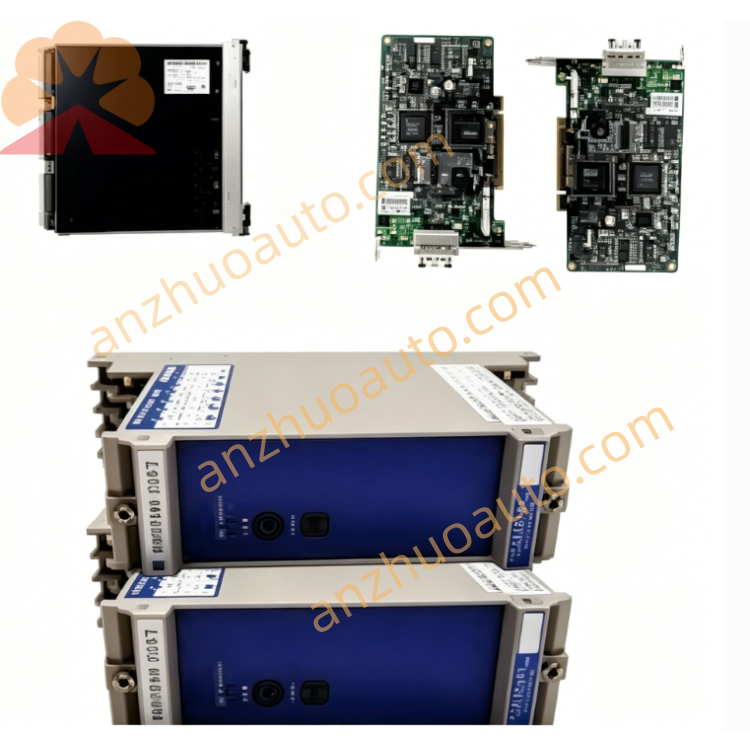
GE IS200BPIBG1AEB Bus Power Interface Input Advanced Extended Filter Module
Description
GE IS200BPIBG1AEB Bus Power Interface Input Advanced Extended Filter Module
Product Overview
Core Functional Description
Key Technical Specifications
Application Scenarios
Compatibility, Installation & Revision Difference Notes
Core Upgrade Distinctions of IS200BPIBG1AEB vs Standard IS200BPIBG1 Base Unit
Upgraded 2500V reinforced galvanic isolation transformers for each universal AC/DC power signal channel, versus 1500V standard isolation on baseline model;
Enhanced six-stage bidirectional multi-range AC/DC CT transient surge suppression circuits, upgraded from five-stage basic surge protection;
Optimized seventh-order full-spectrum wide-band LC EMI filter with dual low/high frequency harmonic and commutation noise attenuation, improving interference attenuation from 40 dB to 45 dB;
Upgraded bidirectional precision analog scaling circuitry with improved linearity for ultra-low light-load universal AC/DC minimum power signals;
Expanded self-diagnostic coverage with basic intermittent weak wiring contact resistance fault detection, unavailable on the baseline model;
Triple-layer anti-corrosion, anti-salt-fog conformal PCB coating, replacing single-layer basic anti-mold coating of the base unit;
Expanded medium-capacity non-volatile fault storage for longer universal main power transient disturbance history retention;
Optimized low-amplitude AC/DC mixed signal threshold logic to filter long cable capacitive leakage interference and reduce nuisance overload/voltage protection trips under medium-to-high EMI conditions.
Key Gaps Compared to Top-Tier Full Diagnostic Extended-Grade Power Interface Modules
Standard -20°C to +70°C operating temperature range without extended +75°C upper temperature tolerance of full diagnostic variants;
Lacks seven-stage full-range multi-magnitude surge suppression hardware equipped on top-tier diagnostic modules;
No multi-month long-term continuous trend tracking for cable insulation degradation, CT saturation drift and amplifier gain drift;
Components only undergo 72-hour thermal burn-in, not the 168-hour extreme temperature stress screening of full diagnostic grade hardware;
Smaller on-board non-volatile memory without dedicated multi-month historical component drift trend archive capacity;
Not suitable for severe coastal heavy salt-fog sites or continuous long-term unattended turbine operation with minimal annual maintenance cycles.
Get a Quote