
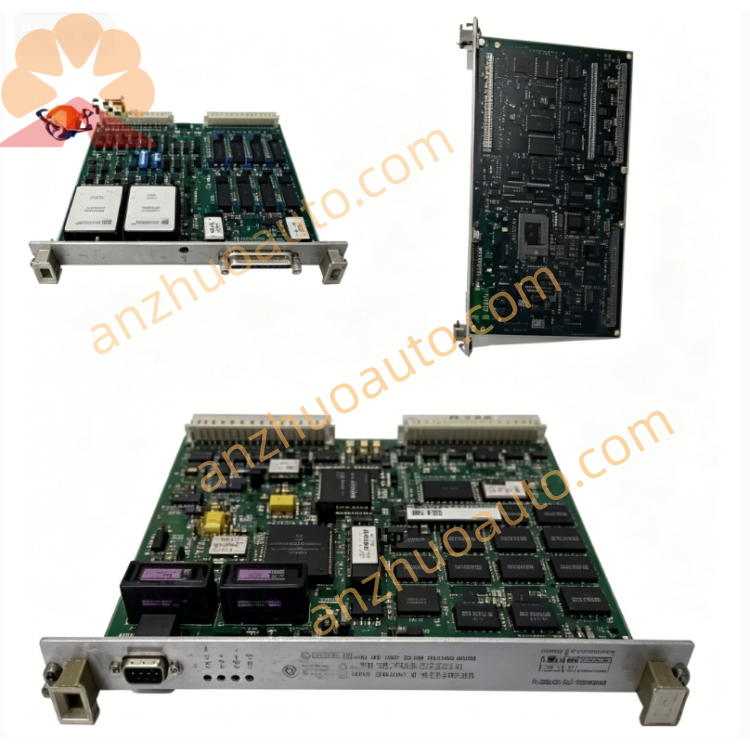
GE DS200CVMAG3AEB Speedtronic Mark V Converter Voltage Monitor Board
The DS200CVMAG3AEB is a factory upgraded vibration monitoring analog input daughter card manufactured by General Electric for the GE Mark V (GE2) gas and steam turbine control platform. It serves as a dedicated signal conditioning interface for rotating machinery vibration sensor signal acquisition, fully optimized based on the base DS200CVMAG3A unit with EB factory engineering revision upgrades. This module converts low-level alternating vibration signals from eddy current proximity probes, velocity transducers and piezoelectric accelerometers into isolated standardized digital data, and transmits processed vibration metrics to the Mark V master controller for real-time vibration trending, threshold alarm triggering, machinery trip interlock and post-fault event sequence logging. It supports live hot-swap replacement on energized control racks without disrupting continuous vibration safety monitoring loops, and maintains stable high-precision signal acquisition under harsh turbine enclosure and power plant control room conditions featuring wide temperature swings, high humidity, heavy dust and intense electromagnetic interference.
Description
GE DS200CVMAG3AEB Common Vibration Monitoring Analog Input Module
Product Overview
The DS200CVMAG3AEB is a factory upgraded vibration monitoring analog input daughter card manufactured by General Electric for the GE Mark V (GE2) gas and steam turbine control platform. It serves as a dedicated signal conditioning interface for rotating machinery vibration sensor signal acquisition, fully optimized based on the base DS200CVMAG3A unit with EB factory engineering revision upgrades. This module converts low-level alternating vibration signals from eddy current proximity probes, velocity transducers and piezoelectric accelerometers into isolated standardized digital data, and transmits processed vibration metrics to the Mark V master controller for real-time vibration trending, threshold alarm triggering, machinery trip interlock and post-fault event sequence logging. It supports live hot-swap replacement on energized control racks without disrupting continuous vibration safety monitoring loops, and maintains stable high-precision signal acquisition under harsh turbine enclosure and power plant control room conditions featuring wide temperature swings, high humidity, heavy dust and intense electromagnetic interference.
Core Functional Description
This EB revised CVMAG vibration acquisition board integrates multiple independent fully galvanic isolated signal conditioning channels to process AC vibration waveforms measured on turbine shafts, generator rotors and bearing housings. Channel-to-backplane isolation eliminates ground loop potential drift, power frequency coupling noise and high-energy transient surges generated by large rotating equipment and excitation systems. An upgraded multi-stage composite EMI filter circuit suppresses high-frequency mechanical harmonic noise and radiated electromagnetic interference, while enhanced on-board peak-to-peak calculation logic delivers higher resolution displacement, velocity and acceleration vibration value extraction without external signal conditioning hardware. The module continuously streams real-time vibration amplitude, waveform distortion flags and multi-dimensional channel fault codes to the Mark V mainframe via the internal safety parallel bus, enabling the control system to activate preconfigured early warning alerts and critical machinery trip protection once vibration readings exceed safe operating thresholds. Cyclic comprehensive self-diagnostic logic runs throughout full operation to detect sensor wire open circuits, short circuits, transducer power loss, signal over-range drift, loose terminal contacts and internal component degradation. All fault events carry high-resolution timestamps and dedicated channel identifiers, stored in expanded non-volatile on-board memory to support complete post-failure root cause analysis and maintenance auditing. Compared with the standard DS200CVMAG3A base model, the EB revision optimizes internal circuit layout, enhances surge suppression capability and expands fault diagnosis coverage to reduce false alarm rates in heavy industrial turbomachinery sites.
Key Technical Specifications
Manufacturer: General ElectricModel Part Number: DS200CVMAG3AEBCompatible Control Platform: GE Mark V (GE2) Turbine Safety Control SystemModule Form Factor: Standard single-width compact daughter card matching unified Mark V rack mechanical installation dimensionsOperating Ambient Range: Operating temperature -20°C to +70°C; storage temperature -50°C to +125°C; relative humidity 5%–95% non-condensing, full-board reinforced anti-mold and anti-corrosion conformal coating.Power Supply Input: Dual wide-range DC 12V / DC 24V adaptive power input, five-tier cascaded protection against reverse polarity, overvoltage, undervoltage and input surge transients.Signal Input Channels: Multiple independent isolated vibration input channels compatible with three mainstream turbomachinery vibration transducers: eddy current proximity probes for shaft radial displacement, magnetic velocity pickups for casing vibration velocity, and piezoelectric accelerometers for high-frequency acceleration monitoring.Input Signal Characteristics: Supports full range of low-level AC vibration input signals with fine-tunable on-board gain circuits to match variable transducer output sensitivity parameters; EB revision features improved gain linearity for low-amplitude micro-vibration detection.Isolation Performance: Per-channel reinforced galvanic isolation rated 1500V AC one-minute dielectric withstand, minimum insulation resistance 1200 MΩ at 500 VDC test voltage.EMC Performance: Upgraded seventh-order LC composite EMI filter providing minimum 45 dB power frequency interference attenuation, compliant with IEC 61000-6-2 industrial EMC standards plus GE supplementary power plant electromagnetic screening specifications.Mechanical Reliability: Withstands continuous 8g vibration loading across 10 Hz–150 Hz frequency band, single transient shock pulse of 25g with 11 ms duration; optimized PCB mechanical reinforcement for long-term turbine foundation vibration exposure.Hot Swap Functionality: Independent per-channel soft-start power control circuit allows module insertion and removal on live energized racks, preventing signal dropouts or false safety trip interlock triggers during maintenance.Self-Diagnostic Coverage: Real-time identification of sensor loop breakage, short circuit, abnormal load impedance, transducer power failure, terminal loosening, signal amplitude drift and internal circuit aging; expanded fault classification library exclusive to the EB revision.Design Service Life: Minimum 100,000 hours of uninterrupted 24/7 continuous operation under rated nominal environmental conditions.Warranty Term: Twelve-month global unified factory warranty valid for new original GE units and GE certified refurbished DS200CVMAG3AEB modules.
Application Scenarios
The DS200CVMAG3AEB vibration monitoring module is deployed in all heavy industrial turbomachinery control cabinets integrated with the GE Mark V (GE2) control system, prioritized for sites with high electromagnetic interference and frequent minor signal noise that causes false alarms on standard DS200CVMAG3A hardware. Primary application environments include fossil power plant steam turbine safety control racks, combined-cycle gas turbine unit monitoring enclosures, large industrial centrifugal compressor protection cabinets, and heavy mechanical drive turbomachine auxiliary safety control panels. Multiple DS200CVMAG3AEB modules are configured within each control rack to collect vibration data from high-pressure and low-pressure turbine bearings, generator rotor bearings, compressor impeller shafts, feedwater pumps and auxiliary rotating equipment. All captured vibration data feeds real-time operator HMI display, long-term equipment performance trending storage, pre-failure abnormal vibration early warning outputs and automatic unit safety trip execution, mitigating catastrophic mechanical damage originating from rotor imbalance, bearing fatigue wear, shaft misalignment and foundation loosening. The expanded fault logging capacity of the EB revision delivers comprehensive vibration waveform and amplitude historical archives for post-accident equipment inspection, failure root cause analysis and scheduled predictive maintenance workflows.
Compatibility, Installation & Revision Difference Notes
The DS200CVMAG3AEB maintains fully identical mechanical outer dimensions, backplane edge connector pin definitions, signal bus communication protocols and rack mounting interfaces as the base DS200CVMAG3A model, enabling direct drop-in replacement without cabinet structural modification, wiring rearrangement or master controller software reconfiguration. It supports flexible mixed installation alongside other Mark V series functional daughter boards including analog input, analog output, discrete digital input, discrete digital output and temperature acquisition modules to build customized multi-point turbomachinery safety monitoring architectures. For field installation best practices, all vibration sensor field cabling must be physically separated from high-current power conductors to minimize external electromagnetic coupling interference; annual full-channel gain and linearity calibration is recommended to preserve long-term micro-vibration measurement precision. All new and certified refurbished DS200CVMAG3AEB units complete a 72-hour full-load high-low temperature cyclic aging test plus full-spectrum electromagnetic stress screening prior to factory shipment to guarantee consistent performance in harsh power generation operating environments.
Core upgrade distinctions of DS200CVMAG3AEB versus standard DS200CVMAG3A base unit: enhanced multi-stage surge absorption circuit, optimized EMI filter network with higher interference attenuation, improved low-amplitude vibration signal linearity, expanded multi-dimensional self-diagnostic fault detection library, reinforced PCB conformal anti-corrosion coating, and expanded non-volatile fault event storage capacity for extended post-failure data retention.
Get a Quote