
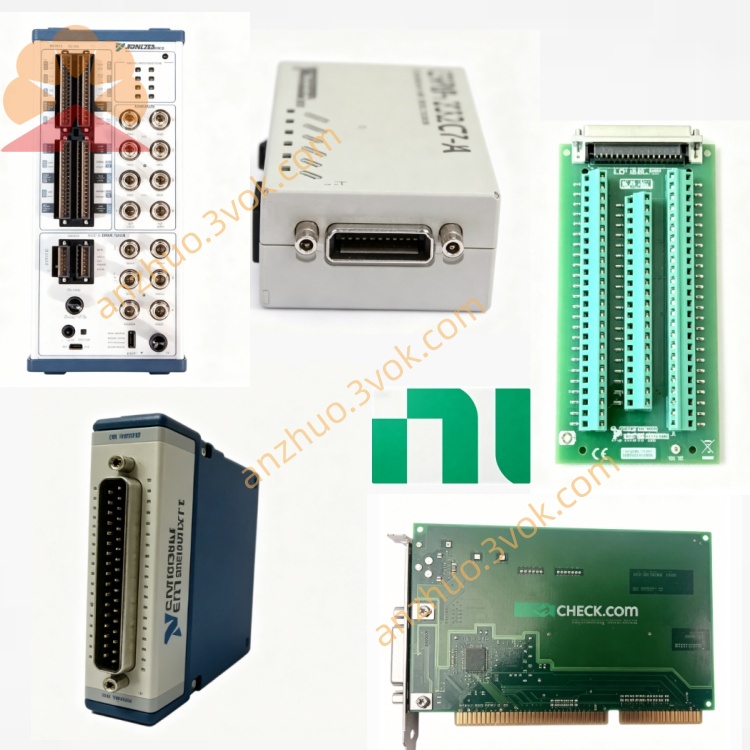
NI PXIe-4154 4-Channel Precision Source Measure Unit (SMU) Module
Description
Model Nomenclature
PXIe: PXI Express high‑speed modular instrumentation bus
41: Precision SMU and battery simulator series
54: 2‑channel (battery + charger), 6 V/3 A + 8 V/1.5 A, fast transient, 1 µA sensitivity
Technical Specifications
Form factor: 3U two‑slot PXIe module
Channels: 2 independent, isolated channels (Ch0: battery simulator; Ch1: charger simulator)
Voltage ranges: Ch0 0–+6 V; Ch1 0–+8 V
Current ranges: Ch0 ±3 A (3 A range), ±30 mA (30 mA range); Ch1 ±1.5 A (source), ±0.1 A (sink)NI
Current sensitivity: 1 µA (Ch0, 30 mA range)NI
Sampling rate: up to 200 kS/s (V/I simultaneous)NI
Transient response: <20 µs (fast mode, Ch0)NI
Programmable output resistance (Ch0): −0.04 Ω to 1 Ω, 1 mΩ resolution
Voltage accuracy: ±0.05% reading + 100 µV
Current accuracy: ±0.1% reading + 1 µA (Ch0, 30 mA range)
Remote sense: 4‑wire for both channelsNI
Protection: OVP, OCP, reverse polarity, overtemperature
Operating temperature: 0 °C to 55 °C (23 °C ±5 °C for rated accuracy)NI
Storage temperature: −40 °C to 70 °C
Connector: Front‑panel 5‑position Phoenix Contact COMBICON
Dimensions: 40 mm × 130 mm × 216 mm
Weight: approx. 565 g
Interface and Communication Configuration
Bus: PXIe Gen1, Windows plug‑and‑play
Driver: NI‑DCPower v1.7.5 or later
Software: NI‑MAX, InstrumentStudio, LabVIEW, C/C++, Python
Trigger: PXI trigger lines 0–7, multi‑module hardware synchronization
I/O: Front‑panel connectors for force, sense, and power signals
Core Features
Dual‑channel simulation: independent battery (Ch0) and charger (Ch1) emulation
Fast transient response: <20 µs to minimize voltage dip under dynamic loadsNI
Programmable internal resistance: Ch0 adjusts battery impedance for accurate modelingNI
Two‑quadrant operation: bidirectional source/sink for charging/discharging cyclesNI
4‑wire remote sense: eliminates lead resistance errors in high‑current pathsNI
Integrated precision measurement: 1 µA sensitivity for quiescent and standby current testsNI
Application Scenarios
RF power amplifiers: battery‑powered dynamic load testing with fast transientsNI
Mobile handsets and wearables: lithium‑ion battery and charger simulation for validationNI
Portable wireless devices: low‑power consumption and standby current characterizationNI
Battery‑operated IoT devices: charge/discharge cycle and voltage sag testingNI
PMIC and power management ICs: dual‑rail battery/charger parallel testingNI
Get a Quote