
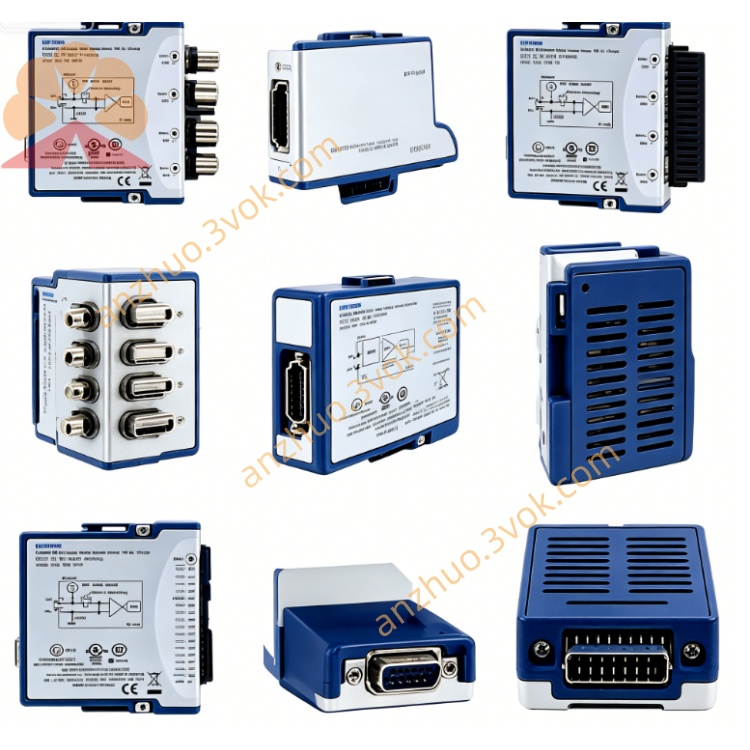
NI PXIe-4140 4-Channel ±10V 100mA PXIe Source Measure Unit
Description
Model Nomenclature
PXIe: PXI Express high‑speed modular instrumentation bus.
41: Denotes the precision SMU series.
40: Indicates a 4‑channel, ±10 V, ±100 mA configuration with four‑quadrant operation, 100 pA sensitivity, and SourceAdapt technologyNI.
Technical Specifications
Basic Parameters
Form Factor: 3U single‑slot PXIe module
Channels: 4 independent channels (channel‑to‑ground isolation: 60 VDC, CAT I)NI
Voltage Range: ±10 V (min. programmable step 0.1 mV)NI
Current Range: ±100 mA, with 5 auto‑ranging scales: 100 mA / 10 mA / 1 mA / 100 µA / 10 µANI
Power per Channel: 1 W (source/sink)
Current Sensitivity: 100 pA (lowest range)NI
Sampling Rate: Up to 600 kS/s (simultaneous V/I readback)NI
Update Rate: Up to 100 kS/sNI
Electrical Performance
Voltage Accuracy: ±0.02% of range + 20 µV
Current Accuracy: ±0.03% of range + 100 pA (10 µA range)
Remote Sense: 4‑wire with guard (eliminates wiring resistance errors)NI
Output Impedance: Programmable (±1 V/range)
Protection: Overvoltage, overcurrent, overtemperature, reverse polarity
Environmental & Mechanical
Operating Temperature: 0 °C to 55 °C
Storage Temperature: -40 °C to 70 °C
Humidity: 10%–70% (non‑condensing, operating)
Calibration Interval: 1 year (recommended)NI
Connector: 25‑pin D‑Sub (male) for all channels
Dimensions: 20 mm × 130 mm × 216 mm
Weight: 425 g
Interface and Communication Configuration
Bus: PXIe Gen1, plug‑and‑play for Windows
Control Software: NI‑MAX (configuration), InstrumentStudio (interactive control)
Programming Environments: LabVIEW, LabWindows/CVI, C++, Python (via NI‑DCPower driver)
Triggering: PXI trigger lines 0–7 (hardware synchronization)
Synchronization: Multi‑module triggering, sequence linking with other PXI instruments
Isolation: 60 VDC channel‑to‑ground (CAT I) for floating measurementsNI
Core Features
Four‑Quadrant Operation: Sources and sinks power (±10 V, ±100 mA) for true bi‑directional testingNI.
100 pA Sensitivity: Ultra‑low current measurement for leakage, sub‑threshold, and nano‑device characterizationNI.
SourceAdapt Technology: Programmable transient response to stabilize any load, minimize overshoot, and protect DUTs.
4‑Wire Remote Sense with Guard: Eliminates IR drop and common‑mode errors in high‑precision setupsNI.
High‑Speed Sequencing: Hardware‑timed I‑V sweeps, pulse generation, and multi‑channel synchronization up to 100 kS/sNI.
Multi‑Mode Operation: Single‑point, sequence, and advanced sequencing modes for flexible test flowsNI.
Application Scenarios
Semiconductor Test: Characterizing MOSFETs, diodes, IGBTs, and power ICs (I‑V curves, leakage, breakdown).
High‑Pin‑Count ATE: Testing SoCs, FPGAs, and multi‑channel components in PXI‑based automated systemsNI.
Precision Component Test: Verifying resistors, capacitors, sensors, and MEMS devices with pA‑level sensitivity.
Aerospace & Defense: Bi‑directional power and precision measurement for avionics and radar modules.
Battery & Energy Storage: Testing low‑capacity cells, supercapacitors, and fuel cells (charge/discharge cycles).
Get a Quote