
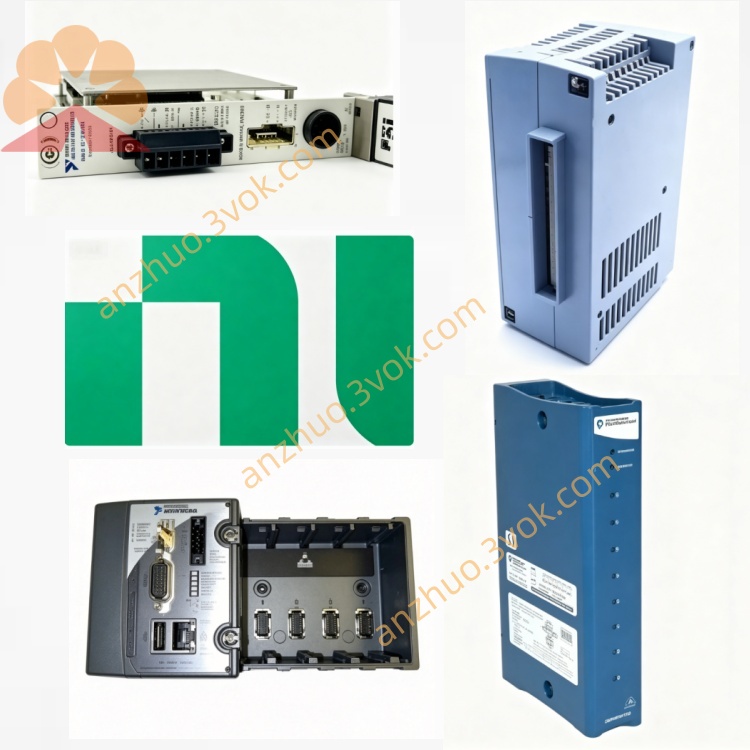
NI PXI-8331/PXI-8336 MXI-4 Fiber PXI Extension Controller Kit
he PXI-8331 and PXI-8336 are 3U single-slot bus extension modules launched by National Instruments, both based on the MXI-4 protocol. They act as hardware PCI-to-PCI bridges to implement transparent PCI bus extension between PXI chassis, host PCs and other PXI or VXI devices. Remote hardware can be recognized and controlled by the host just like local devices. As upgraded versions of the older MXI-3 modules, they add CRC checking and automatic retransmission to enhance communication reliability. The PXI-8331 uses copper cables for connection, while the PXI-8336 adopts fiber-optic transmission. Both models have reached end-of-life and are no longer in mass production, yet refurbished and second-hand units are still available for maintenance and legacy system renovation.
Description
Model Nomenclature
PXI stands for PCI eXtensions for Instrumentation, complying with the standard of modular instrumentation bus. The series number 833x represents MXI-4, the fourth-generation multi-system extension interface. MXI-4 is a dedicated protocol for cross-chassis PCI bus bridging. PXI-8331 is the copper cable variant, and the suffix number 1 refers to copper transmission. PXI-8336 is the fiber-optic variant, and the suffix number 6 stands for fiber-optic transmission.
Technical Specifications
Both modules adopt 3U form factor and occupy one slot in a standard PXI chassis. They connect to the PXI backplane via PCI interface and operate with the MXI-4 protocol. The serial data rate is 1.5 Gbit/s, delivering a peak bandwidth of 132 MB/s and a sustained bandwidth of 78 MB/s. They support daisy-chain and star topologies, and the maximum quantity of cascaded links is 254, which is subject to system BIOS settings.
The PXI-8331 is equipped with copper cables in 2 meters, 5 meters and 10 meters for selection. The PXI-8336 uses multi-mode fiber-optic cables, with a maximum transmission distance up to 200 meters. Both modules draw 5 V DC power from the PXI backplane with a typical operating current of 1.5 A. The operating temperature range is from 0 degrees Celsius to 50 degrees Celsius, and the storage temperature ranges from minus 20 degrees Celsius to 70 degrees Celsius. The applicable humidity is 10 percent to 90 percent without condensation.
Interface and Communication Configuration
Each module is fitted with a dedicated MXI-4 port on the front panel for connecting matched cables. The built-in PCI-to-PCI bridge realizes fully transparent bus data transmission. Both modules can forward PXI trigger signals and RTSI synchronization signals between different chassis to ensure synchronous operation of multi-device systems. The MXI-4 protocol integrates CRC error checking and automatic retransmission mechanisms to improve communication stability. Front-panel LED indicators display power status, link connection and real-time data activity. To enable all advanced functions, users need to install NI-PXI driver software on the host operating system.
Core Features
They support transparent PCI bus extension, so remote PXI modules can be directly enumerated, read and controlled by the host without modifying existing application programs. The MXI-4 protocol provides stronger error tolerance and anti-interference capability compared with the previous generation technology. The copper version PXI-8331 features low cost and simple wiring for short-distance connection. The fiber-optic version PXI-8336 supports longer transmission distance and provides complete electrical isolation, which effectively resists strong electromagnetic interference.
The two modules support interconnection between PC and PXI chassis, as well as networking among multiple PXI chassis, suitable for building large distributed test and control systems. They maintain good compatibility with legacy PXI and VXI devices, facilitating the upgrade and expansion of old test platforms. The cross-chassis trigger and signal forwarding function guarantees high-precision synchronization for multi-chassis data acquisition.
Application Scenarios
These two modules are widely applied to distributed automated test systems, connecting host computers in control rooms with PXI test chassis on production lines to realize remote test management. The PXI-8331 is preferred for short-distance indoor test systems due to its cost advantage. The PXI-8336 is suitable for industrial sites with severe electromagnetic interference such as power generation and rail transit, as well as long-distance monitoring scenarios like structural health inspection.
They are commonly used in large-scale multi-chassis test platforms for semiconductor, aerospace and automotive electronics industries. They also serve for the reconstruction of legacy test systems, enabling seamless connection between traditional PXI, VXI equipment and modern host computers.
Usage and Maintenance Instructions
Installation and Configuration
Install the module into a standard 3U PXI chassis, and a slot near the system controller is recommended. Connect the matched copper or fiber-optic cables between two MXI-4 modules on different devices. Do not hot-swap cables or modules when the system is powered on. After all physical connections are completed, power on the devices in sequence. The system will automatically detect the link and remote hardware.
Access the system BIOS to enable MXI-4 functions and configure PCI memory windows properly. Install official NI-PXI drivers to activate advanced functions including signal triggering and interrupt processing.
Daily Maintenance
Inspect cables, connectors and front-panel ports regularly to check for wear, damage or loose connection. Keep the module and chassis in a clean, dry environment and run the equipment within the rated temperature and humidity range. For discontinued products, prepare spare modules and cables in advance to prevent unexpected system downtime.
Judge link status and locate communication faults by observing front-panel LEDs and using official NI diagnostic tools. If the equipment will be left idle for a long time, cut off the power and store it in a dry place, and perform regular power-on tests to prevent component damage caused by moisture.
Safety Notice
Follow local regulations to recycle and dispose of the equipment when it is scrapped. Avoid using the modules beyond the specified working environment to prevent performance degradation or hardware damage.
Get a Quote