
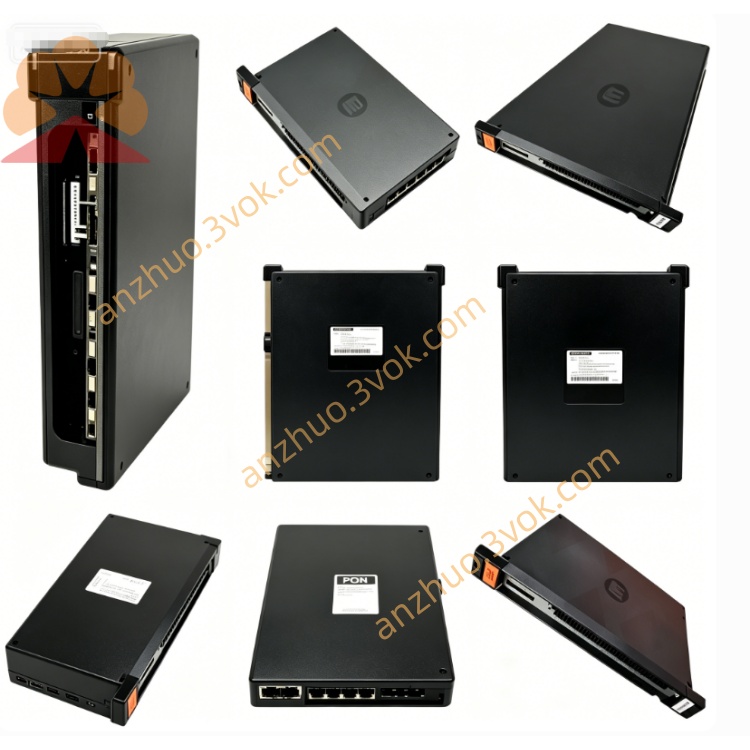
Reliance 57C431B high-performance, revised-generation CPU processor module
The 57C431B is a high-performance, revised-generation CPU processor module in the Reliance Electric AutoMax 57C rack-based control system, also known as AutoMax 6011 Processor (revision B). It is an enhanced hardware revision of the 57C431, featuring upgraded circuitry, optimized firmware, improved EMI immunity, and more robust thermal design for long-term industrial operation. As the core control unit for AutoMax distributed control racks, it executes user programs, manages rack-wide I/O and communication resources, and provides advanced diagnostic capabilities. The module is end-of-life from the original manufacturer and is supplied as a high-reliability replacement part for legacy AutoMax system maintenance and retrofitting.
Description
Product Brief Introduction
The 57C431B is a high-performance, revised-generation CPU processor module in the Reliance Electric AutoMax 57C rack-based control system, also known as AutoMax 6011 Processor (revision B). It is an enhanced hardware revision of the 57C431, featuring upgraded circuitry, optimized firmware, improved EMI immunity, and more robust thermal design for long-term industrial operation. As the core control unit for AutoMax distributed control racks, it executes user programs, manages rack-wide I/O and communication resources, and provides advanced diagnostic capabilities. The module is end-of-life from the original manufacturer and is supplied as a high-reliability replacement part for legacy AutoMax system maintenance and retrofitting.
Model Definition
57C denotes the standard rack-mounted hardware platform of the Reliance AutoMax control system. 431 is the unique functional code for the high-performance main processor, distinguishing it from other 57C series modules (e.g., communication, memory, or I/O modules). The suffix B indicates the second hardware revision, incorporating component upgrades, revised PCB layout, enhanced surge protection, and updated firmware to resolve known issues in earlier 57C430/430A/431 versions, ensuring higher stability and compatibility.
Technical Specifications
Power is supplied via the chassis backplane at 5V DC with an average operating current of 3000mA. It features parity-checked internal RAM for program and data storage, backed by an onboard lithium battery to retain memory during power outages. Operating ambient temperature ranges from 0°C to 60°C; storage temperature from -40°C to 85°C. Relative humidity is 5% to 90% non-condensing. The module includes a hardware watchdog for automatic reset on program runaway, two green status LEDs (BAT OK, OK), and two 7-segment LED displays for fault code diagnostics. It occupies one standard slot (slots 0–4 only) in the AutoMax rack, with dimensions 11.75” H × 1.25” W × 7.37” D and average power dissipation of 15 watts. Compared to the base 57C431, the B revision offers improved temperature resistance, lower failure rate, and wider compatibility with older rack backplanes.
Interface and Communication Configuration
Internal communication uses gold finger connectors to interface with the AutoMax Multibus backplane, enabling real-time data exchange with all rack-mounted modules. The front panel provides two isolated 25-pin RS-232C serial ports: PORT B (PROGRAMMER) for program downloading and local debugging, and PORT A for connecting HMIs or host systems. The primary processor’s PORT B is dedicated to PC connection for multi-processor rack communication. No onboard Ethernet or fieldbus is available; external networking requires compatible 57C series communication modules like the 57C429. The B revision enhances RS-232 port surge protection and signal stability for long-distance wiring.
Core Functions
It executes user application programs (Ladder Logic, Structured Text) to perform discrete logic control, PID regulation, and equipment interlocking. It scans local I/O modules to collect analog/digital signals and outputs control commands based on program logic. It manages system memory, caches data, and facilitates cross-module data sharing. It coordinates communication between the local rack and external devices via expansion modules. It monitors onboard battery voltage, backplane power, and operational status, displaying fault codes for diagnostics. It supports multi-processor configuration in a single rack for distributed control of complex processes. The B revision adds enhanced fault logging, faster error recovery, and improved multi-tasking efficiency for high-load applications.
Application Scenarios
It serves as the core controller in automotive assembly lines, textile continuous processing machinery, and paper machine drive systems. It is deployed in control cabinets for metallurgical auxiliary equipment, rubber/plastic molding lines, and centralized water treatment pump stations. It is a critical replacement part for aging AutoMax systems in printing presses and chemical processing plants. The B revision is preferred for high-vibration, high-noise industrial environments where enhanced reliability and stability are required.
Operation and Maintenance Instructions
Always disconnect rack power before installing or removing the module to avoid hot-plug damage. Insert along chassis rails and tighten front panel screws to ensure secure backplane contact. Regularly check the BAT OK LED; replace the lithium battery promptly if the indicator is off to prevent data loss. Clean dust from the module surface and cabinet vents with dry compressed air every 3–6 months; never use liquid cleaners on the circuit board. Use shielded cables for RS-232 wiring and separate signal cables from high-voltage power cables. In case of startup failure, check the 7-segment fault codes first, then verify backplane connections and wiring before replacing the module. Store spare modules in a dry, temperature-controlled area away from corrosive gases and strong electromagnetic interference. Unauthorized disassembly or modification of onboard components is prohibited without factory approval. The B revision requires no special maintenance beyond standard practices, but periodic firmware checks (via the programming port) are recommended for optimal performance.
Get a Quote