
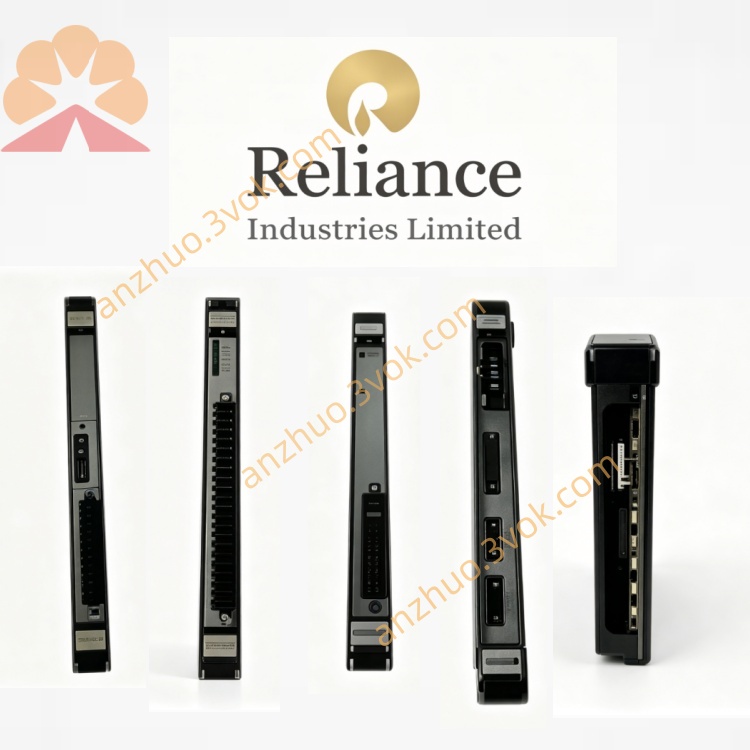
Reliance 57C430 main CPU processor module
The 57C430 is a main CPU processor module belonging to Reliance Electric AutoMax 57C rack series control system. It serves as core control unit of the whole rack system, undertaking user control program execution, internal data calculation and resource scheduling of all installed I/O and communication modules. This industrial grade CPU module dominates logic control, process regulation and linkage coordination of field automation equipment. It has been phased out of original factory mass production and is mainly applied as spare replacement component for maintenance and retrofit of legacy AutoMax production control equipment.
Description
Product Brief Introduction
The 57C430 is a main CPU processor module belonging to Reliance Electric AutoMax 57C rack series control system. It serves as core control unit of the whole rack system, undertaking user control program execution, internal data calculation and resource scheduling of all installed I/O and communication modules. This industrial grade CPU module dominates logic control, process regulation and linkage coordination of field automation equipment. It has been phased out of original factory mass production and is mainly applied as spare replacement component for maintenance and retrofit of legacy AutoMax production control equipment.
Model Definition
57C stands for standard rack-mounted hardware platform code of Reliance AutoMax distributed control system. 430 is exclusive function coding representing main processor configuration, which distinguishes from communication, memory and motion modules in identical product line. Standard version without suffix letter is original basic edition, while versions with A or B suffix represent updated hardware revision with optimized circuit design and component upgrading.
Technical Specifications
The module is powered by 5V DC supplied from chassis backplane bus with relatively large rated operating current. It is equipped with fixed built-in system RAM with parity check function for program and runtime data storage. Working ambient temperature ranges from 0 degree Celsius to 60 degree Celsius, storage temperature ranges from minus 40 degree Celsius to 85 degree Celsius. Applicable working relative humidity is limited between 5 percent and 90 percent without condensation. Internal backup lithium battery is configured to keep stored data when main power cuts off. Multiple status indicator lamps and digital fault code display window are arranged on front panel, and built-in hardware watchdog circuit ensures abnormal system reset upon program runaway. The module occupies single standard slot inside AutoMax control chassis.
Interface and Communication Configuration
Internal data interaction is completed via gold finger contacting with proprietary AutoMax Multibus backplane bus to exchange real-time instructions and operational data with all peripheral modules mounted on same rack. Two independent RS232 serial ports are arranged on module front panel, one port for programming download and local fault diagnosis, another port for connecting upper HMI equipment or monitoring host. No integrated onboard fieldbus or Ethernet interface is available, remote network interconnection needs to cooperate with matched 57C series dedicated communication expansion modules such as 57C429.
Core Functions
It executes compiled user application programs to complete discrete logic control, PID process adjustment and interlock operation of on-site automation equipment. It periodically scans all local I/O modules to collect field digital and analog signals and outputs corresponding control instructions according to program operation result. It manages internal system memory resource and conducts data caching and calculation for cross-module data transmission. It coordinates communication tasks between rack internal modules and external network equipment through matching communication modules. It monitors own operating state, backup battery voltage and backplane power condition, outputs corresponding fault codes and alarm signals once abnormal situation is detected. It supports multi-processor parallel installation inside one rack to realize distributed cooperative control of complex production lines.
Application Scenarios
It is widely used as core control unit for automobile assembly production line, textile continuous spinning and weaving equipment, papermaking roller transmission automation system. It is configured inside control cabinet of metallurgy auxiliary processing equipment, rubber and plastic forming production line and centralized water treatment pumping station group. It is the primary replacement spare part for damaged main controller on aging AutoMax control equipment of printing machinery and chemical raw material processing workshops.
Operation and Maintenance Instructions
Completely cut off rack power supply before installing or removing module to avoid circuit damage caused by hot plug. Insert module along chassis guide rail and tighten front panel fixing screw to guarantee full contact between gold finger and backplane slot. Check backup battery status regularly according to indicator lamp, replace battery timely once low voltage alarm occurs to prevent program data loss after power failure. Clear accumulated dust on module surface and cabinet ventilation gaps with dry compressed air every three to six months, never spray liquid cleaner directly onto circuit board. Use standard shielding wire for external RS232 wiring and separate signal cable from high-power cable during construction. Check front panel fault display code preferentially when system startup failure appears, inspect backplane connection and peripheral wiring before replacing spare module. Preserve standby modules in dry constant-temperature storage environment away from corrosive gas and strong electromagnetic radiation environment. Unauthorized disassembly or modification of original onboard components is strictly forbidden without manufacturer official authorization.
Get a Quote