
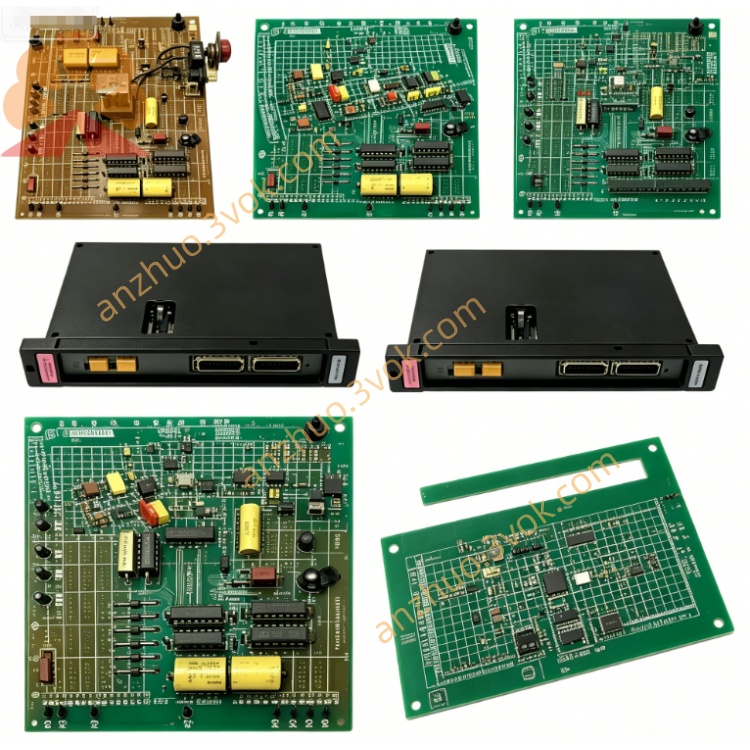
Reliance 57C4230B enhanced revision shared memory and remote I/O master communication module
The 57C4230B is an enhanced revision shared memory and remote I/O master communication module under Reliance Electric AutoMax 57C rack module series. It is an upgraded derivative based on standard 57C423 design with optimized internal circuit layout and improved component reliability for long-cycle industrial operation. The module serves as data exchange hub between multiple main processors inside control rack and works as master station to manage field distributed remote I/O slave nodes. It realizes high-speed cross-processor data synchronization via backplane bus and is widely used for spare part replacement and old AutoMax control cabinet renovation across traditional automation production fields.
Description
Product Brief Introduction
The 57C4230B is an enhanced revision shared memory and remote I/O master communication module under Reliance Electric AutoMax 57C rack module series. It is an upgraded derivative based on standard 57C423 design with optimized internal circuit layout and improved component reliability for long-cycle industrial operation. The module serves as data exchange hub between multiple main processors inside control rack and works as master station to manage field distributed remote I/O slave nodes. It realizes high-speed cross-processor data synchronization via backplane bus and is widely used for spare part replacement and old AutoMax control cabinet renovation across traditional automation production fields.
Model Definition
57C represents Reliance standard rack-mounted hardware platform dedicated to AutoMax distributed control system. 423 stands for core functional code of shared memory plus remote I/O master communication. The trailing 0B indicates revised hardware version B with updated internal circuit and enhanced fault diagnosis performance, maintaining full mechanical and electrical compatibility with basic 57C423 module.
Technical Specifications
The module obtains 5V DC operating power from chassis backplane with fixed normal operating current. Equipped with onboard dual-port shared memory for inter-processor data buffering and system parameter storage. Operating ambient temperature ranges from 0 degree Celsius to 60 degree Celsius, storage temperature ranges from minus 20 degree Celsius to 70 degree Celsius. Working relative humidity is limited between 5 percent and 95 percent without condensation. Built-in hardware watchdog circuit as well as overvoltage and overcurrent protection components, complying with North American industrial anti-vibration and basic electromagnetic compatibility requirements. Multiple status indicator LEDs are arranged on front panel to reflect power supply, running status and communication fault information.
Interface and Communication Configuration
Internal data transmission relies on gold finger contact with proprietary AutoMax backplane bus to complete real-time data interaction with rack CPU modules and other peripheral functional modules. Several isolated external communication ports are reserved on front panel to connect field remote I/O equipment through shielded twisted cables. One RS232 debugging interface is configured for on-site parameter configuration, fault checking and firmware maintenance. No native fieldbus interface is integrated on module, access to upper industrial network needs to match additional dedicated 57C series communication expansion modules.
Core Functions
It supplies shared memory area to implement real-time data sharing and parameter synchronization among multiple processors installed inside the same control rack. It operates as remote I/O master unit to periodically poll distributed field I/O nodes, collect on-site analog and digital signals and transmit corresponding control commands to slave ends. It stores partial system configuration data to reduce calculation burden of host control processors. It continuously monitors backplane bus operating status and external remote communication links, uploading corresponding fault codes and alarm signals once abnormal communication occurs. It coordinates data transmission between local rack internal equipment and scattered field I/O terminals to guarantee overall system data consistency.
Application Scenarios
It is deployed in multi-processor coordinated control system of packaging production lines, textile continuous processing equipment and automated material conveying facilities. It acts as core communication component for auxiliary control cabinets of chemical industry, distributed I/O control system of water treatment equipment and legacy printing machinery control units. It is commonly used for replacement of damaged original communication hardware during equipment maintenance of rubber processing workshops and small metallurgy auxiliary production lines with aging AutoMax control configuration.
Operation and Maintenance Instructions
Cut off full rack power supply before plugging or removing the module to prevent circuit damage caused by hot plug operation. Fasten front panel fixing screw after complete slot installation to ensure stable contact of backplane gold fingers. Remove dust accumulated on module surface and cabinet ventilation gaps with dry compressed air every three to six months according to on-site dust density, never apply liquid cleaning solvent directly onto circuit board. Adopt shielded wiring for all external communication connections and separate signal cables from high-power cables during wiring construction. Check external wiring tightness and terminal condition preferentially when recurring communication failure appears, replace qualified spare 57C4230B module if internal hardware failure is confirmed. Preserve standby modules in dry constant-temperature storage space away from corrosive gas and intensive electromagnetic interference environment. Unauthorized disassembly or modification of original onboard electronic components is strictly prohibited without official manufacturer permission.
Get a Quote