
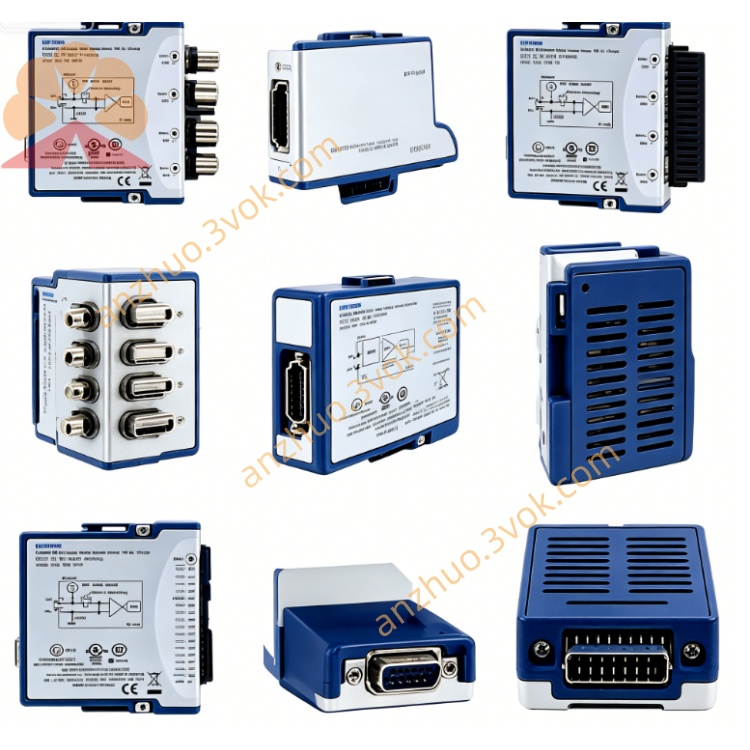
NI SCXI-1162HV 32-Channel Optically Isolated High-Voltage Digital Input Module
Description
I. Product Introduction
NI SCXI-1162HV is a 32-channel high-voltage optically isolated digital input module of the SCXI series. It is an enhanced version of SCXI-1162, capable of directly collecting industrial high-voltage AC and DC digital signals and switch states. The module adopts a grouped isolation design, with a higher insulation withstand voltage level, suitable for monitoring high-voltage circuits in power and automation fields, and has outstanding anti-interference capabilities. This product has been discontinued but still offers maintenance services. Inventory and second-hand equipment in the market can also be used normally.
II. Model Interpretation
SCXI represents the instrument signal conditioning expansion series. 1162 is the base model, corresponding to a 32-channel optically isolated digital input module. The suffix HV indicates the high-voltage version, representing a high-voltage enhanced design, which expands the input voltage range and isolation withstand voltage. The standard component number of the product is 776572-62H.
III. Technical Parameters
The module has 32 digital input channels, divided into eight independent isolated groups, each group containing four channels. The input voltage covers a range from five volts DC to two hundred and forty volts AC and DC, compatible with TTL logic levels, twenty-four volts industrial DC, one hundred and twenty volts and two hundred and forty volts industrial AC. The isolation groups and the backplane of the module can withstand a continuous isolation voltage of three hundred volts AC, meeting the industrial CAT II safety standards. The input level is clearly defined, with the low-level threshold not exceeding the supply voltage minus four volts, and the high-level threshold not less than the supply voltage minus one point five volts. The typical response time of a single channel is zero point six milliseconds, with a maximum not exceeding one millisecond, supporting the input of the highest one thousand hertz pulse signal, and the leakage current of a single channel does not exceed one microampere. The module is powered by five volts DC from the SCXI backplane, and the overall power consumption is approximately two watts. The standard operating temperature range is zero degrees Celsius to fifty-five degrees Celsius, the storage temperature range is minus forty degrees Celsius to eighty-five degrees Celsius, and the working environment humidity requirement is five to ninety-five percent without condensation. The module has six sets of user jumpers onboard, which can be used to switch input level modes and high-voltage operation modes.
IV. Interface and Communication Configuration
The front of the module is equipped with a 96-pin DIN connector, which is used in conjunction with the SCXI-1326 high-voltage dedicated terminal block. It adopts a screw-type wiring structure and is suitable for high-voltage line wiring and insulation requirements. The back is connected to the SCXI standard backplane bus, relying on the bus to complete power supply, address identification and data transmission, supporting multi-module installation in the same chassis and cascading expansion. The module does not have an independent external communication interface. It establishes data interaction through the SCXI bus and the backend DAQ equipment, and is paired with NI-DAQmx, NI-SWITCH driver software to complete parameter configuration, channel status reading, and is compatible with mainstream development environments such as LabVIEW, C language, and .NET.
V. Core Functions
It has the ability to directly sample high-voltage signals, without the need for additional voltage conversion equipment, and can directly connect to two hundred and forty-volt AC and DC high-voltage switches, relay contact signals. The eight-channel grouped isolation architecture has excellent insulation performance between groups and can connect signals of different voltage levels within the same module to avoid mutual interference. The wide voltage compatibility feature also enables it to adapt to both low-voltage logic signals and industrial high-voltage signals, with wide application scenarios. The optically isolated circuit is combined with a high insulation design, effectively resisting electromagnetic interference and line surges generated by equipment such as frequency converters and motors, ensuring stable data acquisition. A single module integrates 32 channels, combined with the cascading method of multiple modules, enabling the rapid establishment of large-scale high-voltage digital quantity monitoring systems.
VI. Application Scenarios
It is mainly used for monitoring the on-off status of circuit breakers and relay auxiliary contacts in high and low voltage distribution cabinets. It is suitable for signal acquisition of high-voltage proximity switches, limit switches, and solenoid valve circuits in industrial automation production lines. It can monitor the status of high-pressure safety circuits and operation feedback contacts of industrial equipment such as fans, water pumps, and large-scale units. It is applicable to industrial sites with high voltages and strong electromagnetic interference such as power plants, petrochemical plants, and rail transit, and can complete distributed digital inspection work at multiple points.
VII. Usage and Maintenance Instructions Instruction Manual
Before installing the module, make sure to cut off the power supply of the SCXI chassis. Insert the module into the slot and tighten the fixing screws. When using multiple modules together, set each module with an independent address to prevent address conflicts. Clearly distinguish between the high-voltage circuit and the low-voltage circuit, and separate the wiring. Select the matching high-voltage terminal block to ensure secure connections and proper insulation protection. Adjust the onboard jumpers according to the on-site signal type, switch to the corresponding high-voltage working mode, and check the wiring to ensure there are no errors before connecting the power supply. During the operation of the equipment, do not perform hot-plugging of the modules to prevent damage to the internal optocouplers and circuits caused by high-voltage surges.
Maintenance Instructions
Maintain the equipment in a well-ventilated and dry environment, away from corrosive gases and intense vibrations. Strictly avoid condensation on the equipment and connection terminals. Regularly inspect the connection terminals, cables, and connectors to check for any aging, loosening, or damaged outer shells. Tighten and replace the wiring in a timely manner. Regularly clean the dust on the module surface to ensure proper heat dissipation. When encountering abnormal channel reading or signal misjudgment, prioritize troubleshooting external high-voltage lines, contact point status, and wiring conditions, and then check the module jumper settings, bus connections, and driver configurations. Before the equipment is left idle for a long time, disconnect all power supplies and external lines, clean them, and store them in a cool and dry place.
Get a Quote