
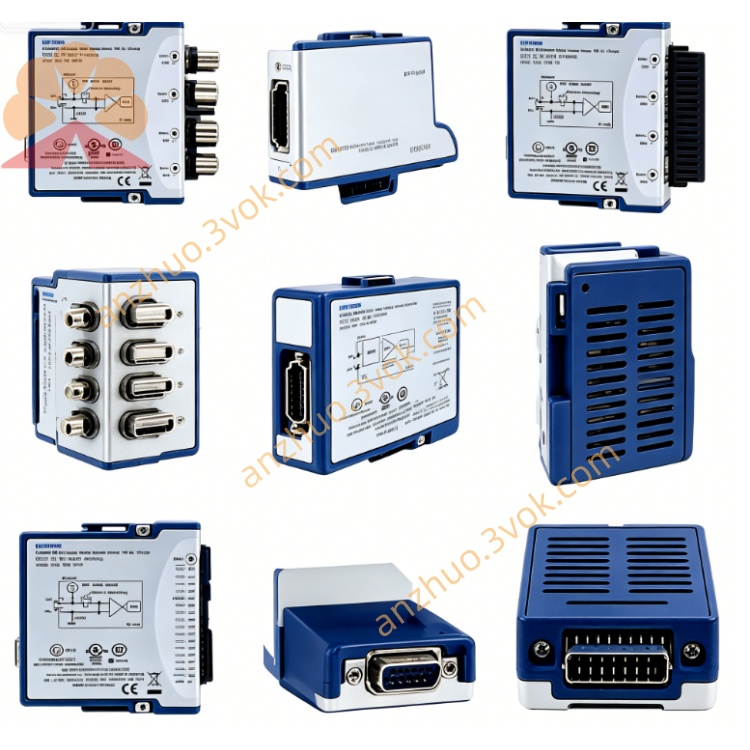
NI SCXI-1102C 32-Channel High-Voltage Multiplexer Analog Input Module
Description
I. Product Introduction
The NI SCXI-1102C is a wide-temperature enhanced version of SCXI-1102, a 32-channel high-precision thermocouple / low-level signal conditioning module, specially designed for harsh industrial environments. The core is the same as 1102 (each channel has an independent instrumentation amplifier + 2Hz low-pass filter, hardware CJC), with the main difference being that the operating temperature is extended to -20℃ to +70℃, suitable for outdoor, cold regions, or high-temperature cabinet scenarios. It is obsolete (Out of Production), repairable or available for purchase of second-hand / in stock.
II. Model Interpretation
SCXI: Instrument Signal Conditioning Expansion Series
1102: Basic Model (32 channels, independent PGA, 2Hz low-pass, thermocouple dedicated)
C: Commercial Extended Temperature, wide-temperature version
Part Number: 776572-02 (standard), 776572-02L (long-life)
III. Technical Parameters (Compared with 1102)
Total Parameters
Channels: 32 differential inputs (non-single-ended), channel-to-channel isolation 500VDC
Inputs: Thermocouple (J/K/T/E/R/S/B/N), ±100mV, ±10V, 0–20mA/4–20mA
Input Impedance: 100MΩ; CMRR: 120dB
Gain: Each channel software two settings: ±100mV (×100), ±10V (×1)
Filter: Each channel fixed 2Hz low-pass (suppress 50/60Hz)
Maximum Scanning Rate: 333kS/s (approximately 3μs / channel)
ADC: 12 bits (effective approximately 11.5 bits)
CJC: Built-in high precision, each channel hardware scan, accuracy ±0.5℃
Overvoltage Protection: ±42V
Power Consumption: 5V ≤15mA; ±15V ≤150mA
Key Differences (Unique to 1102C)
Operating Temperature: -20℃ ~ +70℃ (Standard 1102: 0℃ ~ +50℃)
Storage Temperature: -40℃ ~ +85℃
Stability: The gain/offset indicators are more stringent within the wide temperature range, making it suitable for long-term unattended monitoring.
IV. Interface and Terminal Compatibility
Front Panel: 96-pin DIN C female connector
Back Panel: 50-pin ribbon cable male connector
Recommended Terminals: SCXI-1303 (specific for thermocouples, with CJC and open-circuit detection), SCXI-1300 (general-purpose)
V. Core Functions
Wide Temperature High Precision Measurement: -20℃ ~ +70℃ Maintains stable accuracy, ideal for cold regions / high-temperature environments
Each Channel Independent Adjustment: 32 independent amplifiers + 2Hz filtering, with extremely low channel crosstalk
Industrial-grade Anti-interference: 120dB CMRR + 2Hz low-pass filter, stable millivolt-level signals in strong electromagnetic environments
Multi-sensor Compatibility: Thermocouples, voltage, current direct acquisition; with SCXI-1581, RTD can be measured
High-density Expansion: Single chassis (SCXI-1001) can accommodate up to 12 units, reaching 384 channels
VI. Application Scenarios
Outdoor / Cold Region Temperature Monitoring: Wind power, photovoltaics, polar regions / northern factories, with large temperature fluctuations
High-temperature cabinets / equipment rooms: Metallurgy, cement, glass industries, with cabinet internal temperatures reaching 60℃+
Long-term Unattended Systems: Energy pipelines, remote base stations, field research stations, requiring stable operation throughout the year
Automobile / Aviation Environment Testing: High-low temperature cycling chambers, cabin temperature testing, temperature range covering -20℃ ~ +70℃
Military / Vehicle Testing: Vehicle equipment, field military instruments, adapted to extreme temperatures
VII. Usage and Maintenance
Usage Tips
Installation: Power off and insert SCXI chassis, supports hot swapping
Connection: Prefer SCXI-1303, correctly connect the positive and negative terminals of the thermocouple to the CJC terminals
Configuration: Set channel type, gain, and filtering in NI-DAQmx; enable CJC
System: The chassis connects to DAQ (such as PCIe-6251) via 68-pin SCSI; multiple chassis have a unique address
Maintenance Tips
Environment: Keep the operating temperature within -20℃ ~ +70℃ to avoid condensation
Calibration: Conduct once a year, focus on calibrating gain and CJC accuracy
Faults: Large drift → Check CJC wiring / Calibration; Signal jump → Check grounding and shielding
Get a Quote