
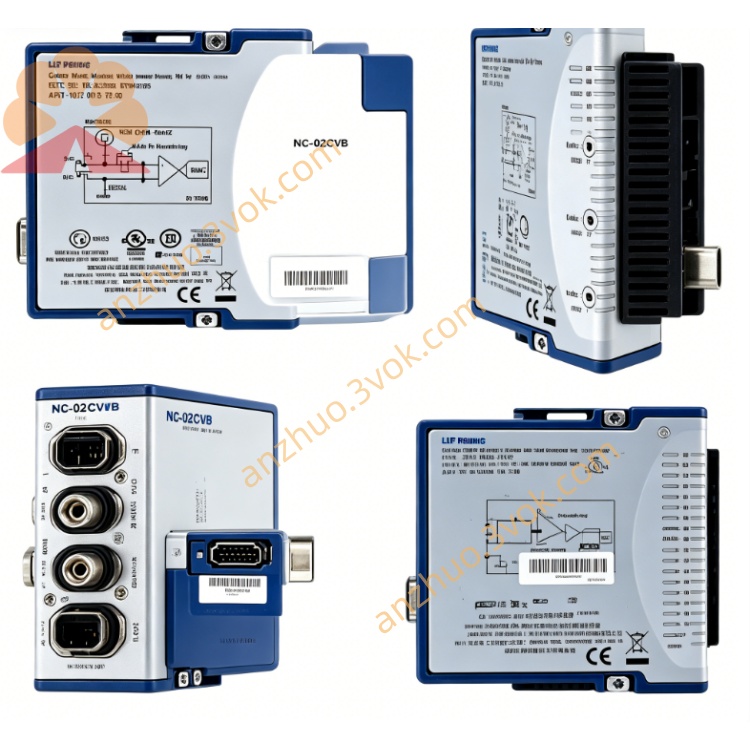
NI R1005050 (182762-0R5) 100-Pin 0.5m DAQ Ribbon Cable
Description
I. Product Introduction
NI R1005050 (Part Number 182762-0R5) is a 100-pin to 2×50-pin IDC flat cable produced by National Instruments (NI), used to distribute the NI 100-pin digital I/O device to two 50-pin interfaces, suitable for high-density digital I/O system wiring.
II. Model Interpretation
R1005050: Ribbon Cable (flat cable), 100-pin to 50-pin ×2.
182762-0R5: NI standard part number, 0R5 represents a length of 0.5 meters.
NB6: Old model name, now unified as R1005050.
III. Technical Parameters
Type: IDC Flat Strip Cable.
One end: 1×100-pin with 0.050-inch pitch female connector.
The other end: 2×50-pin IDC female connector (split into two paths).
Length: 0.5 meters (standard).
Wire gauge: 28 AWG, multi-strand copper core.
Insulation: PVC, gray.
Impedance: Compatible with 5V TTL/CMOS digital signals.
Rated voltage: 300V AC, UL certified.
Operating temperature: -20°C to + 70°C.
RoHS: Compliant with the EU environmental directive.
IV. Compatible Devices
USB-6509, PCI-6509, PXI-6508.
PCI-6527, PXI-6527, PCI-6025E.
Other NI devices with 100-pin digital I/O connectors.
V. Core Functions
Split-to-Two: The 100-pin interface is divided into two 50-pin paths, facilitating wiring and module connection.
High-density Connection: Compatible with 96-channel digital I/O devices, meeting the multi-channel switch/sensor connection requirements for industrial automation and test measurement.
Reliable Transmission: The flat cable has strong anti-interference ability, suitable for short-distance high-speed digital signal transmission.
VI. Application Scenarios
Industrial Automation: PLC, DIO modules, relay boards, sensor array connections.
Test Measurement: Semiconductor testing, functional testing, ATE system's digital I/O wiring.
Laboratory Equipment: Connection of NI data acquisition cards and connectors, terminal blocks.
VII. Usage and Maintenance
Installation: Plug the NI device into the 100-pin end, split the two 50-pin ends to connect the target module, and secure the clips to ensure good contact.
Maintenance: Avoid excessive bending, pulling; keep away from high temperatures, oil stains, and strong electromagnetic interference; regularly check for any looseness or oxidation of the connectors.
Get a Quote