
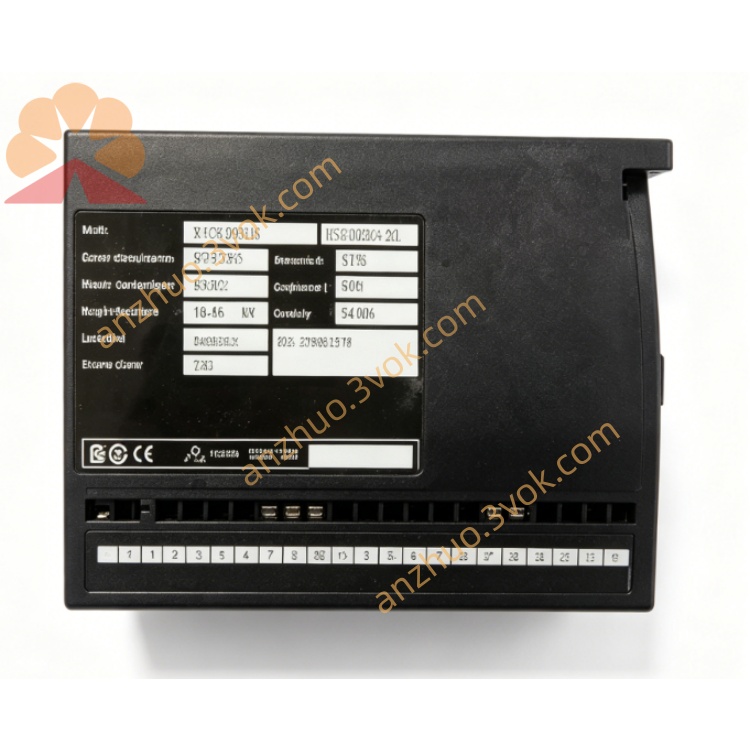
DEIF 100154635.2 Genset Control Spare Part
Description
1. Product Overview
2. Main Features
Industrial wide temperature design, adapt to low temperature and high temperature working environment
Complete electrical isolation between power supply, input and output circuits
Support passive dry contact and active 24VDC digital input signal
High-capacity relay output contact, with strong load driving capability
Analog input supports standard 4~20mA and 0~10VDC signal adaptive sampling
Onboard RS485 communication interface, standard Modbus RTU protocol
Built-in reverse connection, overvoltage, overcurrent and lightning surge protection
Low power consumption, no need for daily maintenance, long service life
Standard 35mm DIN rail mounting, easy installation and wiring
With working status and channel indicator lights for real-time fault judgment
3. Technical Specifications
3.1 Power Supply Parameters
3.2 Digital Input
3.3 Relay Output
3.4 Analog Input
3.5 Communication Parameters
3.6 Environmental Conditions
3.7 Mechanical Structure
4. Application Scope
Diesel / gas generator set signal acquisition and logic control
Marine engine room monitoring, alarm system and automation control
Industrial production line PLC remote I/O expansion
Power distribution cabinet signal collection and interlock control
Wind energy, solar energy new energy control system signal expansion
Building automation, equipment auxiliary monitoring and signal conversion
5. Installation and Wiring Instructions
5.1 Installation Requirements
The module shall be vertically mounted on standard 35mm DIN rail inside the control cabinet.
Reserve more than 20mm ventilation space around the module, do not block the heat dissipation gap.
Keep away from frequency converters, large contactors and high-power equipment to reduce electromagnetic interference.
Take anti-static measures before installation to avoid static electricity damaging internal circuits.
Do not install in environment with corrosive gas, heavy dust, water dripping and condensation.
5.2 General Wiring Rules
All wiring operations must be performed under complete power-off condition, only qualified electrical personnel can construct and maintain.
Power supply circuit uses 1.5~2.5mm² copper wire; signal circuit uses 1.0~1.5mm² twisted pair wire.
Analog signal and RS485 communication line must use shielded twisted pair cable.
Terminal screws shall be tightened with torque of 0.8~1.0Nm to prevent poor contact and heating.
High-voltage power lines and low-voltage signal lines shall be routed separately and not bundled together.
5.3 Terminal Definition
Power terminals: 24VDC positive, 24VDC negative, protective earth PE
Digital input terminals: Each channel signal input and public common terminal
Relay output terminals: Each group relay NO, COM, NC contact
Analog input terminals: Analog positive, analog negative and signal ground
Communication terminals: RS485 A, RS485 B, signal ground
5.4 Wiring Notes
The PE protective earth terminal must be reliably connected to the cabinet ground for safety and anti-interference.
Digital dry contact input wiring should avoid long-distance parallel with power cables.
Relay output is strictly prohibited to exceed rated voltage and current; inductive load must be equipped with absorption device.
The shielding layer of shielded cable is only grounded at one end, no double-end grounding is allowed.
It is forbidden to short-circuit the power input terminal, otherwise the internal circuit will be permanently damaged.
6. Operation and Parameter Configuration
6.1 Indicator Description
6.2 Configuration Steps
Connect the module RS485 interface to PC via USB to RS485 converter.
Open the supporting configuration software and establish communication connection.
Set Modbus station address, baud rate, parity and other communication parameters.
Configure analog signal type, sampling filter and range parameters.
Set digital input logic definition and relay output interlock relation.
Save parameters to the module, restart to make all settings take effect.
6.3 Normal Working Mode
7. Safety Precautions
There is electric shock risk in the circuit. All installation, wiring and maintenance must be operated in power-off state.
It is forbidden to disassemble the module shell without authorization, which will void the warranty and cause electrical safety hazards.
Do not apply overvoltage beyond the specified range to power supply and signal terminals.
Prohibit use in ultra-high temperature, ultra-low temperature and strong vibration environment beyond specification limits.
Avoid short-circuit of relay output contacts to prevent burning internal relay and circuit board.
Residual charge remains inside the module after power off; do not touch the terminals immediately.
8. Daily Maintenance
Regularly check whether the terminal wiring is loose, oxidized or discolored.
Wipe the surface dust regularly with dry soft cloth; do not use liquid corrosive detergent.
Observe the indicator status during daily operation to judge working state.
Retighten all terminals every 12 months, and test each input and output channel one by one.
Regularly check communication stability and analog signal accuracy, calibrate if deviation occurs.
9. Troubleshooting
Power indicator not lit: 24VDC power supply abnormal, reverse wiring or internal fuse damaged.
Run indicator abnormal: Internal program error, parameter confusion or hardware failure.
Digital input no response: Wrong wiring, signal source damage or channel burnout.
Relay output no action: Parameter configuration error, load short circuit or relay contact ablation.
Analog signal inaccurate: Signal line interference, wrong signal type setting or line aging.
Communication interruption: Wrong baud rate and address, A/B line reversed or cable broken.
10. Warranty and Disclaimer
Product Part No.: 100154635.2 Industrial Expansion I/O Module
Warranty period: 24 months from delivery date under normal installation and use conditions.
The warranty does not cover damage caused by wrong wiring, overvoltage, lightning strike, water ingress, artificial disassembly and use beyond specification environment.
The manufacturer reserves the right to update product specifications and manual content without prior notice.
The manufacturer shall not be liable for any indirect loss caused by improper installation and operation.
Get a Quote