
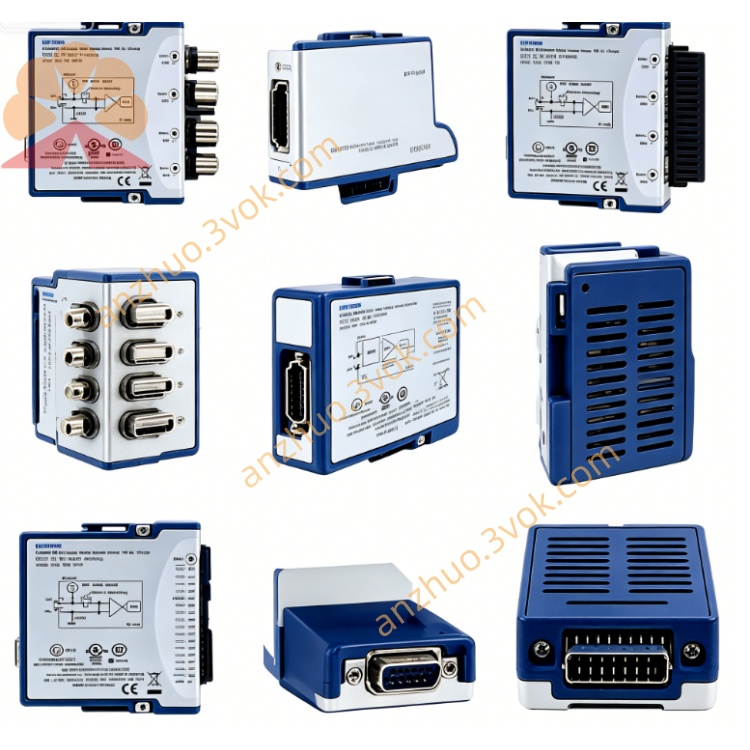
NI PXIe-2541 300MHz 8×12 RF Matrix Switch Module
Description
Model Nomenclature
PXIe: PXI Express bus interface
25: NI switch/matrix product series
41: 8×12 RF matrix, 300 MHz, MCX connectors, 50 Ω systemNI
Technical Specifications
Form factor: 3U, 1‑slot PXIe (hybrid/peripheral slot)
Matrix topology: 8 rows × 12 columns = 96 crosspoints, non‑blocking
Impedance: 50 Ω
Frequency range: DC to 300 MHzNI
Relay type: Non‑latching reed, rhodium‑plated contacts
Switching voltage: 60 VDC / 42.4 Vpk AC
Switching current: 0.5 A (AC/DC) per channel
Switching power: Max 10 W DC per channel
RF power: Max 10 W (50 Ω, derated with frequency/channels)
Insertion loss: Typical <2.1 dB @ 300 MHz
Isolation: >75 dB @ 300 MHz
Scan rate: 100 cycles/s
Relay life: >10⁷ operations (rated conditions)
Operating temperature: 0 °C to 55 °C; storage: −20 °C to 70 °C
Power consumption: 10 W @ 12 V, 2.5 W @ 3.3 V (PXIe)
Dimensions: 21.6 × 2.0 × 13.0 cm; weight: 410 g
Interface and Communication Configuration
Front‑panel I/O: 28×MCX female connectors (8 row + 12 column)
Bus: PXIe Gen1, plug‑and‑playNI
Triggering: PXI trigger lines 0–7, programmable pulse width (1 μs to 62 μs) for multi‑module synchronization
Software support: NI‑MAX for configuration; LabVIEW, LabWindows/CVI, C++ APIs with NI‑SWITCH driverNI
Compatibility: Windows OS, PXIe chassis (3U)NI
Core Features
Full non‑blocking matrix: Any row connects to any column simultaneously for flexible, independent signal routingNI.
High RF performance: Isolation relays disconnect unused paths, ensuring high isolation and low crosstalkNI.
50 Ω matched system: Optimized for RF signal integrity up to 300 MHz.
Expandable: Cascades with other PXIe‑2541 modules to form 8×24, 8×36 or larger matricesNI.
Long‑life reed relays: Rhodium contacts provide stable, reliable operation for mass‑production test systems.
Deterministic hardware triggering: Enables precise, repeatable switching in automated sequences.
Application Scenarios
Functional testing of wireless devices/modules up to 300 MHzNI.
RF signal routing between signal generators, spectrum analyzers, digitizers and test instrumentsNI.
Semiconductor RF parametric testing.
Automotive electronics and industrial communication equipment verification.
General‑purpose RF automated test systems requiring high‑density, non‑blocking switchingNI.
Get a Quote