
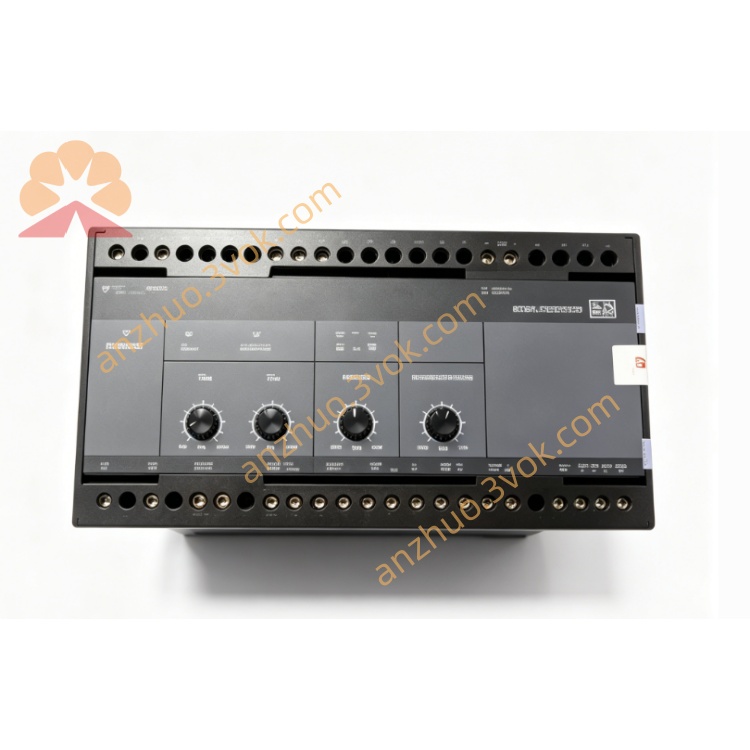
Description
1. Product Overview

2. Key Features
Integrated Transducers: Built‑in active power (kW) and frequency (Hz) sensorsDEIF.
Dual Control Modes:
Isochronous: Zero droop, tight frequency regulation (stand‑alone/grid)DEIF.
Constant Power: Fixed setpoint for base‑load operationDEIF.
Load Sharing: Matches load proportionally among parallel gensets (different sizes supported).
Governor Interface: Two relay outputs (increase/decrease speed) for mechanical/electronic governorsDEIF.
LED Status Indicators: Power, Run, Frequency, Load, and Control outputsDEIF.
Adjustable Settings: Gain, droop, load setpoint, and frequency trim via front‑panel potentiometersDEIF.
Fail‑Safe: Disables paralleling outputs if generator breaker opens or mains fail.
Certified: CE, IEC 60068, and marine‑ready variants availableDEIF.
3. Technical Specifications
3.1 Electrical Ratings
| Parameter | Specification |
|---|---|
| Model | LSU‑112DG (Active Load Sharing Unit) |
| Manufacturer | DEIF A/S |
| Controlled Gensets | 1 (for parallel operation with up to 16 units) |
| Input Signals | |
| – Voltage | 100–440 VAC, 50/60 Hz (L1/L2) |
| – Current | 5 A AC (CT secondary, 3 phases) |
| – Frequency Range | 40–70 Hz (45–65 Hz nominal) |
| – Aux Supply | 24 VDC ±20% (18–32 VDC), ≤10 W |
| Outputs | |
| – Speed Control Relays | 2 × 250 VAC / 5 A (NO/COM) |
| – Paralleling Signals | Isolated, 0–10 V / 4–20 mA (load share) |
| Measurement Accuracy | |
| – Power | ±0.5% FS @ 25 °C |
| – Frequency | ±0.1 Hz |
| Isolation | 2.5 kV AC (1 min) I/O‑to‑supply |
3.2 Environmental & Mechanical
| Parameter | Specification |
|---|---|
| Operating Temperature | –20 °C to +70 °C (standard); –40 °C to +70 °C (marine) |
| Storage Temperature | –40 °C to +85 °C |
| Humidity | 5–95% RH non‑condensing |
| Vibration | 2–13.2 Hz: ±1 mm; 13.2–100 Hz: ±0.7 g |
| Enclosure | IP20 (front), IP00 (rear) |
| Dimensions (W×H×D) | 155 × 110 × 75 mm |
| Weight | Approx. 0.8 kg |
| Mounting | 35 mm DIN rail or base plateDEIF |
4. Application Scope
Land‑Based Gensets: Stand‑alone, grid‑parallel, or multi‑genset CHP plantsDEIF.
Marine Power Systems: Shipboard genset parallel operation, island mode, and DP supportDEIF.
Offshore Platforms: Oil/gas rig load sharing, black‑start, and frequency controlDEIF.
Hybrid Systems: Diesel/gas gensets with wind/solar/battery storage (load smoothing)DEIF.
Emergency Power: Critical infrastructure backup (hospitals, data centres) with paralleling capabilityDEIF.
5. Installation & Wiring
5.1 Installation Requirements
Mounting: Install on 35 mm DIN rail or base plate; ≥50 mm clearance for ventilationDEIF.
Environment: Avoid direct sunlight, moisture, corrosive gases, and excessive vibrationDEIF.
ESD Protection: Use anti‑static wristband when handling (static‑sensitive components)DEIF.
Cable Separation: Separate AC voltage/current cables from DC control cables by ≥10 cmDEIF.
5.2 Terminal Wiring (Simplified)
| Terminal Group | Description | Wire Gauge |
|---|---|---|
| Power | ||
| 1–2 | 24 VDC (+/−) | 1.5 mm² |
| 3 | Chassis ground (PE) | 2.5 mm² |
| AC Voltage (L1/L2) | ||
| 4–5 | 100–440 VAC (line‑line) | 2.5 mm² |
| AC Current (CTs) | ||
| 6–8 | 5 A AC (CT secondary, 3 phases) | 2.5 mm² |
| Speed Control Relays | ||
| 9–10 | Relay 1: Increase speed (NO/COM) | 1.5 mm² |
| 11–12 | Relay 2: Decrease speed (NO/COM) | 1.5 mm² |
| Paralleling I/O | ||
| 13–14 | Load share signal (0–10 V / 4–20 mA) | 1.0 mm² |
| 15 | Breaker status input (24 VDC) | 1.0 mm² |
CT Connection: Use 5 A CTs (3 phases); ensure correct polarity (L1/L2/L3)DEIF.
Shielded Cables: Use twisted‑pair shielded cables for current/voltage signals; ground shield at one end onlyDEIF.
Terminal Torque: Tighten terminals to 0.8–1.0 Nm to avoid loose connectionsDEIF.
Fusing: Protect AC voltage inputs with a 2 A slow‑blow fuse.
6. Front Panel & Operation
6.1 Front Panel Layout
LED Indicators (Left to Right)
POWER: On = 24 VDC present.
RUN: Flashes = normal operation; solid = fault.
FREQ: On = frequency within tolerance; flashing = out of range.
LOAD: On = load > 10%; flashing = overload (>110%).
CONTROL: On = speed control active (increase/decrease).
Potentiometers (Adjustments)
GAIN: Load‑sharing response speed (0–100%).
DROOP: Speed droop (0–5%) for parallel stability.
LOAD SET: Target active power setpoint (0–100% of genset rating).
FREQ TRIM: Fine frequency adjustment (±2 Hz).
6.2 Startup & Configuration
Power On: Apply 24 VDC; POWER LED on; RUN LED flashes.
AC Inputs: Connect L1/L2 voltage and CT current inputs; FREQ LED lights if frequency is 40–70 HzDEIF.
Mode Selection:
Isochronous: Set DROOP to 0%; for stand‑alone or grid‑parallel frequency controlDEIF.
Constant Power: Set LOAD SET to desired kW; for base‑load operationDEIF.
Load Sharing Tuning: Adjust GAIN (start at 50%) for stable load balance (no hunting)DEIF.
Frequency Trim: Use FREQ TRIM to match grid frequency (±0.1 Hz) before parallelingDEIF.
Parallel Operation: Close generator breaker; LOAD LED indicates load level; CONTROL LEDs show speed control activityDEIF.
7. Safety Precautions
High Voltage Hazard: Only qualified electricians may install/service; disconnect all power (DC + AC) before wiringDEIF.
CT Safety: Never open‑circuit CT secondary terminals (risk of lethal voltage)DEIF.
ESD Risk: Static electricity can damage the PCB; use anti‑static protectionDEIF.
Relay Output Caution: Speed control relays switch high voltages; ensure load ratings are not exceededDEIF.
No Unauthorised Modification: Do not open the enclosure; tampering voids the warrantyDEIF.
Environmental Limits: Do not operate outside –20 °C to +70 °C (standard) or –40 °C to +70 °C (marine)DEIF.
8. Maintenance & Storage
8.1 Regular Maintenance (Every 6 Months)
Visual Inspection: Loose terminals, damaged wiring, corrosion, or overheating signsDEIF.
Cleaning: Wipe front panel with dry cloth; no liquid cleanersDEIF.
LED Check: Verify POWER/RUN/FREQ/LOAD/CONTROL LEDs operate correctlyDEIF.
Calibration Check: Compare measured power/frequency with external meter (±0.5% accuracy)DEIF.
Cable Tightness: Retorque terminals to 0.8–1.0 NmDEIF.
Relay Test: Verify speed control relays activate when load is unbalancedDEIF.
8.2 Storage Guidelines
Condition: Original anti‑static packaging, 10–30 °C, 30–70% RHDEIF.
Environment: Dry, avoid direct sunlight/extreme tempsDEIF.
Duration: Shelf life ≤2 years; inspect for ESD damage before use if stored longerDEIF.
9. Troubleshooting
| Fault Phenomenon | Possible Cause | Solution |
|---|---|---|
| POWER LED Off | No 24 VDC / blown fuse | Check power wiring; replace 2 A fuseDEIF |
| RUN LED Solid (Fault) | AC input missing / CT open circuit / overvoltage | Check L1/L2 voltage; verify CT connectionsDEIF |
| FREQ LED Flashing | Frequency <40 Hz or >70 Hz | Adjust genset speed to 45–65 HzDEIF |
| LOAD LED Off (No Load) | CT wiring fault / genset not loaded | Check CT polarity; increase load on gensetDEIF |
| Load Sharing Unstable (Hunting) | GAIN too high / DROOP too low | Reduce GAIN; increase DROOP (1–3%)DEIF |
| Cannot Parallel (Frequency Mismatch) | FREQ TRIM misadjusted / grid frequency drift | Trim frequency to match grid (±0.1 Hz)DEIF |
10. Warranty & Disclaimer
Model: LSU‑112DG Active Load Sharing UnitDEIF.
Warranty Period: 24 months from delivery date (normal installation/use)DEIF.
Warranty Exclusions: Misuse, overvoltage, lightning, water ingress, unauthorised modification, or improper maintenanceDEIF.
Specifications Subject to Change: Manufacturer reserves the right to update specifications without prior noticeDEIF.
Liability Limitation: Manufacturer is not liable for indirect or consequential damages (e.g., downtime, lost revenue)DEIF.
Documentation Version: 1.0 (2026); latest manual available at www.deif.comDEIF.
Get a Quote