
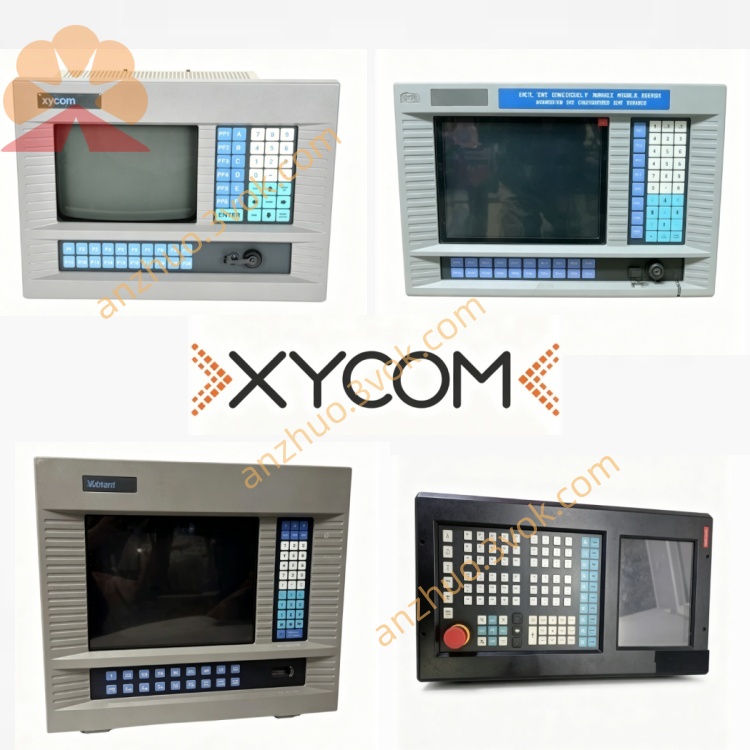
XYCOM XVME-103 VMEbus Ethernet Communication Module
Description
XYCOM XVME-103 (VMEbus 3U High-capacity Multi-type Storage Module) Detailed Product Description
I. Product Overview
XYCOM XVME-103 (Material Number 74103-001) is a 3U single-height VMEbus high-performance storage expansion module launched by XYCOM (now part of Acromag). It provides a large-capacity, multi-type, and highly reliable program and data storage solution for VME bus industrial control systems. It is compatible with four types of chips: RAM/EPROM/Flash/EEPROM, and supports power-off protection and independent configuration. It is suitable for long-life industrial equipment, embedded systems, and harsh environment VME platforms. The product has been discontinued and the market mainly consists of second-hand / refurbished spare parts. It offers larger capacity, more flexible configuration, and higher data security.
II. Model Positioning and Core Functions
Model Positioning: XVME-103 is a 3U high-end storage module, an upgraded version of XVME-100. The core improvements include larger capacity, Flash support, enhanced power management, and compatibility with all standard 3U VME enclosures and backplanes. It is the core unit for large-capacity program storage, critical data backup, and firmware固化 in VME systems.
Core Functions:
Large-capacity program storage: Carries large firmware for VME master control modules (such as XVME-661), real-time operating systems, and complex applications. Supports EPROM/Flash固化 and RAM dynamic operation;
Critical data security backup: Through battery backup for RAM or Flash/E EEPROM, stores process parameters, equipment status, calibration data, and operation logs. Data is permanently saved in case of power loss, preventing loss and tampering;
Expansion for outdated systems: Expands existing VME platforms, supports Flash replacing traditional EPROM, without the need to replace the master control, extending equipment lifespan, and reducing renovation costs;
Military / Aerospace high-reliability scenarios: For airborne control, radar data processing, navigation systems, etc., with high vibration, wide temperature, and long lifecycle requirements, meeting military standards.
III. Core Functional Characteristics
1. Standard 3U VMEbus interface, fully compatible
Fully complies with VMEbus IEEE 1014 standard (2.0/3.0 compatible), 3U single-slot design, supports A24 address space, DTB slave device mode, compatible with all standard 3U VME enclosures and backplanes, seamlessly compatible with all XYCOM VME modules and third-party standard VME devices, plug-and-play, no complex configuration required.
2. Dual storage groups + eight slots, support for multiple types of large capacity
Board-mounted 2 independent storage groups (Bank1/Bank2), each group has 4 32-pin JEDEC standard slots, a total of 8 slots, supports RAM, EPROM, Flash, and EEPROM chips, each group can independently configure chip type, capacity, and speed, far exceeding those of similar products:
Maximum capacity: RAM 4MB, EPROM 8MB, Flash 4MB, EEPROM 4MB;
Supported chip specifications: 8K×8 to 512K×8 (RAM/EPROM/Flash), 32K×8 and below (EEPROM);
Speed compatibility: 100ns, 150ns, 200ns, 250ns, compatible with different bus timings;
Read-write characteristics: Supports ** read - modify - write (RMW) ** cycle, compatible with complex data operations.
3. Triple power-off protection, data security guaranteed
Board-mounted lithium battery backup: Integrated high-capacity lithium battery, specifically for CMOS RAM power supply, automatically switches seamlessly in case of power failure, preventing data loss;
Dual backup power options: Supports board-mounted battery or VME backplane + 5V STDBY backup power, flexible jumpers for switching, compatible with different power supply scenarios;
Intelligent power monitoring: Built-in power monitor, +5V below 4.75V automatically disables storage chips and locks write operations to avoid data damage due to low voltage; automatically detects backup power status upon power-on, triggers indicator light alarms in case of abnormalities.
4. Independent jumper configuration, flexible adaptation for multiple systems
Board-mounted multiple sets of configuration jumpers and switches, can be independently set:
A24 base address of storage groups (to avoid address conflicts);
Chip type and speed matching; Backup power mode (battery / STD BY);
Write protection is linked with the SYSFAIL/SYSRESET signal;
No need to modify the hardware; it can be adapted to different system address planning through jumper settings, with flexible and efficient configuration.
5. Industrial-grade high-reliability design, suitable for harsh environments
Wide temperature operation: working temperature 0℃~+65℃, storage temperature -40℃~+85℃, covering temperature fluctuations in industrial sites;
Anti-vibration / shock: 3U rugged board card, metal panel fixation, anti-vibration 1g (10–100Hz), anti-shock 15g, suitable for equipment vibration and transportation shock;
Electromagnetic compatibility: complies with CE/FCC Class A standards, gold-plated gold fingers on the board, shielding design, anti-static, anti-electromagnetic interference, can operate stably near strong interference equipment;
Low power consumption design: typical power consumption 5W (+5V@1A), maximum 6W, no additional cooling required, low heat generation and high stability during long-term operation.
6. Status visual indication, quick fault location
The panel is equipped with multiple groups of LED indicators: POWER (power), BATT (low battery), FAIL (fault), Bank1/Bank2 ACT (storage group activity):
POWER: constantly on indicates normal +5V power supply;
BATT: lights up to indicate low battery, requires timely replacement;
FAIL: constantly on indicates power abnormality, battery failure or storage error;
Bank ACT: flashes indicating the corresponding storage group is reading and writing data;
No software required to quickly determine module status and read/write activities, maintenance is efficient and convenient.
Four. Hardware Specification Overview
Bus and interface
Bus standard: VMEbus IEEE 1014 (2.0/3.0 compatible);
Address space: A24 (16MB addressing range);
Device mode: DTB slave device;
Slot specification: 8 32-pin JEDEC slots, divided into 2 groups (Bank1/Bank2).
Storage configuration
Supported chips: CMOS RAM, EPROM, Flash, EEPROM;
Maximum capacity: RAM 4MB, EPROM 8MB, Flash 4MB, EEPROM 4MB;
Chip speed: 100ns, 150ns, 200ns, 250ns (jumper selection);
Backup power: high-capacity lithium battery or +5V STDBY (jumper switching).
Electrical parameters
Operating power: +5V DC ±5%, typical 1A, maximum 1.2A;
Power consumption: typical 5W, maximum 6W;
Power protection: overvoltage, overcurrent, reverse connection protection, undervoltage lockout (4.75V threshold).
Environmental and mechanical parameters
Working temperature: 0℃~+65℃;
Storage temperature: -40℃~+85℃;
Humidity: 10%~90% RH (no condensation);
Anti-vibration: 1g (10–100Hz);
Anti-shock: 15g;
Size: standard 3U VME (100mm×160mm), single slot;
Weight: approximately 0.35kg.
Five. Main Application Scenarios
1. Large-capacity program storage for VME master control systems
Combined with XVME-661, XVME-686 and other VME master control modules, it stores large operating systems, complex firmware and applications, supports Flash replacing traditional EPROM, reads and writes faster, longer lifespan, and more convenient erasing and writing, suitable for semiconductor equipment, industrial robots, metallurgical control and other scenarios.
2. Critical process parameter and data security backup In the fields of chemical engineering, power generation, water treatment, and pharmaceuticals, storage devices store calibration data, process formulas, operation logs, and production records. Through battery-backed RAM or Flash, they achieve permanent preservation even in the event of power loss, preventing parameter loss, ensuring production continuity, and meeting data traceability requirements.
3. Military and aerospace embedded systems
Used in airborne control, radar data processing, navigation systems, weapon control, etc. in high-reliability, wide-temperature, and strong-vibration scenarios, it provides large-capacity program固化, data caching, and power-off protection, meeting military standards such as MIL-STD-810.
4. Upgrading and replacement of old VME systems
Directly replace XVME-100, XVME-101, etc., the old 3U memory modules, without the need to redesign hardware or rewrite programs. It is compatible with the existing VME bus architecture and master module, supports Flash upgrade, improves capacity and stability, and reduces renovation costs.
5. Embedded system development and debugging
As a large-capacity program storage and data caching unit for VME bus embedded development platforms, it supports Flash online burning, program debugging, and data log recording. It is suitable for university research, enterprise R&D, etc.
Six. Installation and maintenance key points Installation steps
Box Preparation: Select a standard 3U VME chassis with a backplane, confirm normal +5V power supply and no oxidation on the slots;
Wire Configuration: According to the system address planning, set the base address of the storage group, chip speed, and backup power mode (battery / STD BY);
Chip Installation: Insert the RAM/EPROM/Flash/EEPROM chips in the direction indicated by the slot markings, ensuring good contact of the pins, no skewing, or loose insertion;
Board Installation: Align the 3U slot and push it in smoothly, tighten the panel fixing screws to ensure good contact between the gold fingers and the backplane;
Power On Debugging: After powering on, the POWER light is always on; the BATT light is off indicating normal battery; the FAIL light is off meaning the module is operating normally; through the read/write test of the master control module, verify the storage function, data backup, and the validity of Flash erasing.
Daily Maintenance
Regular Cleaning: Disconnect the power supply every 3 months, use a dry soft cloth to wipe the boards and gold fingers. The gold fingers can be lightly wiped with an alcohol cotton swab to prevent oxidation and poor contact;
Battery Check: Check the BATT indicator light status every 1 year. Replace the lithium battery in time when it is lit to avoid data loss;
Configuration Check: Regularly check if the wire positions are loose or offset to ensure correct address, speed, and backup mode configuration;
Chip Check: Check if the chip is loose, burned out, if the pins are oxidized, and if the Flash chip is regularly checked for erasing life;
Environmental Monitoring: Keep the working environment temperature and humidity within the allowable range to avoid dust, corrosive gases, and strong electromagnetic interference.
Common Fault Troubleshooting
POWER light does not light up: Check if the +5V power supply on the VME backplane is normal; troubleshoot oxidation or poor contact of the gold fingers; check if the power circuit of the board is damaged;
BATT light is on: Battery is low; replace the lithium battery in time; check if the contact of the battery seat is good;
FAIL light is always on: Check if the +5V voltage is lower than 4.75V; troubleshoot battery faults; check if the chip is inserted in the wrong direction, damaged, or short-circuited;
Data Loss: Check if the battery is ineffective; confirm the correct configuration of the backup power wire; troubleshoot chip damage or abnormal write protection;
Read/Write Errors: Verify if the chip speed wire is matched; check if the address configuration is conflicting; troubleshoot loose soldering or poor contact of the chip pins;
Flash Erase Failure: Check the model of the Flash chip and the wire configuration; confirm the state of the write protection switch; troubleshoot chip damage.
VII. Product Core Advantages
The XYCOM XVME-103 is a 3U VME bus high-end large-capacity multi-type storage module. Its core advantages lie in standard VME compatibility, dual storage groups with eight slots, support for large-capacity multiple chips, triple power-off protection, Flash compatibility, industrial-grade high reliability, and flexible configuration for easy maintenance. It solves the pain points of traditional VME storage modules with small capacity, single chip type, and weak data security, and is suitable for harsh working conditions and long lifecycle requirements in multiple fields. The spare parts are stable, there is an abundant second-hand market, and the cost performance is high. It is an ideal storage choice for building and maintaining high-end VME industrial control systems.
Get a Quote