
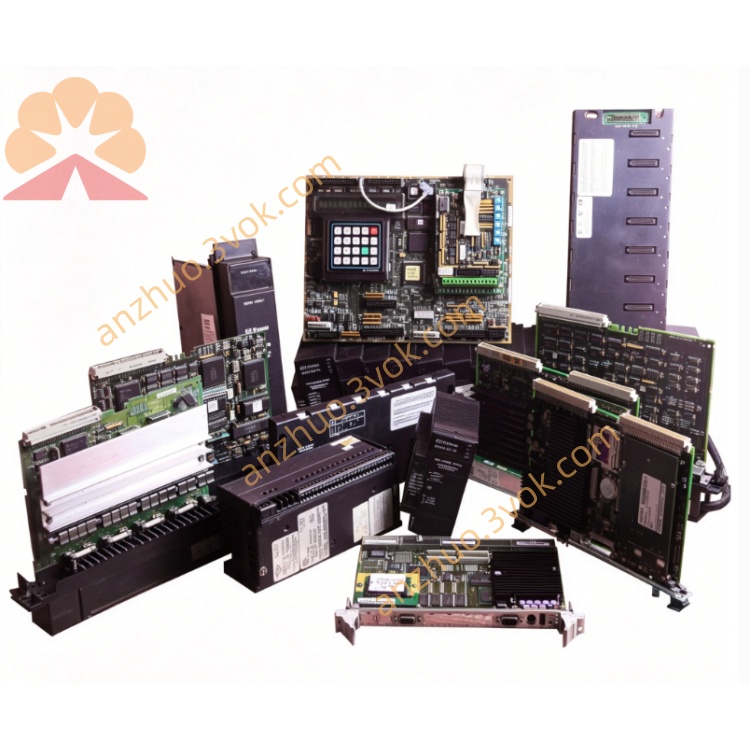
XYCOM XVME-201 VME Digital Input Module
Description
Detailed Product Description of XYCOM XVME-201 I. Product Overview
The XVME-201 is a 3U single-height VMEbus high-density TTL digital I/O module launched by XYCOM (now belonging to Acromag/Xembedded). It is an enhanced version of the XVME-200, featuring 48 TTL level input/output channels, dual 24-bit timers, hardware handshake and VME interrupt capabilities. It is specifically designed for high-density switch control and timing measurement scenarios, and is widely applicable to semiconductor equipment, industrial robots, power and chemical control, as well as military and aerospace embedded systems. This module has been officially discontinued. Currently, the market availability is mainly in the form of second-hand, refurbished, and inventory spare parts.
Core positioning
As a standard VMEbus interface module, XVME-201 emphasizes the integrated functions of "high-density I/O + integrated timing control". The series includes XVME-200 (32 channels), XVME-290 (6U 32 channels), and XVME-201. The core difference of XVME-201 is its 48 I/O channels, meeting the control requirements of more nodes.
II. Core Functional Characteristics
1. Standard VMEbus interface (fully compatible design)
Fully complies with IEEE 1014 VMEbus 2.0/3.0 bus specifications, compatible with all standard 3U VME chassis and backplanes. The address space adopts A16 (64KB), the base address can be flexibly configured through jumpers on the module, avoiding address conflicts. Data width supports D16/D08 (EO), compatible with 8-bit and 16-bit data transmission modes, suitable for different bit-width system architectures. It has complete VME interrupt capability, supports IRQ1 to IRQ7 interrupt lines, interrupt vectors and priorities can be set through software programming to meet real-time response requirements. The backplane connection only requires P1 connector, no need for P2 auxiliary interface, simplifying the wiring of the chassis and the difficulty of adaptation.
2. 48 TTL level I/O (software configurable direction)
Provides 48 5V TTL level input and output channels, the channels are divided into 6 independent 8-bit ports (Port A to Port F), the port division is clear, facilitating group control and management. All I/O channels support software independent configuration of direction, each 8-bit port can be set as input mode or output mode independently, without hardware modification, suitable for different signal flow requirements. Electrical characteristics strictly match TTL standards: input high level ≥ 2.0V, low level ≤ 0.8V, compatible with various TTL level sensors and switch signals; output current sinking / current sourcing both reach 24mA, can directly drive TTL loads, small relays and indicator lights, no additional driver circuits required. All input channels have buffering, output channels have latch function, with hardware anti-interference design, reducing signal fluctuations caused by electromagnetic interference in industrial sites. The front panel is equipped with 2×50-pin SCSI-II connectors, pin definitions are fully compatible with OPTO 22 isolation modules, can directly connect to isolation terminal boards, achieving strong and weak signal isolation, improving system safety.
3. Dual 24-bit programmable timers / counters
The module integrates 2 Motorola MC68230 PI/T chips, equipped with 2 independent 24-bit timers / counters, the maximum count value can reach 16,777,215, the timing accuracy is typically 1μs, meeting high-precision timing control requirements. Timers support various working modes, can be flexibly configured through software: single-time timing, cycle timing, pulse width modulation (PWM), event counting, frequency measurement, delay trigger and pulse generation, suitable for motor speed control, timing triggering, pulse capture and other scenarios. When the timer overflows or counts complete, it can trigger VME interrupt, achieving precise timing linkage and event notification, without CPU polling, reducing system resource occupation.
4. Hardware handshake and programmable interrupt response
Each 8-bit port is equipped with independent ACK (acknowledgment) and STB (selection) hardware handshake signals, suitable for high-speed data interaction of peripherals such as printers, PLCs, and high-speed sensors, ensuring stable and reliable data transmission, avoiding data loss. Interrupt trigger sources are abundant, supporting three types of event-triggered interrupts: changes in input channel level status, timer count overflow, and handshake signal status change, covering the vast majority of real-time control scenarios. The interrupt function is fully programmable, allowing for enabling or disabling interrupts, configuring interrupt vector numbers and priorities, adapting to different interrupt management strategies of different systems, and achieving priority scheduling and rapid response.
5. Industrial-grade high reliability design
It adopts a wide-temperature design, with a standard working temperature range of 0°C to +70°C, and can be extended to adapt to a storage temperature range of -40°C to +85°C, meeting the requirements of industrial sites, outdoor equipment, and military applications, etc. The anti-vibration and anti-shock capability complies with industrial standards, capable of withstanding 1g (10–100Hz) vibration and 15g impact, adapting to the vibration scenarios during equipment operation, avoiding module loosening or failure. The EMC performance is compliant, passing CE/FCC Class A certification, the circuit board uses gold-plated gold fingers and shielding design, reducing electromagnetic interference and improving system stability. Low power consumption, typical operating power consumption is +5V@1.0A (approximately 5W), low heat generation, no need for additional heat dissipation modules, suitable for enclosed chassis environments.
6. Panel status indicator lights
The front panel is equipped with 5 sets of status indicator lights, intuitively displaying the module operation status: the POWER indicator light, which is always on when the power is normal, goes off when the power is off or the voltage is abnormal; the RUN indicator light, which is always on when the module is powered on self-checking and running normally, goes off or flashes when there is a fault; the INT indicator light, which flashes when a VME interrupt is triggered, goes off or flashes when there is no interrupt; the Port A–F ACT indicator lights, which flash when the corresponding ports perform read/write operations, facilitating quick location of port communication status.
III. Hardware Specifications Details
Bus-related specifications
The bus protocol is IEEE 1014 VMEbus 2.0/3.0, in slave device mode; address space A16 (64KB), base address jumper configuration; data width D16/D08 (EO); interrupt support IRQ1–IRQ7, programmable vector and priority; backplane interface only P1 connector.
I/O channel specifications
Total number of channels 48, 5V TTL level; port division 6 independent 8-bit ports (A–F); direction configuration for each port is independently set by software as input/output; input level high ≥ 2.0V, low ≤ 0.8V; output drive pull-in / pull-out current 24mA; handshake signal for each port is ACK/STB; connector is 2×50-pin SCSI-II, compatible with OPTO 22.
Timer specifications
Core chip 2 Motorola MC68230 PI/T; timer quantity 2 independent 24-bit; maximum count value 16777215; resolution 1μs (typical); working modes include timing, counting, PWM, interrupt triggering, etc.
Electrical and environmental specifications
Power supply +5V DC ±5%, typical current 1.0A; operating temperature 0°C to +70°C; storage temperature -40°C to +85°C; anti-vibration 1g (10–100Hz); anti-shock 15g; size 3U (100mm×160mm), single slot; weight approximately 0.35kg.
IV. Comparison of Similar Series Models
XVME-201 is a 3U specification, equipped with 48 TTL I/O and dual 24-bit timers, the core advantage is high-density I/O, suitable for multi-node control scenarios; XVME-200 is also of 3U specification, equipped with 32 TTL I/O channels and dual 24-bit timers, it is a standard model with high cost performance; XVME-290 is of 6U specification, equipped with 32 TTL I/O channels and dual 24-bit timers, it is compatible with 6U chassis and supports P2 backplane output.
V. Typical Application Scenarios
1. High-density industrial automation control
Suitable for multi-station switch quantity control in assembly lines, multi-axis equipment I/O signal acquisition, electromagnetic valve and relay cluster control, motor start-stop and status monitoring. Each module can cover 48 control nodes, reducing the number of modules and simplifying the system architecture.
2. Complex equipment status monitoring
Can connect multiple sets of limit switches, proximity switches, photoelectric switches, etc., to collect equipment position, travel and operation status; compatible with large control panels, control buttons, indicator lights, alarm lights array, to achieve visual monitoring of equipment status.
3. Precise timing and motion control
Utilizing dual 24-bit timers, realize multi-channel synchronous triggering, timing delay linkage, PWM signal output (compatible with motor speed control, valve opening degree control), pulse generation and counting (compatible with encoder signal acquisition, speed measurement).
4. Upgrade and maintenance of old VME systems
Directly replace the XVME-200 or I/O modules of the same specification in the old system, without modifying the hardware architecture and rewriting the control program, quickly restore the equipment function, and extend the service life of old VME equipment in the semiconductor, power, military industries, etc.
5. Data acquisition and event recording
Used for encoder pulse counting, multi-channel frequency measurement, equipment operation event capture and recording, combined with interrupt function, real-time upload of key data, meeting the requirements of production process traceability and equipment fault diagnosis.
VI. Installation and Programming Key Points Installation steps
Preparations: Ensure that the P1 slot of the VME chassis is intact, the +5V power supply is stable, and there are no short circuits or abnormal voltage issues;
Jumper configuration: According to the system address planning, set the module base address jumper; configure the interrupt vectors, interrupt priorities, and handshake mode jumpers as needed;
Module insertion: Align the XVME-201 with the 3U slot, push it in smoothly, ensure that the gold fingers are in good contact with the backplane, tighten the panel fixing screws to prevent loosening;
Cable connection: Connect the 2×50-pin SCSI-II connector of the front cover to the on-site I/O device or OPTO 22 isolation module, check the connection pins to avoid misconnection and open circuit;
Power-on self-test: After the chassis is powered on, observe the panel indicator lights, POWER is constantly on, RUN is on, and INT does not flash, indicating that the module self-test is passed and the system is running normally.
Programming process (simplified)
Address mapping: Configure the A16 base address in the system, map the internal registers of the module to the system memory space, establish a communication channel between the CPU and the module;
Port direction configuration: Write configuration data to the module control register, set Port A-F to input or output mode to match the direction of external device signals;
Output control: Write high or low level data to the output port register to control the action of external actuators (such as relays, indicators);
Input reading: Read the data in the input port register to obtain the status signals of external sensors and switches, upload them to the system for processing;
Timer configuration: Set the timer initial value, working mode (timer / counter / PWM), enable timer interrupts, configure the interrupt trigger conditions;
Interrupt service program: Write the interrupt handling logic, respond to input level changes, timer overflows, etc., execute corresponding control or data processing operations.
Seven, Core Advantages
1. High-density I/O, high integration
48 TTL I/O single module integrates 48 channels, more than XVME-200 by 16 channels, a single slot covers more control nodes, reduces chassis slot occupation, and lowers system hardware cost.
2. Function integration, no additional modules required
Integrates I/O control and dual 24-bit timer functions, covers both switch quantity control and precise timing requirements, no need to configure additional timer modules, simplifies system design.
3. Flexible programmability, strong adaptability
Port direction, interrupt vectors, timer modes all support software programming, can adapt to different scenarios without hardware modifications, shortens system debugging cycle.
4. Industrial-grade reliability, suitable for harsh environments
Wide temperature, anti-vibration, anti-interference design, gold-plated gold fingers and shielding process, suitable for industrial sites, outdoor, military, etc., stable operation over a long period.
5. Strong compatibility, easy integration and maintenance
Standard VMEbus interface, OPTO 22 compatible connector, can directly connect to mainstream VME systems and isolation devices; discontinued but spare parts are sufficient, suitable for upgrading and maintenance of old systems, low replacement cost.
Eight, Precautions
The module is out of production. When purchasing, prefer to choose second-hand or refurbished spare parts with complete test reports, check the model (70201-001/70201-002 are common order numbers) and version, avoid purchasing faulty or incompatible modules;
There is no onboard backup battery, internal configuration data (such as port direction, timer parameters) cannot be saved after the module loses power, key configurations need to be reinitialized after power-on, important running data is recommended to be backed up with an external storage device. During installation and maintenance, proper static protection must be ensured. Wear anti-static wristbands and operate on an anti-static workbench to prevent static electricity from damaging the chips and causing module damage.
The output channel's driving capacity is 24mA. It cannot directly drive high-power loads (such as high-power motors, heaters), and needs to be converted through intermediate devices like relays and contactors.
Get a Quote