
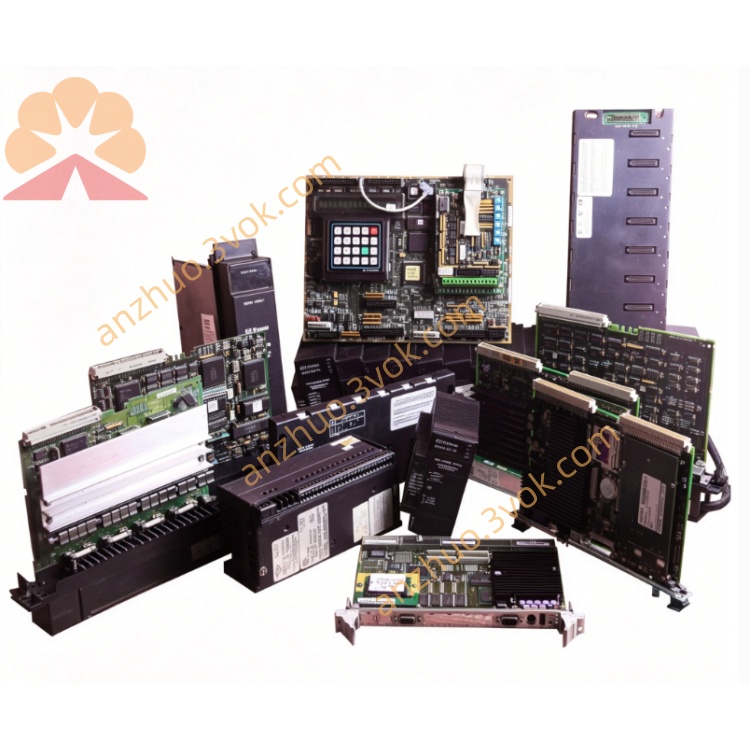
XYCOM XVME-220 VME Digital I/O Control Module
Description
Detailed Product Description of XYCOM XVME-220
I. Product Overview
The XVME-220 is a 6U dual-high VMEbus 32-channel isolated digital output module launched by XYCOM (now belonging to Acromag/Xembedded). Its core function is to drive and control the switch quantities of actuators such as relays, solenoid valves, indicator lights, and contactors in industrial fields. It is the core module for high-density and high-reliability digital output in the VME system. This module has been officially discontinued and is mainly available in second-hand, refurbished, and inventory spare parts in the market. The standard order number is 70220-001. Core positioning
As a VMEbus peripheral device, the XVME-220 emphasizes the integrated capabilities of "32-channel optical isolation output + open-collector drive + power-on safety shutdown + output readback", which is compatible with a 6U VME chassis. It can solve the control requirements for large-scale actuators in a single slot, featuring strong driving capability and high anti-interference performance, and is suitable for harsh industrial environments.
II. Core Functional Characteristics
1. Standard VMEbus Interface (Fully Compatible Design)
Complies with the IEEE 1014 VMEbus specification, compatible with all 6U VME chassis and backplanes, operating in device mode. The address space uses A16 (64KB), occupying a fixed 1KB address range, with the base address configurable via onboard jumpers to avoid system address conflicts. Data width supports D08/D16, compatible with 8-bit and 16-bit data transmission, suitable for different bit-width VME master controllers. Backplane connection requires P1 and P2 connectors, adhering to the standard design for dual-height VME modules, without interrupt functionality, focusing on output control.
2. 32 Isolated Digital Output Channels (Core Function)
Provides 32 independent digital output channels, with a single module achieving high-density actuator parallel driving, compatible with relays, solenoid valves, indicator lights, small contactors, etc. of on-site equipment. Uses channel-level optocouplers for isolation, with isolation voltage up to 300VDC (channel-to-channel, channel-to-bus ground), effectively blocking industrial site ground potential differences and electromagnetic interference, protecting the system bus and enhancing drive stability.
The output circuit is of open-collector (Open-Collector) structure, with a maximum load of 30VDC, 100mA per channel. It can directly drive TTL loads, small relays, LED indicators, or drive higher voltage/current actuators through an external power supply. All channels integrate transient suppression circuits to absorb high-voltage spikes when inductive loads (such as relay coils) are de-energized, preventing module damage.
3. Power-On/Reset Safe Shutdown Design
The module has a hardware default safety mechanism: when the system powers on or is reset by software, all output channels automatically forcibly shut down (high-impedance state), preventing accidental actions during power-on that could cause equipment failures or safety risks, in line with industrial safety control standards.
4. Output Status Readback Function
Supports software readback of output status. Through the VME bus, it can read the current output level of 32 channels, facilitating real-time monitoring of actuator status, diagnosing line faults (such as open circuits, load short circuits), and improving control reliability and maintainability.
5. Industrial-grade High Reliability Design
Standard operating temperature range: 0℃~+70℃ (some wide-temperature versions -20℃~+60℃), storage temperature: -40℃~+85℃. Compatible with industrial sites, outdoor equipment, etc. Adapts to harsh environments. Anti-vibration and anti-shock capabilities comply with industrial standards, capable of withstanding 1g (10–100Hz) vibration and 15g impact, suitable for vibration scenarios during equipment operation. EMC performance is compliant, certified by CE/FCC Class A, the circuit board uses gold-plated gold fingers and shielding design, reducing electromagnetic interference. Low power consumption, typical operating power consumption +5V@1.2A (approximately 6W), low heat generation, compatible with enclosed chassis environments.
6. Panel Status Indicator Lights
The front panel is equipped with multiple sets of LED indicator lights, providing intuitive display of module operation and channel status: POWER indicator light, normally on when power is normal; RUN indicator light, normally on when power-on self-test passes and the module is running; CH0–CH31 ACT indicator lights, lit when the corresponding output channel is conducting (low level), facilitating rapid troubleshooting of channel status in the field.
III. Hardware Specifications Details
Bus Interface Specifications
Bus Protocol: IEEE 1014 VMEbus, device mode;
Address Space: A16 (64KB), 1KB window, jumper configuration for base address;
Data Width: D08/D16;
Interrupt Support: None;
Backplane Interface: P1 + P2 connectors; Dimensions: 6U (160mm × 233.4mm), single slot;
Weight: approximately 0.7kg.
Output channel specifications
Channel quantity: 32 independent isolated outputs;
Isolation voltage: 300VDC (between channels, channel - bus ground);
Output structure: open collector (current-sensing drive);
Maximum load: 30VDC, 100mA (single channel);
Conduction voltage drop: typical 1V, maximum 2V;
Off-state leakage current: maximum 100μA;
Switching time: maximum conduction 30μs, maximum off 100μs;
Protection mechanism: transient suppression, automatic shutdown upon power-on / reset;
Status readback: supports software reading of output status.
Electrical and environmental specifications
Power supply: +5V DC ±5%, typical current 1.2A;
Operating temperature: 0℃~+70℃ (standard), -20℃~+60℃ (wide temperature);
Storage temperature: -40℃~+85℃;
Anti-vibration: 1g (10–100Hz);
Anti-shock: 15g;
Humidity: 5%–95% RH (non-condensing).
IV. Typical application scenarios
1. Industrial automation production line actuator control
Suitable for automotive manufacturing, electronic assembly, food processing, etc. production lines, driving electromagnetic valves, relays, indicator lights, alarm buzzers, etc. to achieve on-off control for workstation start-stop, material transportation, fault alarm, etc. 32 channels meet the demand for multi-node parallel drive.
2. Process industry valve and pump control system
Suitable for power, chemical, water treatment, etc. process industries, driving on-site switch valves, sewage pumps, cooling fans, etc., wide voltage driving capability compatible with industrial-level actuators, optocoupler isolation for anti-interference, suitable for strong electromagnetic interference environments.
3. Upgrade of old VME control systems
Directly replace the digital output module in the old system, without modifying the VME chassis architecture and main program, can upgrade the drive capability and isolation performance, compatible with old VME equipment in the maintenance and upgrade of semiconductor, military, industrial control fields, extend equipment service life.
4. High-reliability control for military and aerospace
Complies with MIL-STD-810G environmental standards, wide temperature, anti-vibration, anti-interference design, compatible with relays, indicator lights, small actuators in military equipment, aerospace test systems for high-reliability on-off control.
5. Control of intelligent devices and test platforms
Used in intelligent buildings, rail transit, automated test platforms, etc. drive lighting circuits, access control relays, test fixtures electromagnetic valves, etc., output readback function facilitates system closed-loop monitoring, improves control accuracy and fault diagnosis efficiency.
V. Installation and programming key points Installation steps
Preparations: Ensure that the P1/P2 slots of the VME chassis are intact and the +5V power supply is stable; Select an appropriate external power supply based on the load voltage/current, and prepare shielded cables.
Jumper configuration: Set the module base address jumper to avoid conflicts with other module addresses; Disable the interrupt-related jumpers, which is simple to configure.
Module insertion: Align the XVME-220 with the 6U slot and push it in smoothly to ensure that the gold fingers make good contact with the P1/P2 backplane, and tighten the panel fixing screws.
Cable connection: The output channel is an open collector, connect the load end to the positive pole of the external power supply, and the other end to the output channel of the module; Connect the common end to the negative pole of the power supply, use shielded cables for long-distance wiring, and keep them away from power cables.
Power-on self-test: After the chassis is powered on, the POWER and RUN indicator lights are constantly on, and all CH ACT indicator lights are off (default shutdown); When the software control channel is enabled, the corresponding ACT indicator light is lit, indicating that the module is running normally.
Programming flow (simplified)
Address mapping: Configure the A16 base address, map the module output registers and status read-back registers to the system memory, and establish the CPU and module communication channel.
Output control: Write 8-bit/16-bit data to the output register, with each bit corresponding to a channel, "0" for conducting (driving the load), "1" for shutting off (high resistance), and support byte/word format access.
Status read-back: Read the status read-back register to obtain the current output status of 32 channels, compare it with the control instruction, and diagnose channel faults or line abnormalities.
Reset operation: When the system is reset or software is reset, the module automatically clears the output register, all channels are shut off, ensuring safety.
Six. Core advantages
1. High-density isolation output, strong driving capability
32 independent optocouplers isolated, 300VDC isolation voltage, open collector drive up to 30V/100mA, can directly drive most industrial actuators, without the need for additional driver modules, saving costs and slots.
2. Power-on safe shutdown, risk controllable
Hardware forced power-on / reset shutdown, avoiding accidental actions, in line with industrial safety standards, reducing equipment damage and safety risks.
3. Output status read-back, high reliability
Support software read-back of output status, achieving control loop, facilitating fault diagnosis and status traceability, improving system maintainability.
4. Industrial-grade reliability, stable in harsh environments
Wide temperature, anti-vibration, anti-interference design, transient protection and isolation process, suitable for industrial sites, outdoors, military and other harsh environments, long-term stable operation, low maintenance cost.
5. Strong compatibility, easy integration and upgrade
Standard VMEbus interface, directly compatible with existing 6U VME systems; Wiring is simple, no complex configuration required, easy integration, suitable for upgrading old systems and building new systems.
Seven. Precautions
The module is no longer in production. When purchasing, prefer to choose second-hand / refurbished spare parts with complete test reports, check the model 70220-001 and version, to avoid faulty or incompatible modules.
The output is an open collector (current-sensing), an external load power supply must be connected,严禁 directly short-circuit the load to the ground, otherwise the channel chip will be burned.
When driving inductive loads (such as relays, solenoid valves), it is recommended to parallel a shunt diode at the load end to absorb the reverse electromotive force and protect the module channel.Field wiring requires using shielded cables, single-ended grounding of the shield layer; Keep away from strong interference equipment such as frequency converters and motors, reduce electromagnetic interference on the signal.
Operating temperature 0℃~+70℃, when installing, ensure good ventilation of the chassis, avoid heat accumulation; In high-temperature environments, it is recommended to reduce the channel switching frequency to extend the module lifespan. During installation and maintenance, proper static protection measures must be taken. Wear anti-static wristbands and operate on an anti-static workbench to prevent static electricity from damaging the chips.
Get a Quote