
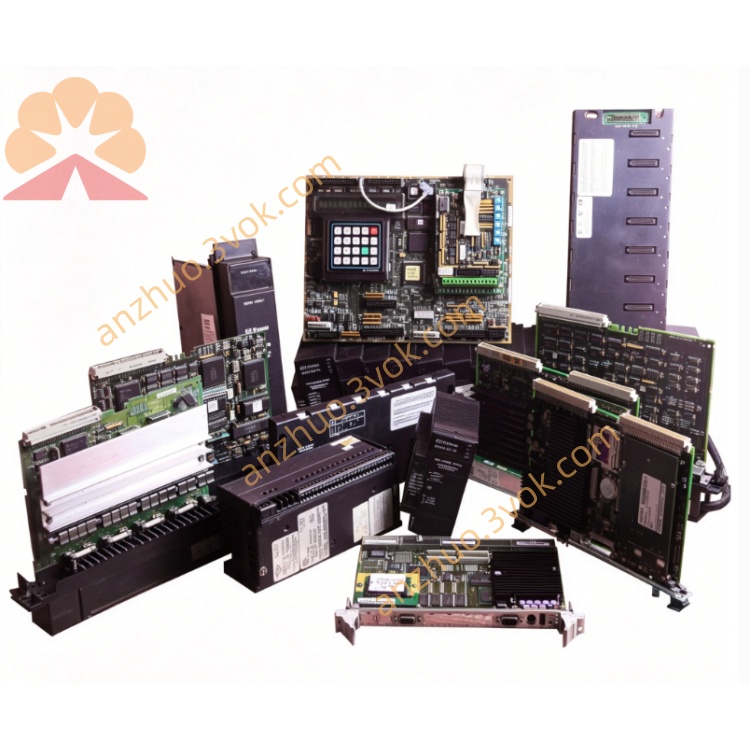
XYCOM XVME-20 VME Digital I/O Control Board
Description
Detailed Product Description of XYCOM XVME-20 I. Product Overview
The XVME-200 is a 3U single-height VMEbus universal TTL digital I/O module launched by XYCOM (now part of Acromag/Xembedded). It provides 32 TTL-level input/output channels, dual 24-bit timers, hardware handshake and VME interrupt capabilities for VME industrial control systems. It emphasizes high cost-effectiveness and flexible configuration, and is widely used in industrial automation, equipment monitoring and timing control scenarios. Core positioning
Standard 3U VMEbus (IEEE 1014 2.0/3.0) from device module;
Same series: XVME-201 (48 channels), XVME-290 (6U with the same function);
Adaptation: Semiconductor devices, industrial robots, power/chemical control, military/aerospace embedded systems.
II. Core Functional Characteristics
1. VMEbus standard interface (fully compatible)
Bus protocol: IEEE 1014 VMEbus 2.0/3.0;
Address space: A16 (64KB), base address configurable via jumper;
Data width: D16/D08 (EO), supports 8/16-bit data transmission;
Interrupt capability: Supports IRQ1–IRQ7, programmable interrupt vector and priority;
Backplane connection: Only requires P1 connector, no P2 needed.
2. 32-channel TTL I/O (software configurable direction)
Channel configuration: 32 TTL levels (5V), divided into 4 independent 8-bit ports (Port A–D);
Direction control: Each port is independently set as input or output (configured by control register);
Electrical specifications:
Input high level ≥ 2.0V, low level ≤ 0.8V;
Output pull-in / pull-out current 24mA, directly drives TTL load;
Input buffer / output latch, anti-interference design;
Port characteristics: fully buffered, with handshake signals (ACK/STB), suitable for printers, PLCs, etc. peripherals.
3. Dual 24-bit timers / counters (MC68230 PI/T)
Chip: Integrates 2 Motorola MC68230 PI/T (parallel interface / timer);
Timers: 2 independent 24-bit timers, maximum count 16,777,215;
Working modes:
Single-shot / cyclic timing;
Pulse width modulation (PWM);
Event counting / frequency measurement;
Delay trigger / pulse generation;
Interrupt trigger: Timer overflow can trigger VME interrupt, achieving precise timing control.
4. Hardware handshake and interrupt response
Hardware handshake: Each port is equipped with ACK (response) / STB (selection) signal, suitable for high-speed peripheral data interaction;
Interrupt trigger sources:
Input channel level change;
Timer count overflow;
Handshake signal status change;
Programmable interrupt: Supports IRQ1–IRQ7, interrupt vector can be software-configured, priority can be adjusted.
5. Industrial-grade high reliability design
Operating temperature: 0℃~+70℃;
Storage temperature: -40℃~+85℃;
Anti-vibration: 1g (10–100Hz); anti-shock: 15g;
EMC compliance: CE/FCC Class A, gold-plated gold fingers, shielding design;
Power consumption: +5V@0.8A (typical 4W), low heat generation;
Connectors: Front panel 2×50-pin SCSI-II, pin compatible with OPTO 22 isolation module, convenient for strong current isolation.
6. Panel status indication
POWER: Power normal always on;
RUN: Module running / self-check passed;
INT: Flashes when interrupt triggered;
Port A–D ACT: Flashes when port is read/write.
III. Hardware Specification Overview
Bus parameters Table
ProjectSpecifications
Bus standardVMEbus IEEE 1014 (2.0/3.0)
Address spaceA16 (64KB)
Data widthD16/D08 (EO)
InterruptsIRQ1–IRQ7, programmable vector
Backplane interfaceP1 (no P2 required)
I/O channel parameters Table
ProjectSpecifications
Number of channels32 channels, TTL (5V), 4×8-bit ports
Direction configurationEach port is set as input/output by software
Input levelHigh ≥ 2.0V, Low ≤ 0.8V
Output drivePull/Load current 24mA
Handshake signalACK/STB (per port)
Connector2×50-pin SCSI-II (OPTO 22 compatible)
Timer parameters Table
ProjectSpecifications
Chip2×Motorola MC68230 PI/T
Number of Timers2 independent 24-bit
Maximum Count Value16,777,215
Resolution1μs (typical)
Operating ModesTiming, Counting, PWM, Interrupt Trigger
Electrical / Environmental Parameters Table
ProjectSpecifications
Power Supply+5V DC ±5%, 0.8A (4W)
Operating Temperature0℃ to +70℃
Storage Temperature-40℃ to +85℃
Vibration Resistance1g (10–100Hz)
Impact Resistance15g
Size3U (100×160mm), single slot
WeightApproximately 0.3kg
V. Comparison with Similar Series Models Table
ModelNumber of ChannelsFormTimerKey Differences
XVME-20032 TTL3U2×24 bitsGeneral standard type, high cost-performance ratio
XVME-20148 TTL3U2×24 bitsHigh-density I/O, 16 more channels
XVME-29032 TTL6U2×24 bits6U chassis compatibility, P2 backplane output
V. Typical Application Scenarios
Industrial automation control: Line switch quantity control, motor start/stop, electromagnetic valve / valve control, alarm light driving;
Equipment status monitoring: Limit switch, proximity switch, photoelectric switch signal acquisition, panel button / indicator light control;
Precise timing control: Timed triggering, delay switch, PWM speed control, pulse generation / counting;
Data acquisition and event recording: Encoder pulse counting, frequency measurement, equipment operation event capture;
Upgrade of old VME systems: Direct replacement of modules of the same series, no need to modify hardware / rewrite programs, extend equipment lifespan.
VI. Installation and Programming Key Points Installation steps
Confirm that the P1 slot of the VME chassis is normal and the +5V power supply is stable;
Jumper configuration: base address, interrupt vector, handshake mode (optional);
Insert the module into the 3U slot, fix the panel screws;
Connect the front panel 2×50-pin SCSI-II to the on-site I/O or OPTO 22 isolation module;
Power-on self-test: POWER is constantly on, RUN is lit, INT does not flash, indicating normal operation.
Programming flow (simplified)
Address mapping: configure A16 base address, map module registers to system memory;
Port direction configuration: write control register, set Port A-D as input or output;
Output control: write output port register, control output level (high/low);
Input reading: read input port register, obtain the status of external devices;
Timer configuration: set timer initial value, working mode, interrupt enable;
Interrupt service program: write interrupt handling logic to respond to input changes or timing events.
VII. Core advantages
High cost-effectiveness: 32-channel TTL I/O + dual timers, comprehensive functions, economical price;
Flexible configuration: port direction can be set by software, base address/interrupt can be programmed, suitable for multiple scenarios;
Industrial-grade reliability: wide temperature range, shock resistance, gold-plated gold fingers, suitable for harsh conditions;
Strong compatibility: standard VMEbus, OPTO 22 compatible connectors, easy integration;
Long lifecycle: production discontinued but spare parts are sufficient, suitable for maintenance and upgrade of old VME systems.
VIII. Notes
The module is discontinued: procurement mainly relies on second-hand / refurbished spare parts, need to confirm the test report;
Battery backup: no onboard battery, data is not saved when power fails, critical data requires external storage;
Heat dissipation requirements: working temperature 0℃~+70℃, ensure good ventilation of the chassis;
Electrostatic protection: during installation / maintenance, need to prevent static electricity, avoid static damage to chips.
Get a Quote