
Bently Nevada 164746-01 Seismic Direct Input Module Product Specification
Model 164746-01 is an original high-precision seismic direct input card manufactured by Bently Nevada, designed as a core functional component matching Trendmaster dynamic scanning system and compatible with partial 3500 series machinery protection framework for industrial rotating equipment online vibration monitoring. This module serves as intermediate signal acquisition hardware dedicated to collecting raw analog signals from piezoelectric accelerometers and passive seismic velocity transducers including the 16639 series sensors, converting continuous analog vibration signals into standard digital data via built-in high-speed A/D conversion circuit for subsequent centralized data analysis, fault diagnosis and remote data upload to DCS/SCADA control platform. Widely deployed in thermal power, petrochemical refining, metallurgy and coal chemical industries, it monitors casing vibration of large-scale fans, feed pumps, steam turbines and centrifugal compressors to realize early warning of rotor unbalance, bearing wear and mechanical looseness faults in line with API 670 industrial machinery protection specification. The suffix "-01" defines factory fixed hardware layout, onboard circuit configuration and rear terminal pin definition, distinguishing it from other variant versions in channel assignment and external wiring specification.
Description
Bently Nevada 164746-01 Seismic Direct Input Module Product Specification
1. Product Overview
Model 164746-01 is an original high-precision seismic direct input card manufactured by Bently Nevada, designed as a core functional component matching Trendmaster dynamic scanning system and compatible with partial 3500 series machinery protection framework for industrial rotating equipment online vibration monitoring. This module serves as intermediate signal acquisition hardware dedicated to collecting raw analog signals from piezoelectric accelerometers and passive seismic velocity transducers including the 16639 series sensors, converting continuous analog vibration signals into standard digital data via built-in high-speed A/D conversion circuit for subsequent centralized data analysis, fault diagnosis and remote data upload to DCS/SCADA control platform. Widely deployed in thermal power, petrochemical refining, metallurgy and coal chemical industries, it monitors casing vibration of large-scale fans, feed pumps, steam turbines and centrifugal compressors to realize early warning of rotor unbalance, bearing wear and mechanical looseness faults in line with API 670 industrial machinery protection specification. The suffix "-01" defines factory fixed hardware layout, onboard circuit configuration and rear terminal pin definition, distinguishing it from other variant versions in channel assignment and external wiring specification.
2. Internal Structure & Working Principle
The module adopts standard rack plug-in structure conforming to Bently dedicated card slot mechanical dimension, enclosed by reinforced metal shielding casing to suppress external electromagnetic interference from high-power frequency converters and power distribution cables on site. Internal circuit is divided into front-end signal conditioning unit, precision constant current power supply unit, 16-bit high-resolution A/D sampling unit and backplane bus communication unit. When powered on, the onboard power circuit outputs regulated 24VDC bias current at 3.3mA to supply power for external two-wire piezoelectric seismic transducers; incoming weak analog vibration signals first pass through filtering and impedance matching circuits to eliminate high-frequency clutter and power-frequency interference before being transmitted to high-speed analog-to-digital converter. After digital quantization, vibration data is transmitted to system main controller via backplane dedicated communication bus for synchronous or asynchronous data sorting, frequency spectrum calculation and threshold comparison processing. Full PCB undergoes conformal coating treatment to resist damp, dust and weak corrosive gas erosion under severe industrial working conditions, improving long-term operation stability.
3. Core Electrical & Metrology Technical Parameters
Standard input bandwidth of each channel covers 0.1Hz to 100kHz with maximum single-channel sampling rate up to 24kHz, fully covering low-frequency structural vibration and high-frequency bearing fault characteristic frequency of various rotating equipment. Equipped with 16-bit high-precision A/D converter to guarantee signal conversion resolution, total dynamic measurement range reaches 160dB to adapt vibration signals from tiny early fault vibration to severe abnormal overload vibration of machinery. Nominal input impedance is set as 50 Ohm for perfect impedance matching with mainstream Bently seismic sensors, factory calibrated standard input sensitivity at 100mV/V to unify signal access standard of different specification accelerometers and velocity transducers. Built-in automatic channel fault diagnosis function can detect open-circuit, short-circuit and abnormal power supply of external sensor wiring, output corresponding fault alarm flag via system bus for host display and interlock prompt. Rated output bias voltage for external transducers is +24VDC with tolerance within ±5% voltage fluctuation range to ensure stable power supply for field sensors.
4. Mechanical Structure & Installation Specification
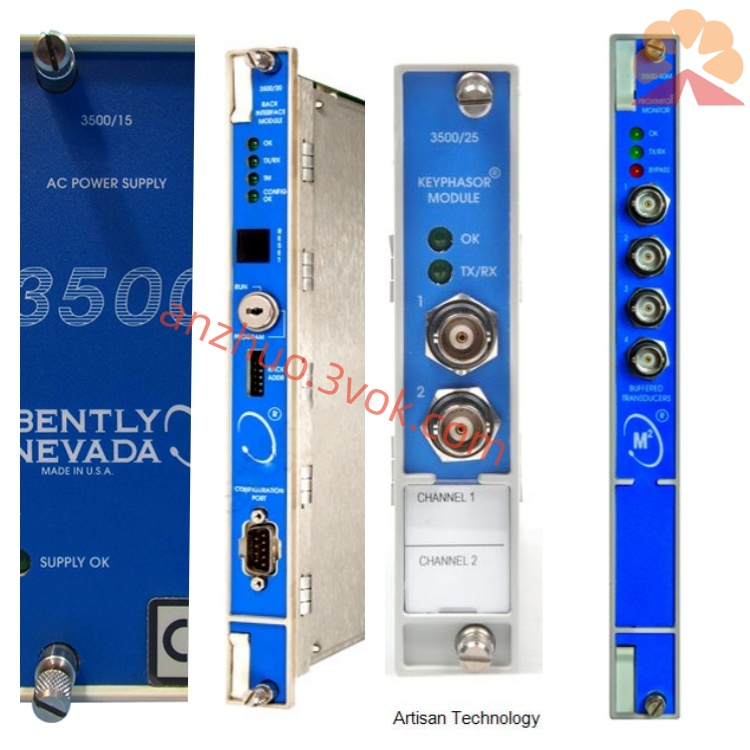
164746-01 follows Bently standard rack plug-in installation mode, directly inserted into designated slot of Trendmaster or compatible 3500 series system rack with fixed card locking buckle on front panel to prevent loose contact caused by equipment ambient vibration. Front panel is equipped with status indicator lamps for power, channel operation and fault alert, together with dedicated communication interface and terminal wiring port; rear side adopts gold-plated backplane connector for reliable bus connection with rack power and data bus, effectively reducing contact resistance and signal attenuation during long-term operation. Overall module weight is around 1000 grams with compact industrial standardized outline dimension, convenient for single-unit disassembly and replacement during on-site routine maintenance without affecting normal operation of other adjacent functional modules in the same rack.
5. Environmental Working Conditions
Permitted continuous operating ambient temperature ranges from -30℃ to +75℃; short-time intermittent peak working temperature can reach +80℃ to adapt high-temperature environment near boiler auxiliary equipment and steam pipeline layout areas. Applicable relative working humidity ranges from 5%RH to 95%RH under non-condensing environment, stable performance maintained in oil mist, dusty industrial plant environment. Long-term spare part storage temperature spans -40℃ to +85℃ under dry indoor warehouse storage condition. The finished module passes CE EMC certification and industrial vibration endurance test, resisting continuous mechanical vibration impact from surrounding running rotating machinery and occasional equipment collision shock on site.
6. System Matching & Practical Application Instruction
This input module can directly match all Bently original two-wire piezoelectric accelerometers and passive magnetoelectric velocity transducers such as 16639-01/02 series, as well as third-party compliant specification seismic sensors with consistent electrical parameters. After digital processing, measured vibration data can be transmitted to upper-level monitoring host for real-time value display, historical data storage and trend curve drawing; system supports user programmable multi-stage vibration threshold setting for Alert pre-alarm and Danger shutdown interlock control, and processed effective data can be transmitted to factory central DCS and SCADA system via monitor’s isolated 4-20mA analog output or digital communication bus. Original raw digital signal can also be extracted for offline spectrum analysis via portable vibration diagnostic equipment to implement predictive maintenance and regular equipment health assessment. Typical application scenarios include thermal power plant boiler induced draft fans and steam feed pumps, petrochemical factory process compressors and process pumps, metallurgical sintering plant exhaust blowers and large central air-conditioning circulating water pump units.
7. Factory Inspection & After-sales Warranty Regulation
Each finished 164746-01 module completes full-channel parameter calibration, high-low temperature cyclic aging test, continuous long-time burn-in test and full functional verification inspection before factory delivery to ensure consistent batch performance and qualified electrical indexes. Original manufacturer standard warranty period is twelve months starting from the date of product delivery. Within valid warranty period, free maintenance or replacement service is available for functional failure caused by inherent manufacturing defects under specified standard installation and normal operating environment scope. Damage induced by improper wiring connection, overvoltage input, artificial disassembly modification, chemical medium corrosion and over-temperature misuse is excluded from free warranty coverage.
Get a Quote