
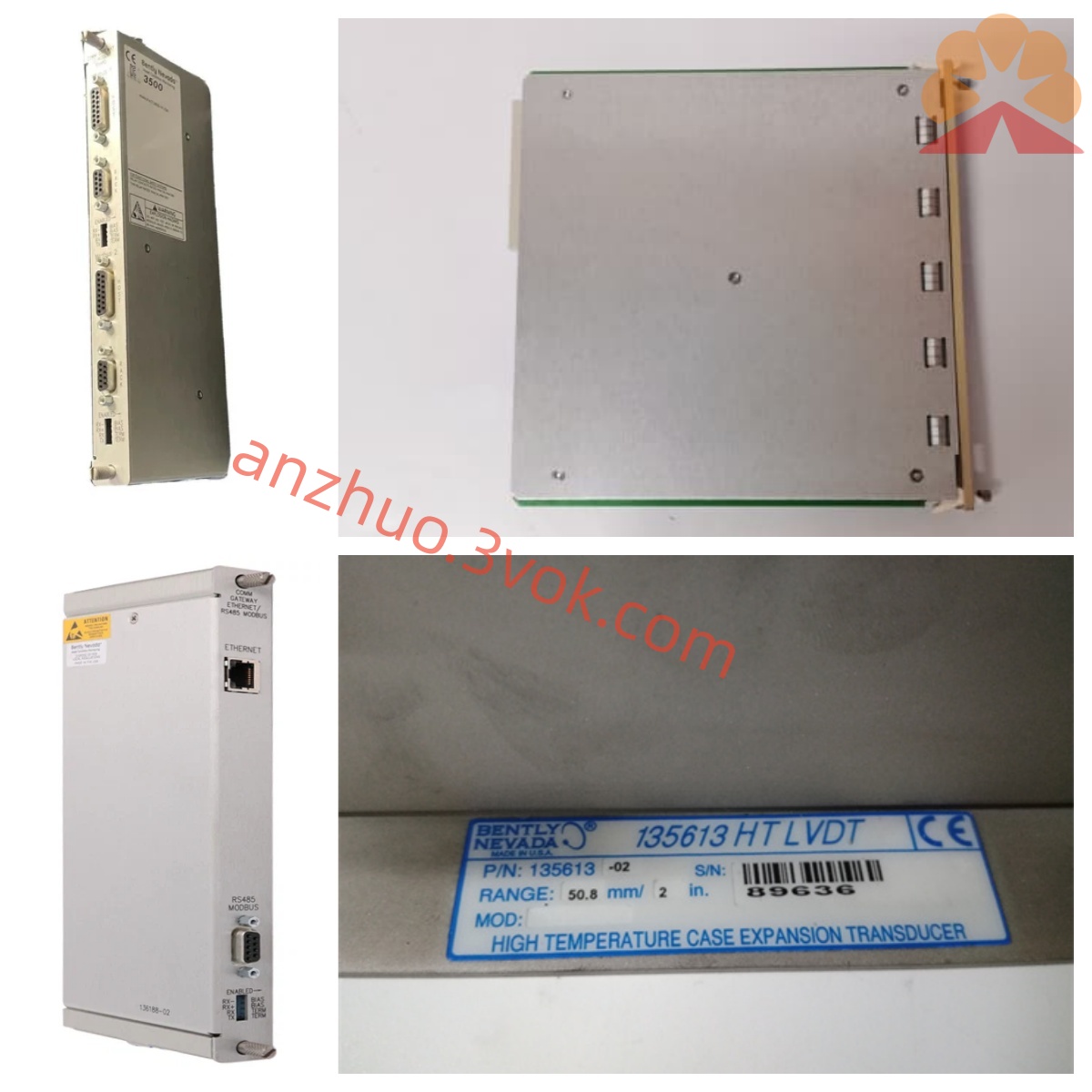
Bently Nevada 19156-01C Monitoring Circuit Board Product Specification
19156-01C is an original US-manufactured plug-in printed circuit control board from Bently Nevada legacy 7200 series TSI rack monitoring system product lineup, designed as dedicated signal conditioning and processing PCB card for vintage turbine supervisory instrumentation system, cooperating with matched rack backplane and terminal base to build complete machinery monitoring unit. Developed for heavy-duty rotating equipment protection in thermal power, petrochemical and metallurgical industries, this circuit board receives standard negative DC output signals from Bently classic 20928 and 20929 series eddy-current proximitor assemblies, completes amplification, filtering, linear calibration and threshold comparison for shaft vibration, axial displacement and Keyphasor rotational pulse signals collected from non-contact proximity probes. The whole PCB adopts full conformal coating anti-corrosion treatment to resist industrial dust, moisture and trace corrosive gas inside control cabinet, supporting uninterrupted 24-hour continuous operation on steam turbines, centrifugal compressors, boiler blowers and large feed pumps. It follows standard European plug-in mechanical layout for direct slot mounting inside 7200 series system rack, serving as spare replacement part for on-site maintenance and system retrofit of old-type Bently monitoring cabinets worldwide.
Description
Bently Nevada 19156-01C Monitoring Circuit Board Product Specification
1. General Introduction
19156-01C is an original US-manufactured plug-in printed circuit control board from Bently Nevada legacy 7200 series TSI rack monitoring system product lineup, designed as dedicated signal conditioning and processing PCB card for vintage turbine supervisory instrumentation system, cooperating with matched rack backplane and terminal base to build complete machinery monitoring unit. Developed for heavy-duty rotating equipment protection in thermal power, petrochemical and metallurgical industries, this circuit board receives standard negative DC output signals from Bently classic 20928 and 20929 series eddy-current proximitor assemblies, completes amplification, filtering, linear calibration and threshold comparison for shaft vibration, axial displacement and Keyphasor rotational pulse signals collected from non-contact proximity probes. The whole PCB adopts full conformal coating anti-corrosion treatment to resist industrial dust, moisture and trace corrosive gas inside control cabinet, supporting uninterrupted 24-hour continuous operation on steam turbines, centrifugal compressors, boiler blowers and large feed pumps. It follows standard European plug-in mechanical layout for direct slot mounting inside 7200 series system rack, serving as spare replacement part for on-site maintenance and system retrofit of old-type Bently monitoring cabinets worldwide.
2. Application Range
This control PCB forms a full measurement loop together with 5mm and 8mm diameter eddy current proximity probes, field extension cables and discrete proximitor modules. Its core measuring targets cover radial shaft vibration, axial thrust displacement, rotor eccentricity and Keyphasor rotational speed signal of industrial rotating shafts. After multi-stage circuit signal processing, the board converts original mechanical displacement parameters into two categories of available output signals: standard analog transmission signal for upper DCS system and local field indicator access, and passive relay contact switching signal for pre-set alarm and emergency unit trip interlock control. Apart from conventional thermal power generation and petrochemical refining plants, it is also widely applied on large industrial fans, steel mill rotary equipment and process water pump units to realize real-time equipment health monitoring and over-limit safety protection, effectively preventing unexpected unit outage triggered by abnormal shaft vibration or axial shifting failure. The internal analog circuit supports static clearance measurement and dynamic vibration sampling up to 10kHz frequency, compatible with both steady static offset reading and high-frequency transient rotor motion capture without mechanical abrasion issue compared with contact displacement transducers.
3. Electrical Performance Specifications
3.1 Power Supply Parameter
The module acquires centralized dual DC power supply from system rack backplane with rated input of +24VDC and -24VDC regulated industrial direct current, built-in reverse polarity prevention and transient surge suppression circuit at power input terminals to avoid component damage caused by field wrong wiring during installation and routine overhaul. Optimized low power consumption circuit layout controls continuous heat generation to meet long-term non-stop cabinet running requirement without extra heat dissipation auxiliary parts.
3.2 Signal Input Standard
Main analog input channel accepts linear negative voltage signal ranging from 0VDC to -24VDC output from matched proximitors, following factory default calibration scale factor of 200mV per mil or 7.87V per millimeter based on standard AISI4140 steel target material. An independent dedicated pulse input port is reserved exclusively for Keyphasor pickup signal to implement non-contact rotational speed and rotor phase detection. Onboard EMI filter circuit eliminates electromagnetic interference induced by surrounding high-voltage distribution cabinet and variable frequency drive equipment to guarantee stable measuring precision under complicated industrial electromagnetic environment. Multiple adjustable trim potentiometers and configuration jumpers are pre-installed on PCB surface, enabling field technicians to modify measuring range and alarm threshold flexibly according to actual on-site equipment configuration demands.
3.3 Signal Output Configuration
Two independent output channels are integrated on the circuit board for field external connection. The analog output supports optional 0~-24VDC voltage signal or industry universal 4~20mA current signal for seamless access to distributed control system and local on-site display instruments. Separate passive mechanical relay contact output is designed for high/low limit alarm and equipment emergency trip interlock loop; the relay owns rated contact capacity of AC250V, 5A, which can directly drive external intermediate relay and safety trip circuit without additional signal isolation amplifier.
3.4 Onboard Fault Diagnosis Function
The analog-type circuit board carries passive loop self-check function without digital communication bus interface. It monitors abnormal input and output voltage deviation to identify field circuit failure status. Detectable fault types include probe inner wire open circuit, extension cable core breakage, terminal short-circuit and probe clearance out of calibrated linear measurement range; all abnormal operating conditions will trigger obvious output signal drift, facilitating maintenance staff to rapidly locate faulty component inside measurement chain without extra external testing instruments.
4. Mechanical Structure and Environmental Rating
4.1 Mechanical Installation Specification
Designed as standard vertical plug-in PCB structure matching 7200 series rack slot size, 19156-01C circuit card is directly inserted into fixed slot of matched terminal base which is pre-fastened inside system rack via screw fixation. The overall dimension of single circuit board is around 325mm × 175mm × 32mm with net weight approximately 0.48kg, compact outline layout saves limited inner cabinet space efficiently. All electronic components on PCB adopt anti-loosening soldering technology to resist long-term mechanical vibration generated by adjacent running equipment inside control room cabinet.
4.2 Ambient Working Condition Limits
Continuous rated operating ambient temperature ranges from -29°C to +66°C for stable cabinet installation environment; allowable spare part storage and cross-region transportation temperature spans from -40°C to +85°C to adapt various global seasonal climate and spare inventory logistics requirement. Permitted working relative humidity is limited within 5% to 95% non-condensing condition to prevent PCB short-circuit damage caused by cabinet interior dew accumulation and dampness. The product is certified for indoor control cabinet installation only and not applicable for open-air mounting without extra sealed protective enclosure.
5. Core Product Advantages
First of all, mature analog circuit design with decades of global industrial field verification delivers outstanding operational stability and long service lifespan under uninterrupted heavy-load production environment, fully compatible with all original Bently 7200 series rack accessories for convenient spare part replacement and field system upgrading maintenance. Secondly, standalone plug-in card structure allows single PCB replacement without rewiring entire terminal wiring layout during component breakdown maintenance, greatly reducing field construction workload and equipment downtime. Thirdly, adjustable onboard calibration potentiometers and configuration jumpers improve flexible adaptability for different specification proximity probes and diversified machinery monitoring parameters, expanding applicable industrial scenarios of this circuit board. Fourthly, integrated multi-level surge protection and anti-reverse power design lowers component damage risk caused by field misoperation and instantaneous power grid fluctuation, cutting down end user’s later maintenance and spare procurement cost effectively.
6. Quality Standard and Warranty Terms
19156-01C is original US-produced component complying with internal Bently Nevada industrial quality control specification and CE electrical safety certification for global industrial automation market supply. When installed and operated strictly within defined rated electrical and environmental parameters without artificial physical damage, improper power wiring or overvoltage misuse, the product is covered by standard twelve-month limited factory warranty against inherent original manufacturing defects calculated from formal goods delivery date.
Get a Quote