
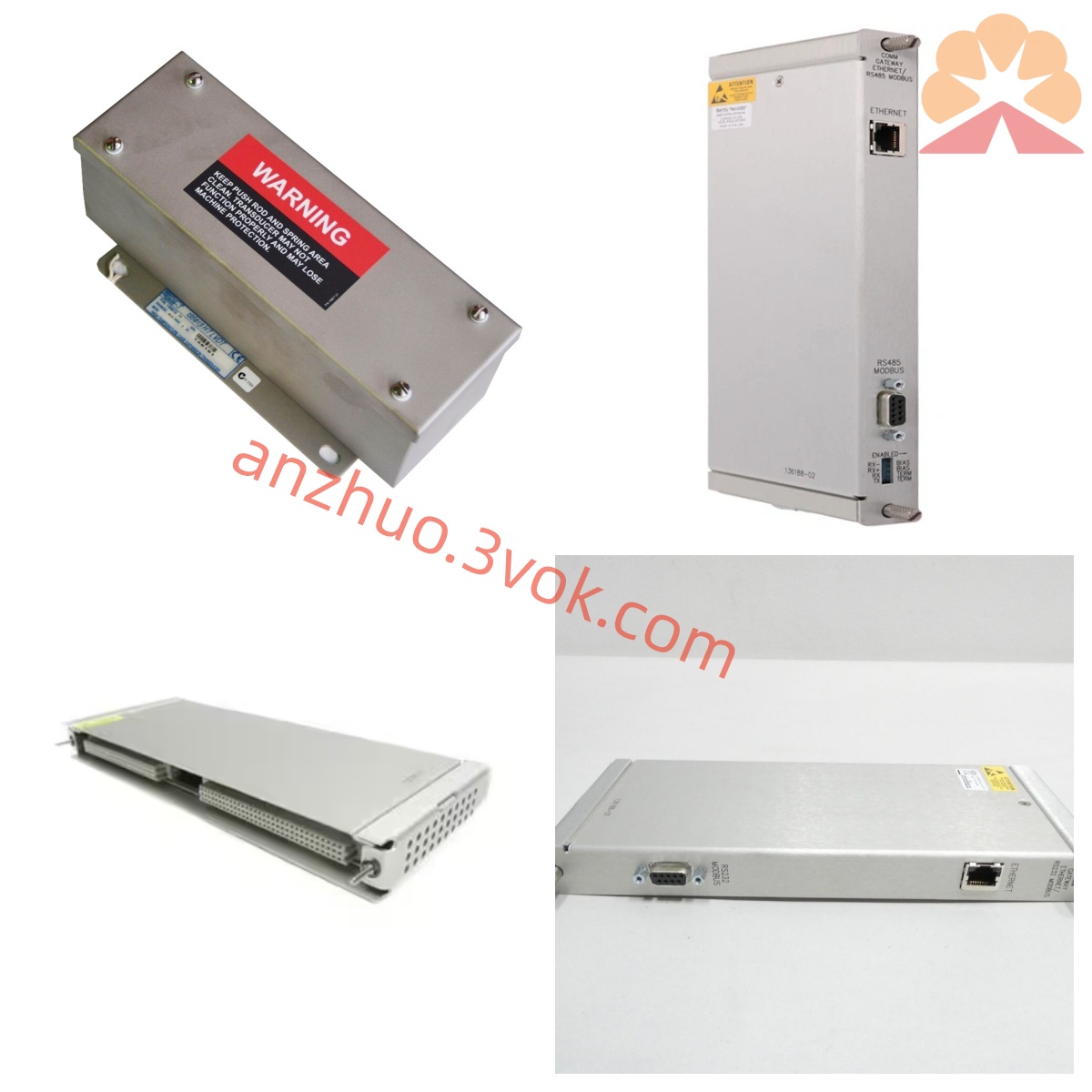
Bently Nevada 20928-01 Eddy Current Proximitor Product Specification
20928-01 is a classic standalone discrete proximitor belonging to Bently Nevada 20928 legacy eddy-current transducer series, factory pre-calibrated for standard 5mm diameter proximity probe with fixed 5 feet (1.52 meters) total system cable length as a core signal conditioning unit of traditional TSI machinery protection monitoring system. Designed based on eddy-current inductance variation principle, this module converts tiny impedance fluctuation of probe internal coil caused by clearance change between probe tip and conductive rotating metal target into standardized linear negative DC analog output signal, realizing non-contact continuous measurement of radial shaft vibration, axial thrust displacement, rotor eccentricity and Keyphasor rotational trigger signal for critical rotating equipment including steam turbines, gas turbines, centrifugal compressors and heavy-duty process pumps across thermal power, petrochemical refining and metallurgical industries. The unit adopts sealed die-cast aluminum alloy enclosure with three brass screw terminal posts for field wiring access; conformal coating is fully applied on internal printed circuit board to resist cabinet dust, humid ambient air and trace corrosive industrial gas to satisfy long-term uninterrupted fixed cabinet installation requirement. It shares identical outer mechanical dimension specification with other variants within the whole 20928 product lineup as well as partial dimensional consistency with 20929 serial proximitors including 20929-01 and 20929-04, supporting limited spare part cross replacement for on-site maintenance management.
Description
Bently Nevada 20928-01 Eddy Current Proximitor Product Specification
1. Product Overview
20928-01 is a classic standalone discrete proximitor belonging to Bently Nevada 20928 legacy eddy-current transducer series, factory pre-calibrated for standard 5mm diameter proximity probe with fixed 5 feet (1.52 meters) total system cable length as a core signal conditioning unit of traditional TSI machinery protection monitoring system. Designed based on eddy-current inductance variation principle, this module converts tiny impedance fluctuation of probe internal coil caused by clearance change between probe tip and conductive rotating metal target into standardized linear negative DC analog output signal, realizing non-contact continuous measurement of radial shaft vibration, axial thrust displacement, rotor eccentricity and Keyphasor rotational trigger signal for critical rotating equipment including steam turbines, gas turbines, centrifugal compressors and heavy-duty process pumps across thermal power, petrochemical refining and metallurgical industries. The unit adopts sealed die-cast aluminum alloy enclosure with three brass screw terminal posts for field wiring access; conformal coating is fully applied on internal printed circuit board to resist cabinet dust, humid ambient air and trace corrosive industrial gas to satisfy long-term uninterrupted fixed cabinet installation requirement. It shares identical outer mechanical dimension specification with other variants within the whole 20928 product lineup as well as partial dimensional consistency with 20929 serial proximitors including 20929-01 and 20929-04, supporting limited spare part cross replacement for on-site maintenance management.
2. Application Scope
This proximitor is mostly installed inside field control cabinets and local equipment junction boxes, forming a complete closed-loop three-element measuring system together with matched 5mm diameter proximity probe and dedicated 1.52m extension cable to continuously collect real-time gap value between probe end and standard AISI4140 alloy steel target surface per factory calibration standard. After multi-stage built-in signal amplification, linearity compensation and high-frequency EMI noise filtering processing, the conditioned proportional DC output signal is transmitted to local field indicating meters, DCS analog input modules or legacy rack-based monitor instruments for real-time parameter display, over-limit alarm activation and critical unit emergency trip interlock control execution. Apart from mainstream energy and chemical industries, it is also widely configured on large industrial induced draft fans and high-pressure feed pumps on continuous production lines for online equipment health monitoring and protection logic setup. Its frequency response ranges from DC static position measurement up to 10kHz dynamic vibration acquisition, capable of capturing both steady shaft static offset and instantaneous rotor dynamic motion without mechanical abrasion compared with contact-type displacement sensors.
3. Detailed Electrical Performance Specifications
3.1 Input and Output Electrical Parameters
Factory fixed standard scale factor is 200 mV/mil (equivalent to 7.87 V/mm), generating linear 0 VDC ~ -24 VDC negative output voltage directly proportional to physical gap distance within valid calibrated linear measuring range matching 5mm probe and 5ft total cable length. Every finished unit passes full-span linearity calibration test at original factory to confine overall system measuring deviation within standard industrial permissible tolerance. Calibration benchmark target material is specified as AISI4140 carbon alloy steel; measurable accuracy will produce visible offset when deployed on non-calibrated metal targets such as stainless steel or titanium alloy without professional field recalibration. Internal integrated low-pass filter circuit effectively suppresses surrounding electromagnetic interference generated by frequency converters, high-voltage distribution panels and large AC driving motors to stabilize measuring precision under complicated industrial electromagnetic environment.
3.2 Power Supply Specification
The proximitor requires regulated external negative DC auxiliary power within standard rated voltage scope, with built-in reverse polarity protection and transient surge suppression circuit integrated at power input terminals to avoid internal circuit burnout triggered by wrong wiring during on-site installation, commissioning and routine maintenance works. Optimized low power consumption design limits continuous operating heat generation to adapt 24-hour non-stop running working mode of heavy-duty critical industrial rotating machinery.
3.3 Onboard Fault Diagnostic Function
No digital bus communication interface is equipped on this discrete analog-type proximitor model; field malfunction diagnosis is completed by tracking abnormal drift of output DC voltage value. Detectable typical field failure modes cover probe inner conductor open circuit, extension cable core wire breakage, terminal short-circuit fault and over-range clearance exceeding valid linear measuring span of matched probe; all abnormal conditions will trigger obvious irregular output voltage variation for maintenance personnel to rapidly locate defective component inside measuring loop.
4. Mechanical Structure and Environmental Operating Ratings
4.1 Mechanical Construction & Installation Details
Solid die-cast aluminum alloy casing provides outstanding shock resistance and anti-vibration performance to adapt vibration-prone cabinet installation working condition on industrial site. Three independent brass screw terminal connectors are arranged on one wiring side respectively for power supply input, probe signal access and conditioned analog signal output, consistent with terminal wiring layout of mainstream 20929 series models rather than coaxial connector design used on partial high-end variants. Pre-drilled fixed mounting holes on housing bottom support direct screw-type panel installation on cabinet guide rails without special plug-in rack structure, compact overall outline efficiently saves limited internal cabinet layout space; single unit net weight is maintained around 0.53kg~0.55kg consistent with peer products of same series.
4.2 Ambient Temperature and Humidity Working Standard
Rated continuous cabinet operating ambient temperature ranges from -29℃ to +66℃ for long-term stable operation; allowable spare part storage and cross-region transportation temperature spans from -51℃ to +107℃ to accommodate diverse seasonal climate during global spare inventory storage and logistics delivery. Rated working ambient relative humidity is controlled within 5%~95% non-condensing condition to prevent internal PCB short-circuit failure caused by cabinet internal dew condensation and accumulated moisture.
5. Core Product Technical Advantages
First, unified dimensional standard across full 20928 serial range enables partial spare part interchange with other 20928 variants and partial 20929 series products, effectively reducing end-user spare stocking categories and subsequent equipment maintenance cost. Second, exclusive internal signal linearization circuit is customized for matched 5mm diameter probe and fixed 5-foot full system cable length to guarantee long-term stable measuring accuracy for critical machinery protection monitoring under continuous heavy-load production environment. Third, robust screw terminal wiring structure improves connection stability under long-term cabinet mechanical vibration compared with coaxial connection configuration, greatly lowering loose wiring induced on-site hidden failure probability. Fourth, mature analog circuit design with decades of global industrial field application verification ensures extended service life and outstanding running stability adapting non-stop continuous industrial operating conditions.
6. Quality Certification and Warranty Provisions
20928-01 is original USA-manufactured product complying with Bently Nevada internal industrial component quality management standards and corresponding CE electrical safety certification for global industrial automation market supply. When operated strictly within specified rated environmental parameters without artificial physical damage, improper power wiring or overvoltage misuse, the product provides standard 12-month limited factory warranty covering inherent original manufacturing defects calculated from formal goods delivery date.
Get a Quote