
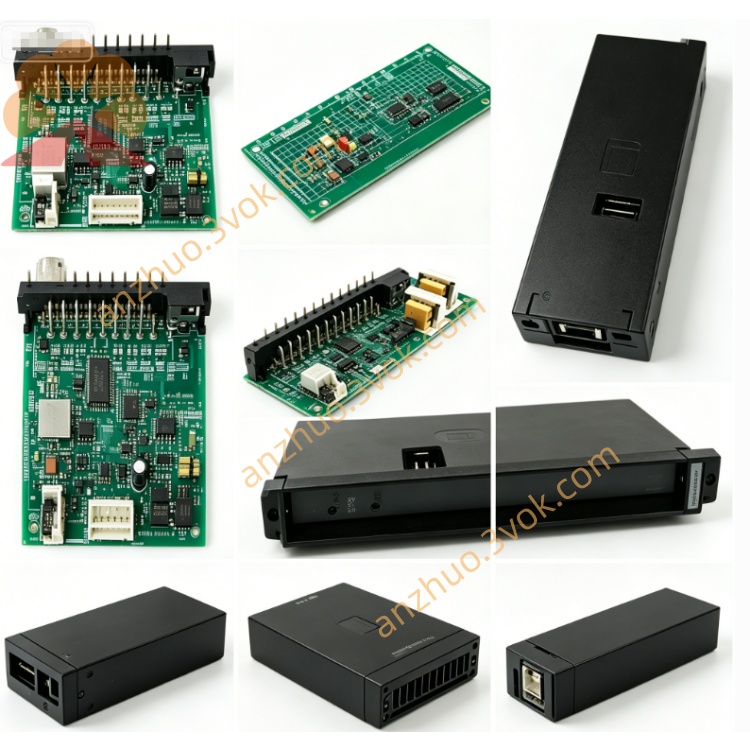
Reliance 57C-423 rack-mounted shared memory and remote I/O master communication module
The 57C-423 is a rack-mounted shared memory and remote I/O master communication module belonging to Reliance Electric AutoMax 57C series control hardware. The hyphen in part number follows manufacturer’s part coding specification. It works as data exchange bridge among multiple main controllers inside system rack and serves as master station for external distributed remote I/O nodes. With built-in shared storage space, the module realizes high speed real-time data sharing and cross-processor data synchronization, and is widely used for spare replacement and system transformation of legacy AutoMax automation control cabinets in various industrial production sites.
Description
Product Brief Introduction
The 57C-423 is a rack-mounted shared memory and remote I/O master communication module belonging to Reliance Electric AutoMax 57C series control hardware. The hyphen in part number follows manufacturer’s part coding specification. It works as data exchange bridge among multiple main controllers inside system rack and serves as master station for external distributed remote I/O nodes. With built-in shared storage space, the module realizes high speed real-time data sharing and cross-processor data synchronization, and is widely used for spare replacement and system transformation of legacy AutoMax automation control cabinets in various industrial production sites.
Model Definition
57C stands for Reliance AutoMax general rack module product line. The middle dash is standardized separation symbol of factory part number. 423 is exclusive code for shared memory and remote I/O communication function, which differentiates from motion control modules like 57C-422 series inside same product family. Standard version carries no suffix letter, revised upgraded versions will add alphabet suffix after model number.
Technical Specifications
The module draws rated 5V DC working power from chassis backplane bus with fixed rated working current. It is equipped with onboard shared dual port memory for system data caching and inter-processor transmission. Working ambient temperature ranges from 0 degree Celsius to 60 degree Celsius, storage temperature is minus 20 degree Celsius to 70 degree Celsius. Working relative humidity is controlled within 5 percent to 95 percent without condensation. It is fitted with internal hardware watchdog and overvoltage protection circuit, meeting North American cabinet installation anti-vibration and basic electromagnetic compatibility standards. Several status indicator lamps are laid out on front panel to display power, running and communication fault state.
Interface and Communication Configuration
Internal data transmission is completed via gold finger contact with AutoMax proprietary backplane bus to finish high speed data interaction with rack main control units and other functional modules. Multiple isolated external communication ports are reserved on module front panel for connecting field remote I/O slave stations by shielded twisted cable. One reserved serial debugging port is used for on-site parameter setting and fault checking. No integrated fieldbus interface is available on module body, upper network access requires matching extra 57C series dedicated communication expansion modules.
Core Functions
It provides shared memory space to realize real-time data exchange and parameter synchronization between multiple processors installed in same control rack. It acts as remote I/O master module to regularly poll external distributed I/O nodes, collect field digital and analog signals and send control instructions downwards. It stores partial system configuration parameters to reduce operating load of host control modules. It continuously monitors internal bus connection state and external remote link condition, generates corresponding fault codes and uploads alarm information to upper control system once communication abnormality appears. It assists whole system to finish data coordination between local rack and scattered field I/O equipment.
Application Scenarios
It is commonly equipped in multi-controller coordinated control system of packaging production line, textile continuous processing equipment and automatic material conveying system. It serves as core communication component of chemical auxiliary control cabinet, water treatment distributed I/O control system and old printing machinery control unit. It is largely used for maintenance replacement of damaged original communication hardware on aging AutoMax control equipment in rubber processing and small metallurgy auxiliary workshop.
Operation and Maintenance Instructions
Cut off total cabinet power supply before plugging or pulling out the module to avoid circuit damage caused by hot plug. Lock front panel fixing screw after fully inserting into slot to guarantee reliable backplane contact. Clear accumulated dust on module surface and cabinet ventilation openings with dry compressed air every three to six months according to site dust concentration, never spray liquid cleaning agent onto circuit board. Use shielding wire for all external communication wiring and separate signal wiring from high-power cable during construction. Inspect external wiring and terminal tightness first when remote communication interruption occurs, replace qualified spare 57C-423 if internal hardware breakdown is confirmed. Keep standby modules in dry constant temperature storage environment far away from corrosive gas and strong electromagnetic radiation. Arbitrary disassembly and modification of original onboard electronic components without official factory approval is prohibited.
Get a Quote