
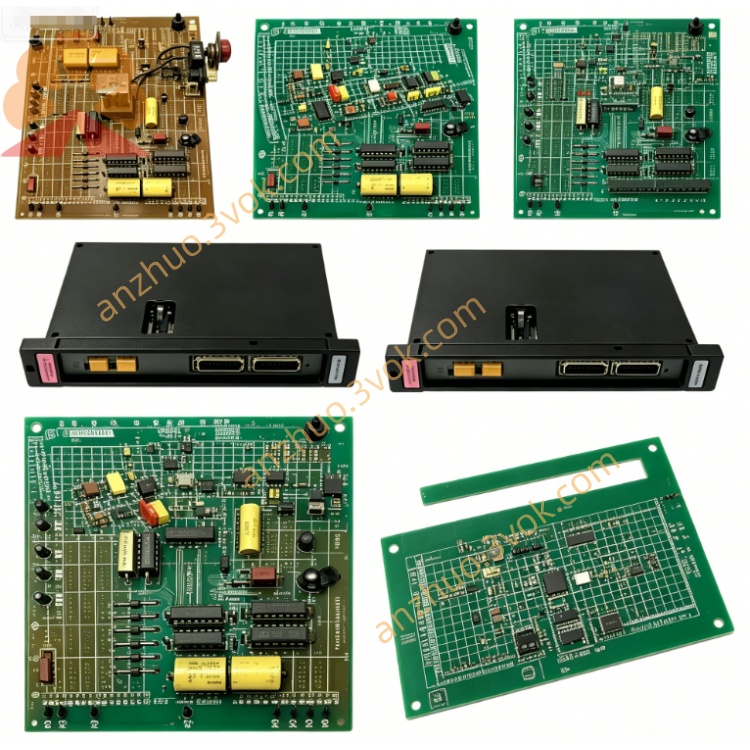
Reliance 40V4160
Description
Product Description
Model Number Interpretation
40: Rated power of 40 HP (30 kW).
V: GV3000 series, variable‑frequency AC drive.
4: 460 VAC input voltage class.
160: Standard hardware configuration with built‑in keypad/display and Version 6.0 regulator.
Technical Specifications
Rated Power: 40 HP (30 kW) continuous.
Input Voltage: 380–460 VAC ±10%, three‑phase, 50/60 Hz.
Input Current: 58 A continuous.
Output Voltage: 0–460 VAC, three‑phase.
Output Current: 54 A continuous; 81 A peak (heavy duty).
Output Frequency: 0–200 Hz.
Control Modes: V/Hz (volts/hertz), closed‑loop vector.
Overload Capacity: 150% for 1 minute.
Protection Features: Overcurrent, overvoltage, undervoltage, overtemperature, short circuit, ground fault, phase loss, motor overload.
Ambient Temperature: 0°C to +45°C.
Enclosure: Type 1/IP20, panel‑mount.
Weight: ~25.4 kg (56 lb).
Full‑Load Power Loss: 960 W.
Interface and Communication Configuration
Power Terminals: Three‑phase AC input, three‑phase AC output to motor.
Control I/O: Start/stop, forward/reverse, 0–10 VDC / 4–20 mA speed reference, fault reset, digital inputs/outputs for interlocks and status.
Feedback: Compatible with encoder for closed‑loop vector control.
Communication: Optional Modbus RTU module for connection to PLC/DCS; no native Ethernet.
Human‑Machine Interface: Built‑in keypad and LED/LCD display for parameter programming, status monitoring, and fault diagnostics.
Core Functions
Dual Control Modes: Selectable V/Hz for simple applications or closed‑loop vector for high torque and precision at low speeds.
Auto‑Tuning: Automatic motor parameter tuning for optimal performance.
Speed Regulation: Wide speed range with stable operation; adjustable accel/decel ramps.
Torque Control: Direct torque regulation for tension control and hoisting applications.
Energy Efficiency: Optimized PWM switching to reduce motor losses and heat.
Comprehensive Protection: Fault detection and safe shutdown to protect drive and motor.
Application Scenarios
Material Handling: Conveyors, cranes, hoists, and lift equipment.
Machine Tools: Lathes, mills, and machining centers requiring variable speed.
Process Industries: Pumps, fans, mixers, and extruders in chemical, food, and textile processing.
Packaging & Printing: Web handling and tension control systems.
Legacy System Retrofits: Direct replacement for older GV3000 units in manufacturing lines.
Usage and Maintenance Instructions
Installation: Mount vertically on a rigid panel; maintain 150 mm clearance top and bottom for airflow. Ensure the enclosure is sealed to prevent dust ingress.
Wiring: Use shielded cables for control signals; torque power terminals to manufacturer specifications. Separate power and control wiring to minimize noise.
Startup: Verify input voltage matches the drive rating. Set motor nameplate parameters (voltage, current, frequency, RPM) and run auto‑tuning before operation.
Routine Maintenance (Quarterly): Clean dust from heat sinks and fans; inspect terminals for tightness and corrosion; check keypad/display for proper function.
Safety: Disconnect all power and wait at least 5 minutes for DC bus capacitors to discharge before servicing. Never operate with the cover removed.
Get a Quote