
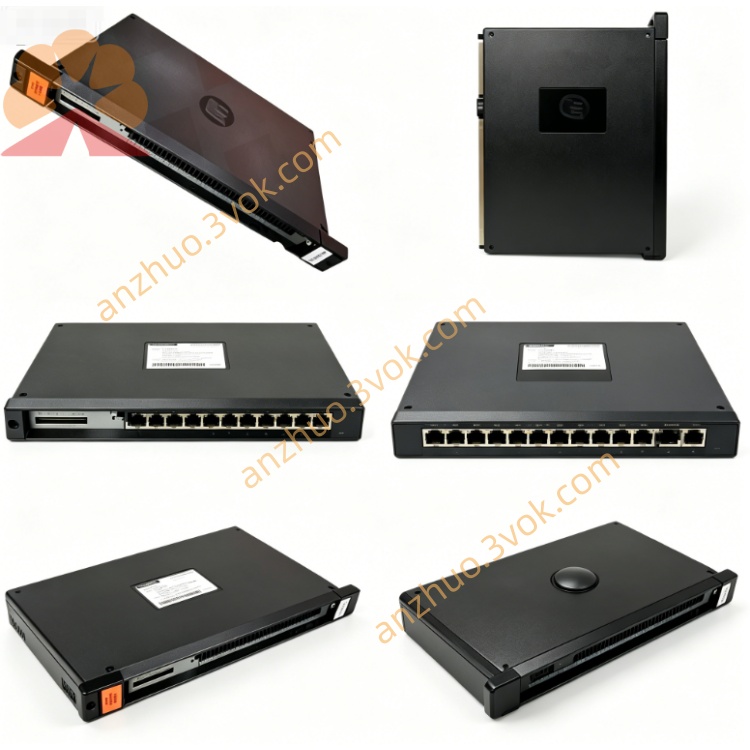
Reliance Electric 14C300-1
The 14C300-1 is a three-phase industrial DC drive manufactured by Reliance Electric, a brand of Rockwell Automation. It is engineered for high-power DC motor speed and torque control, adopting mature power conversion and control circuits. The unit features sturdy structure and complete protective functions, suitable for long-term heavy-duty operation. This is a discontinued legacy product, and refurbished and surplus units are mainly used for equipment maintenance and replacement of existing DC drive systems.
Description
Product Description
The 14C300-1 is a three-phase industrial DC drive manufactured by Reliance Electric, a brand of Rockwell Automation. It is engineered for high-power DC motor speed and torque control, adopting mature power conversion and control circuits. The unit features sturdy structure and complete protective functions, suitable for long-term heavy-duty operation. This is a discontinued legacy product, and refurbished and surplus units are mainly used for equipment maintenance and replacement of existing DC drive systems.
Model Definition
14 refers to the series of industrial DC drives. C represents the product category as a motor control drive. 300 stands for the power grade and overall configuration of this three-phase drive. The suffix 1 indicates the specific hardware revision and internal circuit version.
Technical Specifications
This drive uses three-phase AC power input and works with 50 Hz and 60 Hz frequency. It converts AC power into adjustable DC power to supply the motor armature and field winding. It supports open-loop voltage control and closed-loop speed control with external tachometer feedback. It is equipped with full protection functions including overcurrent, overvoltage, undervoltage and overtemperature protection. The operating ambient temperature ranges from 0 degrees Celsius to 55 degrees Celsius, and the relative humidity is 5 percent to 95 percent without condensation. The metal housing ensures good mechanical strength and heat dissipation performance.
Interface and Communication Configuration
Terminal blocks are provided for three-phase AC input, DC armature output, DC field output and protective grounding. Independent control terminals are reserved for start-stop commands, direction switching, external speed reference and tachometer feedback signals. It adopts analog signal acquisition and processing for internal regulation. There is no built-in network communication port, and all control and signal transmission are realized through hard wiring. The drive is designed for standard panel mounting inside industrial control cabinets.
Core Functions
It delivers stable and precise speed regulation for DC motors and maintains consistent running speed under variable loads. The built-in dual-loop control system improves dynamic torque response and operating stability. Multiple protection mechanisms effectively prevent damage to the drive and motor under abnormal working conditions. The optimized heat dissipation structure enables continuous stable operation under rated load. It supports various external control signals to realize flexible speed adjustment and logic control on site.
Application Scenarios
It is applied to high-power DC motors in heavy industrial fields. It fits for large machine tools, material handling equipment, fans, pumps and production lines that require reliable DC drive control. It is a preferred replacement part for renovation and maintenance of old three-phase DC drive systems. It can operate steadily in ordinary factory workshops with dust and moderate vibration.
Usage and Maintenance Instructions
Usage
Install the drive vertically on a solid mounting panel and reserve enough surrounding space for heat dissipation. Connect power cables, motor cables and control cables strictly in accordance with terminal marks, and complete reliable grounding. Set parameters such as maximum speed and current limit via onboard potentiometers according to actual working demands. After wiring and parameter setting, power on the device and conduct jog test to confirm motor rotation direction. Carry out load running test before formal operation. Do not keep the drive running under long-term overload status.
Maintenance
Conduct routine inspection every three to six months to check the unit appearance, housing, cables and connecting terminals. Cut off all power before cleaning, and wipe dust away with dry cloth. Never use liquid or chemical cleaning agents. Retighten all wiring terminals every year to avoid faults caused by poor contact. Keep heat dissipation channels unobstructed and clean dust on heat sinks regularly. Internal circuits contain static-sensitive components, so do not disassemble the drive without permission. Store spare units in cool, dry and dust-free environment. All inspection and repair work must be handled by professional technicians.
Get a Quote