
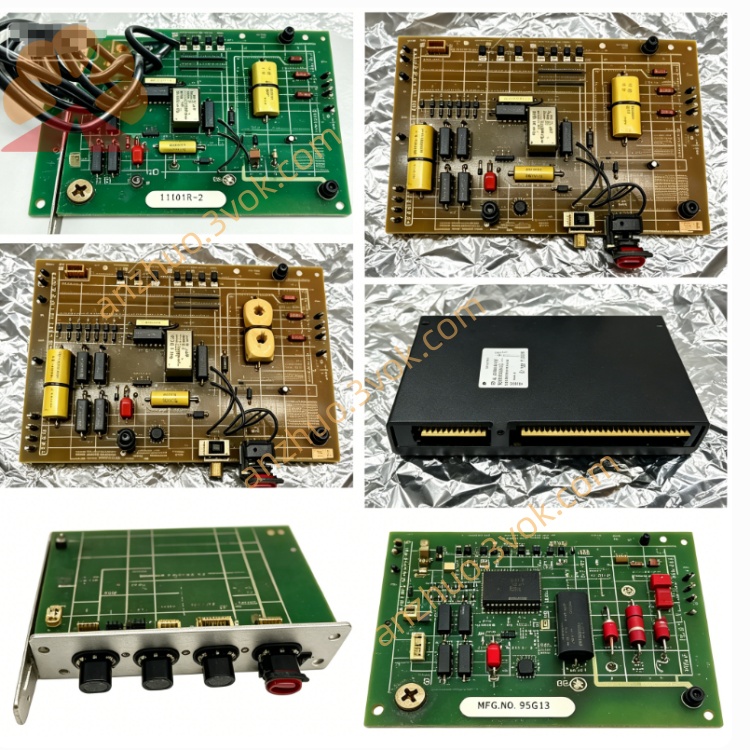
Reliance 404745D
Description
Product Description
Model Number Interpretation
404745: Base part number for Reliance’s industrial control module series, indicating its design for high‑power drive and automation systems.
D: Denotes the specific hardware revision and functional variant, optimized for enhanced durability and compatibility with legacy Reliance drive systems.
Technical Specifications
Input Voltage: 24 VDC (20.4–28.8 VDC tolerance).
Current Consumption: Max 1300 mA.
Output Voltage: 24 VDC (22.8–25.2 VDC tolerance).
Operating Temperature: 0 °C to +60 °C.
Storage Temperature: ‑40 °C to +85 °C.
Humidity: 5%–90% non‑condensing.
Isolation: Optical isolation for input/output channels.
Dimensions: Standard industrial rack‑mount form factor.
Weight: Approximately 0.5 kg.
Interface & Communication Configuration
Electrical Interface: Screw‑terminal connections for power, input, and output signals; supports direct wiring to sensors, actuators, and drive units.
Communication Ports: Equipped with RS‑232 and RS‑485 serial interfaces; supports Modbus RTU protocol for data exchange with other controllers and HMI devices.
Backplane Compatibility: Designed for integration with Reliance AutoMax system backplanes, enabling seamless communication with other system modules.
No Digital Ethernet: Operates via hardwired serial and analog signals; no native Ethernet support.
Core Functions
Real‑Time Control: Executes high‑speed logic and motion control algorithms to regulate motor speed, torque, and position in drive systems.
Signal Processing: Converts and conditions analog/digital input signals from sensors and feedback devices for precise control-loop adjustments.
System Coordination: Acts as an interface between the main controller and peripheral I/O, ensuring synchronized operation of multiple system components.
Diagnostic & Protection: Built‑in fault detection and monitoring capabilities to identify abnormal operating conditions and trigger protective actions, minimizing equipment damage and downtime.
Application Scenarios
Reliance AutoMax Systems: Core control module for coordinating multi‑axis motion control in manufacturing and process automation.
Industrial Drive Systems: Integration with Reliance HR2000, UDC, and Allen‑Bradley variable high‑power drives for speed regulation and process control.
Heavy‑Duty Manufacturing: Automotive assembly lines, metal processing, packaging machinery, and conveyor systems requiring precise motion control.
Legacy Equipment Maintenance: Replacement or upgrade component for aging Reliance automation systems to extend operational life and maintain productivity.
Usage & Maintenance Instructions
Installation: Mount in a standard industrial rack; ensure proper ventilation and clearance for wiring and heat dissipation. Securely fasten the module to avoid vibration‑induced damage.
Wiring: Connect power, input, and output terminals per system schematics; verify tightness of all connections and insulation integrity before power‑on.
Operation: Apply power gradually; monitor initial startup for abnormal noise or indicators. Operate within specified voltage and temperature ranges to prevent component stress.
Maintenance: Perform quarterly inspections to clean dust, check terminal connections, and verify LED status indicators. Update firmware as recommended by the manufacturer.
Safety: Disconnect all power sources before maintenance; allow capacitors to discharge fully to prevent electric shock. Adhere to all industrial safety standards during handling and installation.
Get a Quote