
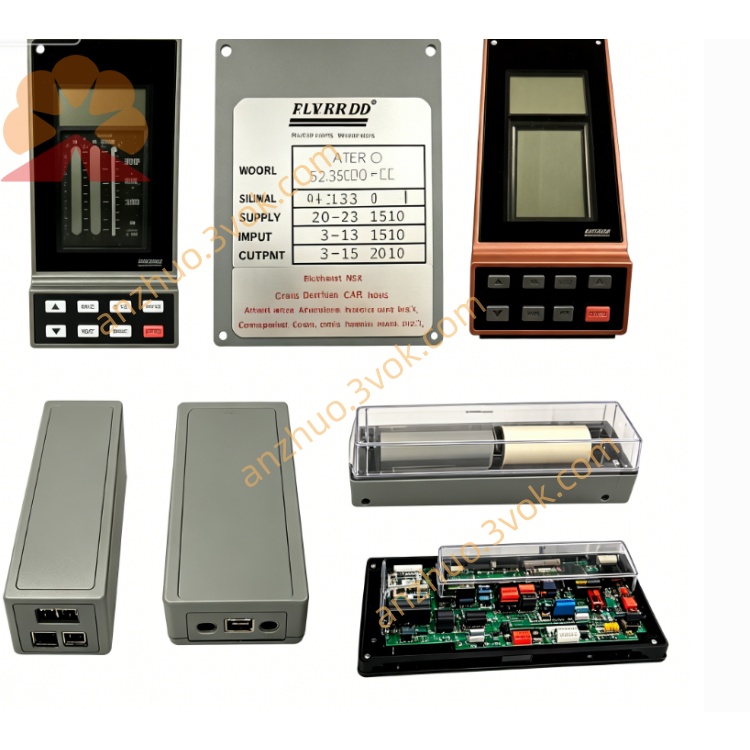
Foxboro CP40B CPU Main Control Module
1. Product Overview
CP40BCPU is a compact, high-performance professional audio power amplifier designed for low-power sound reinforcement applications, integrating stable output performance, reliable protection mechanisms, and user-friendly operation. It is widely used in various small-scale scenarios such as small conference rooms, offices, retail kiosks, small cafes, classrooms, and home audio systems. This power amplifier adopts an energy-saving circuit design and high-quality electronic components, ensuring clear, crisp, and undistorted audio output and stable long-term operation. It supports multiple input/output interfaces, compatible with various common audio signal sources (such as CD players, mixers, microphones, and mobile devices), and features built-in overcurrent, overvoltage, overtemperature, and short-circuit protection functions to avoid equipment damage from improper use or abnormal working conditions. Notably, CP40BCPU features a lightweight and compact design, easy installation and debugging, and is commonly available as a new product in the market, with professional repair and after-sales support provided by suppliers, ensuring consistent performance and user experience after strict quality control and testing. It also adopts optimized ventilation design and safety protection measures to further enhance use safety and service life[superscript:7].
Description
1. Product Overview
CP40BCPU is a compact, high-performance professional audio power amplifier designed for low-power sound reinforcement applications, integrating stable output performance, reliable protection mechanisms, and user-friendly operation. It is widely used in various small-scale scenarios such as small conference rooms, offices, retail kiosks, small cafes, classrooms, and home audio systems. This power amplifier adopts an energy-saving circuit design and high-quality electronic components, ensuring clear, crisp, and undistorted audio output and stable long-term operation. It supports multiple input/output interfaces, compatible with various common audio signal sources (such as CD players, mixers, microphones, and mobile devices), and features built-in overcurrent, overvoltage, overtemperature, and short-circuit protection functions to avoid equipment damage from improper use or abnormal working conditions. Notably, CP40BCPU features a lightweight and compact design, easy installation and debugging, and is commonly available as a new product in the market, with professional repair and after-sales support provided by suppliers, ensuring consistent performance and user experience after strict quality control and testing. It also adopts optimized ventilation design and safety protection measures to further enhance use safety and service life[superscript:7].
2. Key Specifications
2.1 Electrical Specifications
• Rated Output Power: 40W (8Ω, 2-channel, RMS)
• Input Voltage: 100-240V AC (single-phase, 50/60Hz)
• Input Interface: 2-channel RCA unbalanced input, 1-channel 3.5mm AUX input (for mobile devices), 2-channel MIC input (for microphones)
• Output Interface: 2-channel binding post output, 2-channel speaker terminal output
• Frequency Response: 20Hz ~ 20kHz (±1.2dB)
• Total Harmonic Distortion (THD): ≤ 0.08% (1kHz, 1/3 rated power)
• Signal-to-Noise Ratio (S/N): ≥ 93dB (A-weighted)
• Damping Factor: ≥ 180 (8Ω, 1kHz)
• Input Sensitivity: 0.387V (unbalanced), 0.5V (AUX input), 10mV (MIC input)
• Input Impedance: 10kΩ (unbalanced), 5kΩ (AUX input), 600Ω (MIC input)
• Control Interface: Front panel button control (no remote control function); built-in low-power CPU for stable signal processing and fault monitoring[superscript:2]
• Display: LED indicator display for power status, input mode, and fault prompts
2.2 Environmental & Physical Specifications
• Operating Temperature Range: 0~45°C (non-condensing)
• Storage Temperature Range: -10~55°C (non-condensing)
• Operating Humidity: 20%~85% (non-condensing)
• Storage Humidity: 10%~90% (non-condensing)
• Maximum Operating Altitude: 1500 meters above sea level
• Protection Grade: IP20 (dust-proof)
• Cooling Method: Natural cooling (no built-in fan, energy-saving and low-noise) with optimized ventilation design to ensure heat dissipation efficiency[superscript:8]
• Dimensions: W 330 × H 70 × D 270 mm (non-rack mountable, compact desktop design)
• Shipping Weight: 4.2 kg (approximately 9.26 lbs)
• Installation Orientation: Horizontal placement (stable desktop or shelf, preferred)
2.3 Performance Characteristics
• Audio Performance: Energy-saving low-power output, low harmonic distortion, wide frequency response, ensuring clear, crisp, natural, and undistorted sound reproduction for small-scale scenarios; with independent MIC input adjustment, suitable for voice amplification in small venues such as classrooms and small conference rooms
• Stability: Equipped with high-quality power supply and enhanced circuit protection design, strong anti-interference ability, suitable for long-term continuous operation; the power cord is equipped with a grounding wire to improve safety performance
• Compatibility: Multiple input interfaces, compatible with common audio signal sources, small speakers, and microphones, adaptable to different small-scale sound reinforcement scenarios; supports correct matching of high and low level signal sources to avoid equipment damage
• Portability: Lightweight and compact design, small size, easy to move and place, no need for rack mounting
• Fault Diagnosis: Built-in basic fault monitoring function, able to identify overcurrent, overvoltage, overtemperature, short circuit, and display corresponding LED prompts for easy troubleshooting
• User-Friendliness: Simple panel operation, clear LED indicators, easy installation and debugging, no complex settings required; the volume control adopts a stepped adjustment design to improve adjustment accuracy
• Safety: Built-in multi-level protection (overcurrent, overvoltage, overtemperature, short-circuit), avoiding equipment damage and ensuring safe operation; strictly abides by electrical safety standards to prevent electric shock hazards[superscript:7]
3. Installation & Wiring
3.1 Installation
Install the CP40B on a flat, stable desktop, shelf, or other stable surface (it is non-rack mountable, horizontal placement is preferred). The installation environment should be clean and dry, free from dust, direct sunlight, high temperature, and humidity to protect the internal electronic components. Keep the power amplifier away from heat sources such as radiators, stoves, or other high-heat equipment. Since it adopts natural cooling (no built-in fan), ensure there is no less than 10cm clearance around the amplifier to facilitate heat dissipation and prevent overheating—do not block the amplifier’s surface vents, otherwise overheating may occur and damage the device[superscript:8]. Avoid installing the device near water or in areas prone to liquid splashes, as it has no splash-proof protection. Ensure the installation surface can bear the weight of the amplifier (4.2kg) to avoid falling damage; do not place heavy objects on the amplifier. Install the device in a place free from vibrations to prevent unnecessary malfunctions.
3.2 Simplified Wiring
Follow the correct sequence when connecting the CP40B: first, turn off the power of the amplifier and all connected devices to avoid signal interference or equipment damage. Do not connect or disconnect cables when the power is on to prevent short circuits or electric shock[superscript:2]. Connect the audio signal source to the input terminals of the amplifier: use RCA cables for unbalanced input, 3.5mm AUX cable for mobile devices, or dedicated MIC cables for microphones, ensuring firm connections to avoid audio signal loss or noise. Note that high-level signal sources (such as CD players) should be connected to RCA or AUX terminals, and low-level signal sources (such as microphones) should be connected to MIC terminals to avoid overload or no sound. Then, connect the speakers to the output terminals of the amplifier, ensuring the speaker impedance matches the rated output impedance (8Ω) of the amplifier, and the positive/negative poles of the speakers are correctly connected (red to positive, black to negative) to avoid phase reversal. The speaker connection cables should be as short and thick as possible to reduce signal attenuation, and short circuits should be avoided during connection. Do not overload the amplifier beyond its rated output power (40W), as it may cause overheating or equipment damage. Finally, connect the power cord to the amplifier’s power input terminal and plug the other end into a standard 3-conductor grounded outlet to ensure grounding safety; ensure the power supply voltage matches the rated input voltage (100-240V AC) to prevent equipment damage. Before formal operation, check the connections point by point: confirm the signal cables and speaker cables are correctly connected, and the power cord is securely plugged in. Do not use non-standard cables or adapters, as they may cause signal interference or equipment failure.
4. Basic Operation
4.1 Panel Button Functions
The core buttons on the CP40B front panel include POWER, INPUT SELECT, VOLUME (left/right channel), MIC LEVEL, MUTE, and PROTECT. The POWER button turns the device on or off; pressing it once to turn on and pressing it again to turn off. The INPUT SELECT button switches between RCA unbalanced, AUX, and MIC input modes. The left/right channel VOLUME buttons adjust the output volume of each channel independently; the MIC LEVEL button adjusts the input level of the microphone, rotating clockwise to increase the level and counterclockwise to decrease it, and turning it fully counterclockwise to cut off the MIC input. The MUTE button mutes the audio output temporarily; the PROTECT indicator lights up when the amplifier is in protection mode (e.g., overtemperature, overcurrent). This power amplifier is equipped with basic fault monitoring functions, which can real-time monitor parameters such as output current, voltage, and temperature, and display corresponding prompts on the LED indicator when abnormalities occur. Most minor faults can be initially resolved by turning off the power, checking the connections, or reducing the load, but complex faults should be referred to professional technical support. For detailed button operations and advanced settings, refer to the official user manual (available for free PDF download from the manufacturer’s website).
4.2 Common Operations
For basic operation: turn off the volume of the amplifier and connected devices first, press the POWER button to turn on the CP40B, the LED indicator will show the power status. Press the INPUT SELECT button to select the appropriate input mode (RCA, AUX, or MIC) according to the connected signal source. Gradually adjust the VOLUME and MIC LEVEL buttons to the appropriate level—avoid excessive volume to prevent speaker damage, and it is recommended to keep the volume knob at 1/2 of the full scale to avoid long-term full-load operation. Press the MUTE button to mute the audio output temporarily; press it again to cancel mute. After use, turn down the volume to the minimum first, press the POWER button to turn off the amplifier, and then unplug the power cord if it is not used for a long period of time, especially during lightning storms, to avoid damage from lightning or power surges[superscript:7]. For daily use, avoid frequent on/off operations. Regularly check the connection terminals for looseness or oxidation, and tighten or clean them in time if necessary.
5. Common Faults & Solutions
When the CP40B malfunctions, a corresponding prompt will be displayed on the LED indicator or the PROTECT indicator will light up. For detailed fault explanations and troubleshooting methods, refer to the official user manual, which includes a complete troubleshooting guide. Common fault handling methods are as follows (following the principle of "external first, internal second, simple first, complex second"):
• Overheating Protection (PROTECT indicator on, no output): Turn off the power and let the amplifier cool down for 10-15 minutes, check if the surface vents are blocked, clean the surface with a dry cloth if necessary, and reduce the load before restarting.
• No Audio Output: Check if the power is turned on, the input mode is correctly selected, the volume and MIC level are adjusted properly, and the signal cables/speaker cables are firmly connected. Verify that the signal source is working normally, the speaker impedance matches the amplifier, and the signal source is connected to the correct input terminal (high/low level distinction)[superscript:8].
• Distorted Audio Output: Check if the input signal is too strong, reduce the input signal level or adjust the volume to an appropriate range; check if the speaker is damaged or the connection is poor; check if the MIC input level is too high and adjust it properly.
• Short Circuit Protection (PROTECT indicator flashes): Turn off the power immediately, check the speaker cables for short circuits or incorrect polarity connection, repair or reconnect the cables, and restart the amplifier after troubleshooting.
• Noise or Interference: Keep the amplifier away from high-power electromagnetic equipment and high-voltage lines, shorten the signal cables, and ensure the device is reliably grounded; check if the input signal is pure and the connection terminals are clean.
If the fault cannot be resolved with the above methods, contact professional technical support or the manufacturer for repair services, and avoid disassembling the device by yourself to prevent electric shock or secondary damage—no user-serviceable parts are inside the device[superscript:5][superscript:8].
6. Safety & Maintenance
Electrical safety hazard: Unplug the power cord during lightning storms or when the device is not in use for a long period of time to avoid damage from lightning or power surges. Do not touch the power cord or terminals with wet hands to prevent electric shock; the power cord should be inserted into a grounded outlet to ensure safety[superscript:7]. Do not expose the device to rain or moisture to reduce the risk of fire or electric shock. Avoid excessive sound pressure levels to prevent permanent hearing damage. For daily maintenance: Clean the amplifier’s surface and vents with a dry cloth regularly to remove dust, ensuring unobstructed heat dissipation; avoid using chemical cleaners, as they may damage the surface of the amplifier[superscript:8]. Check the power cord and connection cables regularly for damage; replace damaged cables immediately to prevent safety hazards. Store the amplifier in a dry, cool environment when not in use for a long period of time, and avoid placing it in humid or high-temperature areas. If the device gets wet or foreign matter enters, immediately disconnect the power cord and consult professional technicians. Do not open the device cabinet, as it has been fully adjusted at the factory, and opening it may cause electric shock or equipment damage. When检修 the device, ensure it is completely powered off and the capacitors are fully discharged before operation.
7. Supplementary Information
• Manufacturer: Yamaha Electric Co. (mainstream model supplier)
• Product Line: Professional Audio Power Amplifier Series
• Availability: Available as new and refurbished products in the market; professional repair and exchange services are available
• Warranty: New products come with a 1-year limited warranty; refurbished products come with a 6-month limited warranty (varies by supplier); the warranty covers normal use faults, excluding damage caused by improper operation, disassembly, or natural wear and tear.
• Documentation: Detailed user manual and troubleshooting guide can be downloaded from the official website, including operation steps and maintenance tips; keep the instruction manual near the unit and record the serial number (found on the rear panel) for future reference.
• Application Scenarios: Small conference rooms, offices, retail kiosks, small cafes, classrooms, home audio systems, and small-scale voice amplification scenarios.
• Supplementary Advantages: Energy-saving low-power output, stable performance, multiple interface compatibility (including MIC input), user-friendly operation, compact design, professional after-sales service support, and optimized safety and heat dissipation design.
Get a Quote