
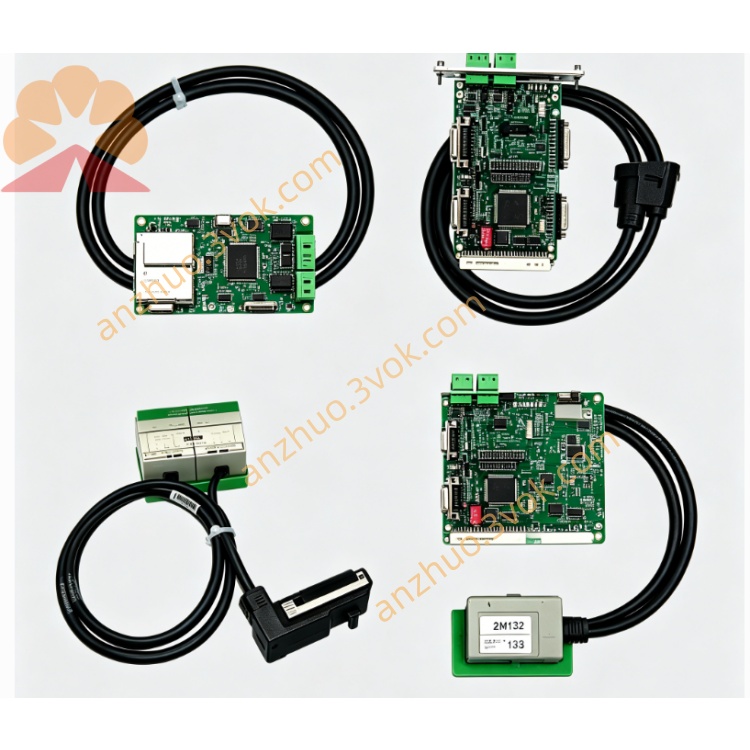
Foxboro FBM223 Product Description
The Foxboro FBM223 (part number P0926GX) is a high-performance PROFIBUS DP Communication Interface Module within the Foxboro I/A Series and EcoStruxure Foxboro DCS portfolios, manufactured by Schneider Electric. It acts as a critical link between PROFIBUS DP slave devices—such as variable frequency drives, remote I/O, valve positioners, and motor starters—and the Foxboro DCS, enabling high-speed, reliable bidirectional data exchange for process monitoring and control. Designed for high-availability and hazardous industrial environments, the FBM223 delivers robust communication, comprehensive diagnostics, and flexible scalability for process industries.
Description
Foxboro FBM223 Product Description
Overview
The Foxboro FBM223 (part number P0926GX) is a high-performance PROFIBUS DP Communication Interface Module within the Foxboro I/A Series and EcoStruxure Foxboro DCS portfolios, manufactured by Schneider Electric. It acts as a critical link between PROFIBUS DP slave devices—such as variable frequency drives, remote I/O, valve positioners, and motor starters—and the Foxboro DCS, enabling high-speed, reliable bidirectional data exchange for process monitoring and control. Designed for high-availability and hazardous industrial environments, the FBM223 delivers robust communication, comprehensive diagnostics, and flexible scalability for process industries.
Key Features
The FBM223 provides one isolated PROFIBUS DP port (RS-485) compliant with EN 50170, supporting DP-V0/DP-V1 protocols for seamless integration with standard PROFIBUS slave devices. It operates as a PROFIBUS Class 1 master, managing up to 31 slave nodes per network at baud rates from 9.6 kbps to 12 Mbps, with automatic baud rate detection for simplified setup. The module supports full device variable access and diagnostic message handling, ensuring complete visibility into slave device status and health.
Communication with the DCS controller (FCP/ZCP) uses a redundant 2 Mbps HDLC fieldbus with automatic A/B path failover, eliminating data loss during communication disruptions and ensuring continuous operation. The FBM223 supports module-level redundancy (dual FBM223 hot standby) for mission-critical applications, alongside hot-swap capability allowing online replacement without DCS shutdown or process interruption.
Rugged construction includes an extruded aluminum enclosure and conformal-coated PCB, rated for ISA S71.04 Class G3 harsh environments, withstanding dust, moisture, vibration, and wide temperature fluctuations. It carries ATEX/IECEx certifications for installation in Class 1 Division 2 and Zone 2 hazardous explosive atmospheres.
Front-panel LED indicators provide clear visual status for power, communication, and network activity, enabling quick on-site troubleshooting without specialized tools. Built-in advanced diagnostics continuously monitor signal quality, power supply, and communication health, delivering real-time fault detection and alerts to minimize unplanned downtime.
Technical Specifications
Manufacturer: Foxboro (Schneider Electric)Compatible Systems: Foxboro I/A Series DCS, EcoStruxure Foxboro DCSModel/Part Number: FBM223 (P0926GX)Communication Port: 1 isolated PROFIBUS DP (RS-485)Supported Protocols: PROFIBUS DP-V0, DP-V1 (Class 1 master)Baud Rate: 9.6 kbps to 12 Mbps (automatic detection)Slave Capacity: Up to 31 nodes per networkMax Data Length: 244 bytes per slaveCommunication with DCS: Redundant 2 Mbps HDLC fieldbus, A/B path redundancy with automatic failoverPower Supply: 24 V DC (+5%/–10% tolerance); max power consumption 7 WIsolation: 2500 V AC (port-to-chassis)Operating Temperature: –20 °C to +70 °C (–4 °F to +158 °F)Storage Temperature: –40 °C to +85 °C (–40 °F to +185 °F)Relative Humidity: 5%–95% non-condensingAltitude: –300 m to +3,000 m (–1,000 ft to +10,000 ft)Enclosure: Extruded aluminum, conformal-coated PCB; IP20 ratingDimensions: 102 mm × 45 mm × 104 mm (4.0 in × 1.8 in × 4.1 in)Weight: 0.28 kg (0.62 lb)Certifications: CE, UL, CSA, ATEX, IECEx, ISA S71.04 Class G3; compliant with EMC Class A (IEC 61000-6-2)
Applications
The FBM223 is widely deployed across process industries requiring reliable PROFIBUS DP integration for critical process monitoring and control. In chemical and petrochemical plants, it connects DCS systems to PROFIBUS-compatible pressure, level, flow, and temperature transmitters, as well as variable frequency drives and valve positioners on reactors, distillation columns, and pipelines, enabling precise process regulation.
In oil and gas facilities—including refineries, offshore platforms, and gas processing stations—it monitors wellhead pressure, pipeline flow, and storage tank level transmitters, and controls choke valves, separator actuators, and compressor capacity controls, ensuring safe, efficient hydrocarbon production even in hazardous explosive atmospheres.
In power generation plants, the FBM223 links DCS systems to PROFIBUS field devices for boiler temperature/pressure sensors, turbine vibration/speed transmitters, and generator excitation control signals, while controlling steam valves, feedwater pumps, and cooling fan actuators for reliable, efficient power plant operation.
In water and wastewater treatment plants, it interfaces with PROFIBUS-compatible pH, dissolved oxygen, turbidity, and level transmitters, and controls dosing pumps, gate valves, and aeration blowers for precise, compliant treatment process control.
In pharmaceutical, food and beverage, and fine chemical industries, the FBM223’s intrinsic safety, high isolation, and regulatory certifications make it suitable for controlled, hygienic, and hazardous processes requiring strict signal integrity and safety compliance, while its compact size and hot-swap capability minimize downtime in space-constrained cabinets.
Installation & Integration
The FBM223 installs on standard DIN rails in Foxboro I/A Series or EcoStruxure Foxboro DCS cabinets, mounting on a dedicated I/A Series baseplate for power distribution and redundant fieldbus communication with the DCS backplane. Field wiring connects to a compatible PROFIBUS termination assembly (TA), which provides surge protection, signal conditioning, and bus termination, supporting both local and remote wiring configurations.
Standard shielded twisted-pair cables are recommended for PROFIBUS field wiring, with proper grounding and bus termination to optimize noise immunity and ensure reliable signal transmission. The PROFIBUS port wires to a daisy-chain of slave devices, with the TA providing bus termination to prevent signal reflection and ensure communication stability.
System configuration is performed via Foxboro DCS software, enabling users to configure PROFIBUS port parameters, assign slave devices, map process data to DCS tags, and set up redundant communication modes. The module is plug-and-play compatible with existing Foxboro systems, requiring minimal on-site setup and supporting hot-swap replacement for maintenance without system shutdown. It integrates seamlessly with other I/A Series modules, including controllers, analog/discrete I/O modules, and communication cards, forming a unified, scalable process control solution.
Maintenance & Support
Routine maintenance for the FBM223 includes visual inspection of the aluminum enclosure for physical damage, dust accumulation, or loose connections, and verification of front-panel LED indicators for normal power, communication, and network operation. Periodic testing of PROFIBUS communication integrity, signal quality, and power supply stability is recommended, especially in high-vibration, corrosive, or strong electromagnetic interference environments. The conformal coating on the PCB protects against moisture and dust, reducing cleaning frequency.
Faulty modules can be repaired by authorized Schneider Electric service providers, with standard and expedited repair options available for critical applications. The FBM223 comes with a 12-month standard warranty against manufacturing defects, with extended warranty options available for long-term operational reliability. For redundant communication configurations, periodic testing of path failover functionality is recommended to ensure fault tolerance readiness。
Get a Quote