
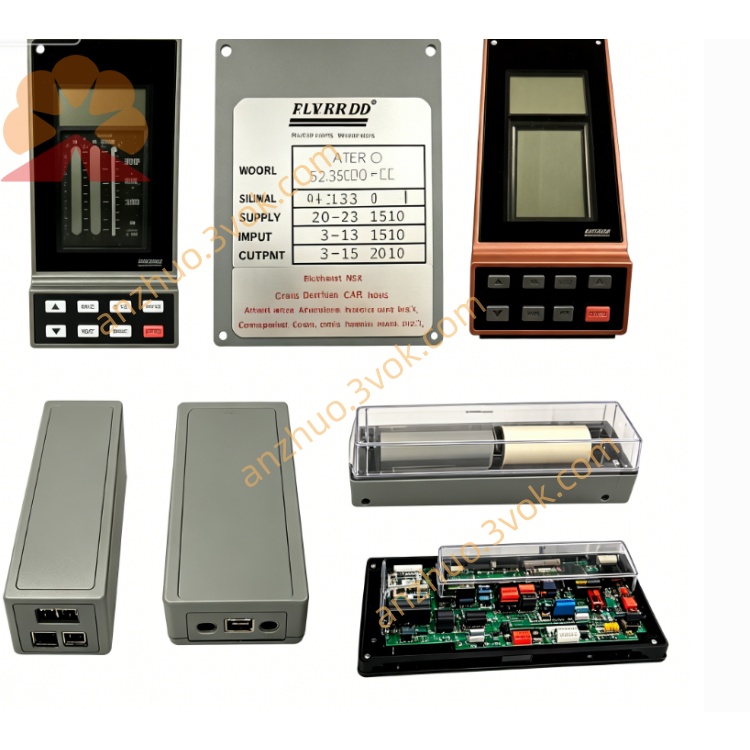
Foxboro FBM214b & FBM216b Combined Product Description
Foxboro FBM214b and FBM216b are high-performance field bus modules developed by Foxboro, now part of Schneider Electric, designed for the I/A Series and Foxboro Evo distributed control systems. Both modules serve as essential field interface units for industrial process automation, supporting standard analog signals and HART communication for smart field transmitters. Built to operate reliably in demanding industrial environments, they deliver precise signal acquisition, bidirectional digital communication and comprehensive device diagnostics. These modules are widely adopted across chemical, petrochemical, oil and gas, power generation, water treatment and other process industries, enabling seamless data exchange between the DCS platform and on-site measurement instruments. Though sharing the same core technical framework and system compatibility, they feature distinct channel configurations and functional designs to meet different on-site I/O layout and application demands.
Description
Foxboro FBM214b & FBM216b Combined Product Description
Overview
Foxboro FBM214b and FBM216b are high-performance field bus modules developed by Foxboro, now part of Schneider Electric, designed for the I/A Series and Foxboro Evo distributed control systems. Both modules serve as essential field interface units for industrial process automation, supporting standard analog signals and HART communication for smart field transmitters. Built to operate reliably in demanding industrial environments, they deliver precise signal acquisition, bidirectional digital communication and comprehensive device diagnostics. These modules are widely adopted across chemical, petrochemical, oil and gas, power generation, water treatment and other process industries, enabling seamless data exchange between the DCS platform and on-site measurement instruments. Though sharing the same core technical framework and system compatibility, they feature distinct channel configurations and functional designs to meet different on-site I/O layout and application demands.
Key Features
Both modules adopt per-channel galvanic isolation design, which effectively eliminates ground loops, electrical crosstalk and transient voltage interference, protecting both the control system backplane and connected field devices. Each channel supports standard 4–20 mA analog signals and superimposed HART FSK digital signals, allowing simultaneous use of conventional analog transmitters and HART-enabled smart instruments on the same module. Integrated dedicated HART modems realize bidirectional communication, so operators can read real-time process variables, retrieve device status information, execute remote configuration and conduct fault diagnosis for field instruments directly through the DCS. All internal circuit boards are coated with conformal material, paired with sturdy metal enclosures and shock-resistant components, delivering excellent resistance against dust, moisture, vibration and temperature fluctuation to adapt to harsh working conditions. Front panel LED indicators clearly display module power status, channel activity and fault alarms, facilitating daily inspection and rapid troubleshooting. They support hot-swap operation, allowing module replacement and maintenance without shutting down the entire control system, which greatly reduces unplanned downtime for production facilities. In addition, both products comply with universal HART protocol specifications and mainstream industrial electromagnetic compatibility and safety standards.
The FBM214b is configured with eight independent input channels, each equipped with a built-in current-limited 24 V DC loop power supply. This design is highly flexible for applications requiring a large number of analog signal collection points, and it can directly power field transmitters without additional external power sources. It is an ideal choice for dense signal acquisition areas in large-scale process plants.
The FBM216b is a four-channel version of the same series. It retains all core performance and communication functions of the series. With fewer channels, it features more compact structure and more stable signal performance in complex electromagnetic environments. It is suitable for regional monitoring points, equipment local control cabinets and application scenarios that require fewer analog input channels. Its simplified channel layout also brings convenience for wiring, maintenance and spare parts management.
Technical Specifications
Manufactured by Foxboro under Schneider Electric, FBM214b and FBM216b are fully compatible with Foxboro I/A Series and Foxboro Evo DCS platforms. The standard input signal for all channels is 4–20 mA DC, and the communication mode follows HART protocol for bidirectional data interaction. The galvanic isolation structure can withstand high common-mode voltage to ensure long-term stable operation of signals. The working temperature range covers typical industrial operating environments, and the applicable relative humidity is 5% to 95% without condensation. Both modules adopt standard industrial cabinet installation structure and match the dedicated baseplate and termination assemblies of I/A Series systems. The built-in loop power supply provides regulated 24 V DC output with over-current protection to prevent damage to field instruments caused by abnormal current. The internal high-precision analog-to-digital conversion circuit guarantees accurate signal sampling and fast data update speed. Both products have passed CE, UL and other international industrial certifications, meeting strict requirements for safety, anti-interference and environmental adaptability in industrial sites.
Applications
These two field bus modules are extensively applied in full-range process control scenarios for industrial automation. In chemical and petrochemical industries, they connect pressure, temperature, flow and liquid level transmitters on reactors, distillation towers and pipelines, realizing continuous monitoring and data collection of process parameters, while using HART functions to manage and diagnose smart instruments remotely. In oil and gas industry including refineries, offshore platforms and gas processing stations, they monitor pipeline operating status, equipment operating parameters and safety-related measurement points, ensuring safe and stable operation of production systems. In power generation industry such as thermal power plants and combined cycle power plants, they collect analog signals from boiler, turbine and auxiliary system transmitters to support automatic regulation and state monitoring of power equipment. In water supply and wastewater treatment plants, they are used for monitoring flow, liquid level, pH value and other parameters of water treatment units, supporting automatic operation of pumping, filtration and chemical dosing systems.
The FBM214b with eight channels is mainly deployed in central control cabinets and main I/O racks with intensive signal points, which can centralize a large number of field measurement signals and improve the integration degree of the control system. The four-channel FBM216b is more often used in local control cabinets near production equipment, small monitoring units and branch control points with scattered signal distribution, achieving flexible layout of regional I/O signals.
Installation & Integration
Both modules adopt standard industrial installation methods and are mounted on dedicated baseplates inside DCS control cabinets. They connect to the DCS controller and backplane through the baseplate to complete power supply and data transmission. Field instruments are connected to module channels via supporting termination assemblies. When wiring, standard industrial cables are recommended, and reasonable shielding and grounding operations need to be implemented according to specifications to optimize signal anti-interference ability. If external power supplies are used for field loops, matching auxiliary accessories shall be installed to avoid HART communication interference. System configuration is completed through supporting Foxboro DCS software, including channel enabling, signal parameter setting, HART communication configuration and alarm threshold definition. Both modules support plug-and-play and hot-swap functions, so there is no need to stop the running system during module replacement. They can be freely combined with other I/A Series controllers, output modules and communication cards to build a complete distributed control system according to actual I/O quantity requirements.
Maintenance & Support
Routine daily maintenance includes visual inspection of module appearance to check for damage, dust accumulation and loose wiring terminals, and observation of front LED indicators to confirm normal operating status of each channel. It is recommended to periodically test signal sampling accuracy, loop power output and HART communication quality, especially in high-vibration, corrosive or strong electromagnetic interference environments. The conformal coating on internal circuit boards can effectively resist moisture and corrosion, reducing the frequency of cleaning work. For faulty modules, users can obtain professional repair services from authorized Schneider Electric service providers, with both standard and expedited maintenance options available. The products are covered by a standard twelve-month warranty against manufacturing defects, and extended warranty services can be selected according to on-site operation requirements to ensure long-term reliable operation of equipment.
Get a Quote