
Description
TERASAKI AVT-1-B 9478: Air Circuit Breaker Voltage Trip Device Product Description
Brand and Product Identification
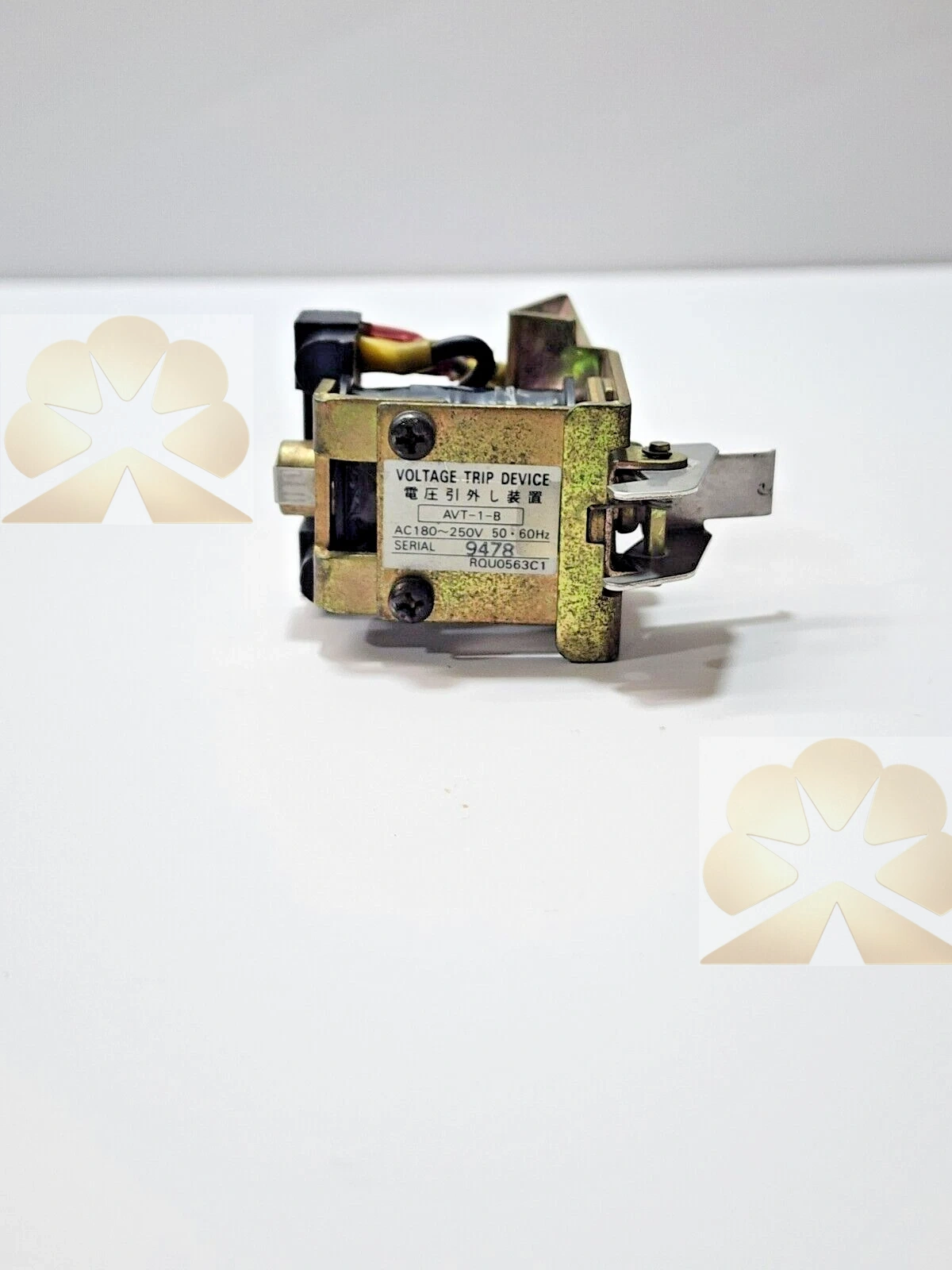
The TERASAKI AVT-1-B, with identification number 9478, is a voltage trip device produced by Terasaki Electric Co., Ltd. for use with Terasaki air circuit breakers. The AVT-1-B model corresponds to a shunt trip or opening trip coil device installed as a breaker accessory, rather than a complete circuit breaker by itself. Related Terasaki trip device catalog and coil codes include RQU0563 series codes such as RQU0563A1, RQU0563C1 and RQU0563H1, and part references such as BTVB0001B or BTVB0007-B. The number 9478 serves as the unit or internal identification reference; the exact coil voltage and breaker model must be confirmed from the device label or Terasaki documentation before installation.
Product Function and System Role
The AVT-1-B voltage trip device is an electrically operated trip coil that opens the associated Terasaki air circuit breaker when an external control signal energizes the coil. It is used for remote opening, emergency shutdown, protection relay trip initiation or electrical interlock of the breaker. The trip device receives a control voltage from an external protection relay, switch, pushbutton or control circuit and mechanically releases the breaker latch, causing the circuit breaker to trip open. It functions as an accessory operating mechanism of the ACB, not as a standalone protective switch.
Voltage Ratings and Coil Versions
The AVT-1-B is supplied in different coil voltage ratings according to the application. Listed versions include AC 180 to 250 V at 50 or 60 Hz, AC 421 to 480 V at 50 or 60 Hz, AC 100 to 150 V at 50 or 60 Hz, and DC 24 V. Coil references differ by voltage, such as RQU0563C1 for the AC 180 to 250 V version and RQU0563H1 for the DC 24 V version. The actual AVT-1-B unit marked 9478 should be matched to the control supply voltage shown on its label; using the wrong coil voltage can prevent tripping, damage the coil or create an unsafe breaker condition.
Construction and Mechanical Connection
The AVT-1-B trip device is mounted on the side plate or accessory compartment of the compatible Terasaki air circuit breaker. It consists of the trip coil, armature or plunger mechanism, terminal wiring connections and mounting hardware that engage the breaker trip latch. Related Terasaki trip devices are designed as breaker accessories and operate with the breaker's stored-energy or spring mechanism to release the closed breaker. The device weight for the listed AVT-1-B version is approximately 250 g, but actual weight and dimensions depend on the coil version and associated ACB frame.
Operating Principle
When the control circuit closes and applies rated voltage to the AVT-1-B coil, the coil energizes and its plunger or armature acts on the breaker trip mechanism. The breaker latch releases, the ACB opens under its stored energy or spring mechanism, and the connected electrical circuit is disconnected. The trip indicator associated with the breaker closes or shows tripped status when the ACB trips by overcurrent release, shunt trip device, undervoltage trip device or manual OFF operation, allowing remote or local alarm indication of the trip condition.
Compatible Breaker and Control Context
Terasaki air circuit breakers are used in low-voltage power distribution, main switchboards, generator or feeder protection, marine and industrial switchgear. The AVT-1-B shunt trip device supports remote opening initiated by an external protection relay, emergency stop, reverse power relay, underfrequency relay, fire alarm or other safety or control interlock. It must be paired with the correct Terasaki ACB frame and trip device option; continuously rated shunt trip and undervoltage trip devices cannot be fitted to the same ACB in the Terasaki arrangement described in breaker catalog documentation.
Installation and Wiring Notes
Installation and commissioning must be performed by qualified electrical personnel following the Terasaki ACB instruction manual, trip device wiring diagram and local electrical codes. Verify coil voltage, frequency or DC rating, terminal assignment and control contact rating before energizing. The trip coil control circuit should be wired according to the breaker accessory diagram, with appropriate protection and control contact rating. Test the trip function using the breaker test procedure or designated trip control after installation, and confirm that the breaker opens reliably and that trip indication or alarm feedback operates as required. Do not reuse a coil rated for a different supply voltage.
Maintenance and Fault Checks
Routine maintenance should inspect the trip device mounting, coil wiring, terminals, plunger or armature operation and breaker trip latch engagement. Check for loose connections, coil overheating, mechanical binding or corrosion in the accessory compartment. If the breaker fails to trip on command, verify control supply voltage, control contacts, coil continuity, wiring to the trip device and associated protection relay output. Trip device replacement should match the original Terasaki coil code, voltage rating and breaker model, and functional testing should be repeated after any replacement or maintenance work.
Advantages and Selection Notes
The AVT-1-B provides remote electrical tripping for Terasaki air circuit breakers, supporting safety shutdown and control interlock functions in power distribution systems. Its advantage is compatibility with Terasaki ACB accessories and straightforward coil-based trip operation. When selecting or replacing the AVT-1-B, confirm the exact coil voltage, coil code, breaker frame, trip function and wiring diagram. The AVT-1-B is a breaker trip coil accessory, not a complete circuit breaker, protection relay, control switch or power distribution feeder; its role is to electrically release the breaker trip mechanism when the control signal is applied.
Get a Quote