
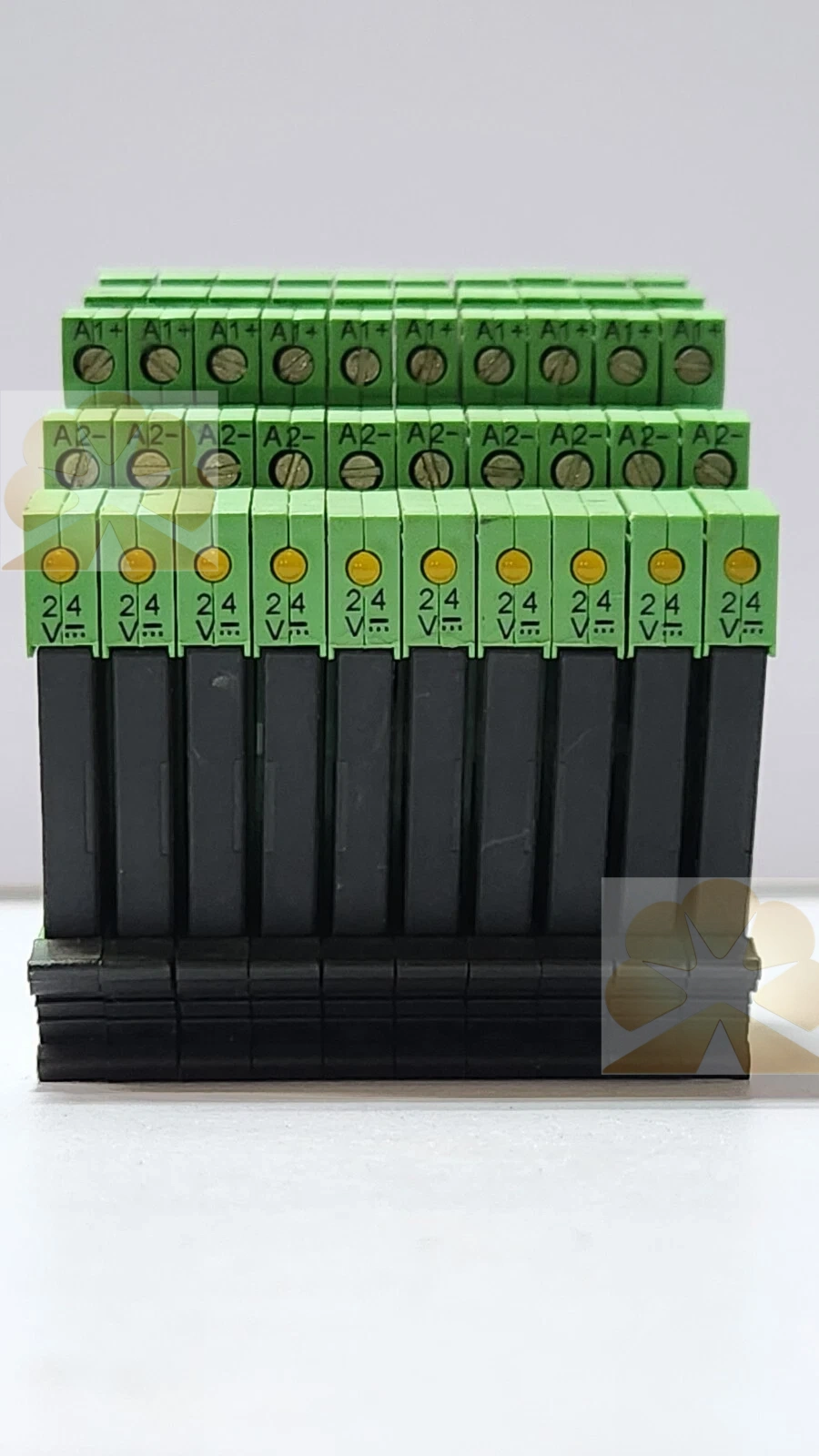
Description
PHOENIX CONTACT 2966595 PLC-BSC-24DC/1/ACT: PLC-INTERFACE Solid-State Relay Module Product Description
Brand and Product Identification
The PHOENIX CONTACT 2966595 corresponds to the miniature solid-state relay OPT-24DC/24DC/2, used together with the PLC-BSC-24DC/1/ACT basic terminal block in the Phoenix Contact PLC-INTERFACE system. Order number 2966595 identifies the plug-in miniature solid-state relay itself, while PLC-BSC-24DC/1/ACT is the relay base or actuator terminal block on which the relay plugs. The base block order number in the related PLC-BSC documentation is 2966058, so the complete module is commonly described as the PLC-BSC-24DC/1/ACT base fitted with the 2966595 OPT solid-state relay. The PLC-INTERFACE range provides compact interface switching between PLC or control outputs and field loads, with separate coil-side and load-side wiring on a DIN-rail mounted terminal block.
System Architecture and Function
The PLC-INTERFACE combination separates the control-side signal from the load-side circuit. The 24 V DC PLC output drives the solid-state relay input, and the relay output switches the connected DC load through the normally open contact path. The base block is a 6.2 mm PLC actuator terminal block with screw connection and a load return line connection, designated BB in the Phoenix Contact catalog. It is designed for mounting on an NS 35/7.5 DIN rail. The plug-in relay can be inserted or removed without rewiring the base terminals, which simplifies replacement and reduces service time in control cabinets.
Input Side Specifications
The OPT-24DC/24DC/2 relay has a nominal input voltage of 24 V DC, with an input voltage range from 0.8 to 1.2 times the nominal voltage. The zero-signal switching threshold is a voltage of 10 V or less, and the one-signal switching threshold is 16 V or higher. Typical input current at nominal voltage is 7 mA. Typical response time is 20 microseconds at nominal voltage, and typical turn-off time is 300 microseconds at nominal voltage. The transmission frequency is 300 Hz. The base block provides a status LED for input indication and includes a damping diode and polarity protection diode on the input side.
Output Side Specifications
The solid-state relay output covers an output voltage range of 3 V DC to 33 V DC. The limiting continuous current is 3 A, subject to the derating curve in the datasheet. Maximum inrush current is 15 A for a 10 ms pulse. Voltage drop at maximum limiting continuous current is 150 mV or less. The output circuit is a two-wire floating output, and the output provides reverse-polarity protection and surge protection. Because this is a DC solid-state relay, it is intended for DC load switching rather than AC mains contact switching.
Isolation, Protection and Standards
Input-to-output test voltage is 2.5 kV at 50 Hz for one minute. The relay operates at a 100 percent duty cycle. The device complies with IEC 60664 and EN 50178. The solid-state relay is wear-free and durable compared with electromechanical contacts, and it is resistant to vibration and shock. The relay itself is rated RT III, wash-tight to a level comparable with IP67, while the relay base provides IP20 protection. The PCB-mountable relay can also be soldered directly onto a circuit board where the base terminal block is not used.
Mechanical and Commercial Data
The OPT miniature solid-state relay measures 5 mm wide, 28 mm high and 15 mm deep. Ambient operating temperature ranges from minus 25 degrees Celsius to 60 degrees Celsius, and storage or transport temperature ranges from minus 25 degrees Celsius to 70 degrees Celsius. The relay weighs 5.2 grams excluding packaging. Packing unit is 10 pieces, minimum order quantity is 10 pieces, and country of origin is Hungary. The screw terminal base block accepts the conductor cross sections and stripping length specified in the PLC-BSC datasheet, typically 8 mm stripping length with M3 screw terminals.
Typical Application Scenarios
The PLC-INTERFACE module is used in PLC output wiring, control cabinet interface panels, digital output isolation, solenoid valve switching, indicator or pilot light control, small DC load switching, and signal amplification between a PLC output and a field device. It suits applications where a PLC digital output needs a compact interfacing relay, where fast solid-state switching is preferred over mechanical contacts, or where relay replacement must be quick during maintenance. Common industries include machine building, automation systems, packaging equipment, material handling, process control panels and general industrial control.
Installation and Wiring Notes
Installation begins by clipping the PLC-BSC base onto the NS 35/7.5 DIN rail. The PLC control signal is wired to the base input terminals on the coil side, and the load circuit is connected to the output terminals on the load side. The load return line connection is used according to the base block wiring diagram. The OPT relay is then plugged into the base; correct orientation must be observed because the relay pins correspond to the input and output terminals. Wiring should follow the Phoenix Contact PLC-INTERFACE documentation, local electrical codes and the load voltage and current limits. The designer must verify that the DC load voltage remains within 3 to 33 V DC and that continuous load current stays within the 3 A rating and applicable derating.
Advantages and Selection Notes
The 2966595 PLC-BSC-24DC/1/ACT combination offers a compact 6.2 mm terminal width, plug-in relay replacement, fast solid-state switching, wear-free operation, LED status indication, reverse-polarity and surge protection, and DIN-rail mounting in a standard PLC interface arrangement. When selecting the module, distinguish the solid-state relay OPT-24DC/24DC/2 from an electromechanical miniature relay version in the same PLC-BSC base, because contact ratings, coil current and switching behavior differ. The module is an interface relay or solid-state switch, not a circuit breaker, contactor, motor starter, power supply or field sensor; its role is to switch and interface a low-power DC output signal between control system and field load.
Get a Quote