
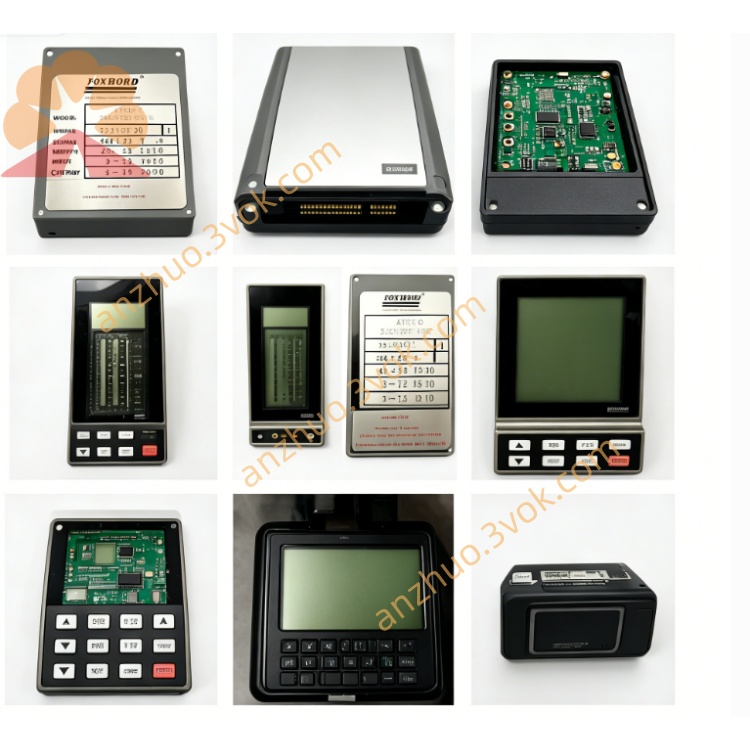
Foxboro P0916RJ Compression Screw Termination Assembly for FBM203 8-Channel mV / Resistance Input Module
Description
Foxboro P0916RJ is a compression screw type signal termination assembly exclusively designed for Schneider EcoStruxure Foxboro I/A Series FBM203 universal millivolt and resistance input module. It supports low-level millivolt signals from custom thermocouples, strain gauge transducers, and resistance signals from 2/3-wire slide wire displacement sensors, potentiometers and low-temperature RTDs. Integrated with onboard cold junction compensation, per-channel RC noise filtering, TVS surge suppression and full-group galvanic isolation circuits, it suppresses industrial power frequency and electromagnetic interference to ensure stable acquisition of microvolt weak signals. Adopting double-layer compression screw terminal layout and standard 37-pin D-subminiature connector, it transmits conditioned mV/resistance signals to FBM203 DCS acquisition module reliably under long-distance wiring. Featuring wide temperature operating range, vibration-resistant wiring structure and standard 35mm DIN rail cabinet mounting, it is fully compatible with Foxboro I/A Series baseplates and Type 4 37-core signal cables, serving as universal wiring accessory for strain measurement, displacement detection and custom low-temperature temperature monitoring loops.
Brand: Foxboro (Schneider EcoStruxure Foxboro)
Model: P0916RJ
Matching FBM Module: FBM203 8-channel mV / Resistance universal input module
Product Category: Universal Weak mV & Resistance Signal Termination Assembly
Wiring Type: Compression screw terminal
Supported Input Signals:
−100mV ~ +100mV millivolt signals (TC, strain gauge, micro-transducer)
0~4kΩ resistance input (potentiometer, slide wire, low-range RTD)
Built-in Function: High-precision onboard cold junction compensation for thermocouple measurement
Connection Port: 37-pin male D-subminiature connector
Matching Cable: Standard Type 4 termination cable, maximum transmission distance 30m
3.2 Electrical Specifications
Weak Signal Conditioning Performance
Millivolt input range: −100mV ~ +100mV, suitable for strain bridge and custom thermocouple sensors
Resistance measurement range: 0~4000Ω, constant low excitation current to avoid self-heating error
Onboard CJC accuracy: ±0.5°C for thermocouple channels
Isolation & Anti-Interference Protection
Whole-group galvanic isolation, isolation withstand voltage 600V AC for 1 minute
Independent RC low-pass filter per channel to attenuate 50/60Hz power frequency noise
Bidirectional TVS diodes for electrostatic discharge and transient voltage spike suppression
Terminal Layout: Double-layer compression screw terminals, separated dedicated terminal groups for mV positive/negative leads, resistance multi-wire sensors and shared cabinet auxiliary power terminals
Auxiliary Power Supply: 24VDC ±10% standard cabinet auxiliary power for CJC and signal conditioning circuits
3.3 Mechanical & Environmental Parameters
Housing Material: UL94-V0 flame-retardant PA polyamide industrial plastic, dust-proof and resistant to weak corrosive vapor
Wiring Mode: Compression screw fastening wiring, anti-loosening under continuous mechanical vibration of test benches and production lines
Installation Standard: Vertical 35mm DIN rail snap mounting for Foxboro standard closed control cabinet
Operating Temperature: −20°C ~ +70°C
Storage & Transportation Temperature: −40°C ~ +85°C
Environmental Grade: Comply with ISA S71.04 G3 harsh industrial environment (heavy dust, strong electromagnetic interference)
Protection Class: IP20, only applicable to indoor cabinet installation
Net Weight: Approximately 445g
3.4 Installation & Operation Guidelines
Pre-installation Inspection
Confirm model matches FBM203 mV/resistance input module; inspect housing without cracks, intact compression terminals and undamaged D-sub pins without bending or oxidation. Cut off cabinet 24VDC auxiliary power before all wiring operations.
Wiring Procedures
Connect strain gauge/millivolt sensor cables and resistance potentiometer wires to corresponding dedicated compression screw terminals; strictly follow signal polarity;
Do not mix millivolt and resistance sensor wiring on the same channel to prevent measurement deviation;
Tighten all terminal screws evenly with standard flat screwdriver to eliminate poor contact-induced signal drift;
Link Type 4 37-pin termination cable between P0916RJ D-sub port and FBM203 baseplate interface.
Power-on Debugging
Restore cabinet auxiliary power, launch Foxboro Evo DCS configuration software; enter FBM203 module diagnosis page to configure each channel signal type (mV or resistance). Calibrate zero and span for strain gauge channels; adjust cold junction compensation offset for thermocouple mV signals; extend filter time to suppress field electromagnetic noise.
Routine Maintenance
Clean terminal dust and oxide deposits every 3 months; re-tighten compression screws in high-vibration workshop environments; replace P0916RJ immediately if persistent signal drift, channel open/short-circuit alarm or internal CJC conditioning circuit burnout occurs.
Safety Precautions
Live wiring and hot plug/unplug of D-sub connectors are strictly prohibited; do not connect input voltage exceeding 30V DC to avoid burnout of microvolt weak-signal circuits; this product cannot be installed in open-air, humid, flammable and explosive hazardous atmospheres.
3.5 System Compatibility
4. Application Fields
Petrochemical & Natural Gas Industry
Pipeline strain stress monitoring, reactor expansion displacement potentiometer signal collection, low-temperature thermocouple millivolt temperature measurement for storage tank safety monitoring.
Thermal, Hydropower & Energy Storage Power Stations
Turbine vibration strain gauge signal acquisition, valve stroke slide wire resistance feedback, cooling pipeline low-temperature thermocouple multi-point monitoring.
Metallurgy & Mining Automation
Rolling mill force strain gauge measurement, hydraulic cylinder displacement potentiometer signal collection, furnace auxiliary pipeline low-temperature temperature monitoring.
New Energy Battery Production
Battery press equipment strain detection, mold displacement resistance sensor signal acquisition, drying oven low-temperature thermocouple monitoring.
Pharmaceutical & Food Automated Production
Reaction tank pressure strain transducer signal collection, filling machine stroke potentiometer feedback, low-temperature sterilization equipment temperature monitoring.
Pulp & Paper Manufacturing
Paper thickness roll strain gauge measurement, pulp valve displacement slide wire signal collection, workshop pipeline ambient temperature monitoring.
General Industrial Test & Heat Treatment
Universal material tensile test bench strain signal acquisition, hydraulic equipment displacement monitoring, small heat treatment furnace low-temperature temperature measurement.
Technical Note
Content Confirmation
Determined content: Compression screw terminal design, matched FBM203 8-channel mV/resistance universal input module, dual support for microvolt strain/mV signals and 0~4kΩ resistance sensors, built-in cold junction compensation, group galvanic isolation, dedicated low-noise filtering for weak signals, 37-pin D-sub interface, DIN rail installation, universal for strain, displacement and low-temperature measurement industrial scenarios.
Content requiring further verification: Ultra-long distance weak signal cable attenuation parameters, explosion-proof matched accessories for hazardous areas, customer customized cabinet wiring layout drawings.
Get a Quote