
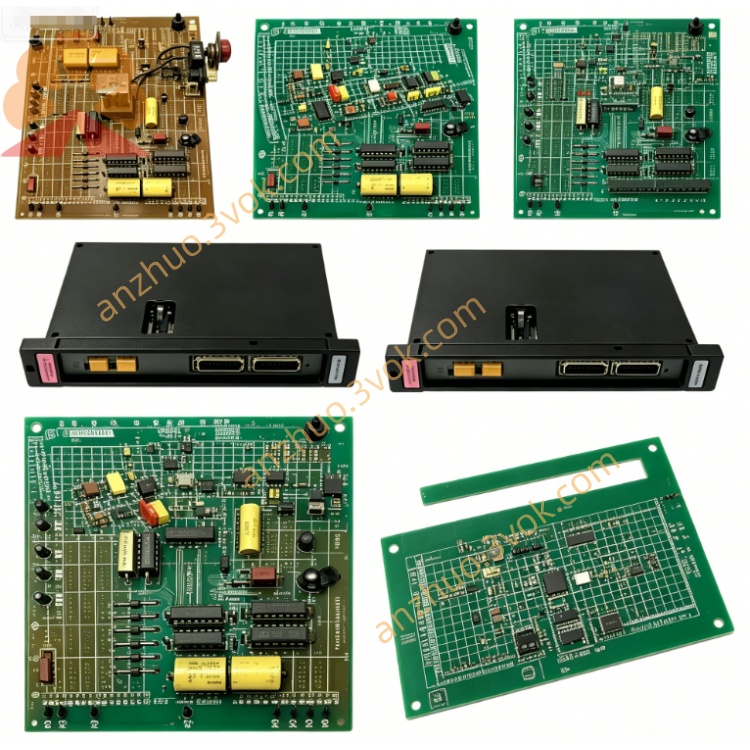
RELIANCE 64418-YA industrial heavy-duty electromagnetic relay
64418-YA is an industrial heavy-duty electromagnetic relay from Reliance NBR series, specially engineered for field loss protection and auxiliary interlock circuits of Reliance classic SCR DC drives and AutoMax control cabinets. Original production has been discontinued. Available market resources include unused original surplus stock and fully inspected refurbished relays for maintenance retrofit on outdated metallurgical, papermaking and chemical DC drive equipment. It shares identical mounting footprint with other 64418 family parts like 64418RW, 64418-WA and 64418-1X for direct drop-in field replacement.
Description
Product Introduction
64418-YA is an industrial heavy-duty electromagnetic relay from Reliance NBR series, specially engineered for field loss protection and auxiliary interlock circuits of Reliance classic SCR DC drives and AutoMax control cabinets. Original production has been discontinued. Available market resources include unused original surplus stock and fully inspected refurbished relays for maintenance retrofit on outdated metallurgical, papermaking and chemical DC drive equipment. It shares identical mounting footprint with other 64418 family parts like 64418RW, 64418-WA and 64418-1X for direct drop-in field replacement.
Model Definition
64418 serves as the common base part number of Reliance NBR standard relay product platform. The suffix YA defines exclusive coil voltage grade and contact configuration variant. Letter Y represents specific coil voltage grouping while A stands for internal winding and terminal layout revision from factory. Various suffix codes only adjust coil rating and contact form without changing overall mechanical dimension and mounting hole layout.
Technical Specifications
Rated coil operating voltage is 240VAC with nominal coil power consumption of 8.2W. Contact type is SPDT single-pole double-throw, rated resistive switching capacity of 7A at 250VAC and maximum interrupt voltage up to 300VAC. Dielectric withstand voltage between coil winding and contact assembly reaches 2100VAC, and insulation resistance under normal ambient is higher than 1000 megaohms. Mechanical switching lifespan exceeds 9 million cycles, and electrical service life under full rated load exceeds 90000 operations. Operating ambient temperature ranges from -25℃ to +65℃, storage temperature spans from -40℃ to +85℃, and working relative humidity is between 5% and 95% within non-condensing environment. The component meets UL industrial certification requirements.
Interface and Communication Configuration
The relay features phenolic base paired with metal mounting frame and four pre-drilled fixing holes for screw installation inside drive cabinets. Exposed screw-type copper terminals on front are designed for direct hard wiring without detachable plug socket. No built-in digital communication port is available; all circuit connections are implemented via hard wiring into field excitation loop and cabinet interlock control circuits.
Core Functions
Its primary task is continuous monitoring of DC motor field excitation current. It changes contact status instantly to break main enable interlock signal and lock drive output once field open-circuit or field-loss fault happens to prevent destructive motor overspeed. Besides field loss protection, it executes auxiliary circuit switching for cabinet auxiliary power and transfers fault feedback signals between field devices and AutoMax main control unit.
Application Scenarios
It is commonly mounted inside Reliance SCR DC drive cabinets for metallurgical rolling mill drives, papermaking drying cylinder motors and chemical industry high-power DC driven pumps. It acts as critical spare component for routine maintenance and control cabinet upgrading of legacy Reliance automation drive systems.
Operation and Maintenance Instructions
Disconnect full cabinet power supply and wait at least 20 minutes for complete residual charge release before relay removal or terminal rewiring. Carry out quarterly routine maintenance to clear accumulated core dust with dry low-pressure compressed air, tighten terminal screws and check terminals for oxidation corrosion. If the drive triggers unexpected field-loss alarm without real circuit failure, test coil integrity and contact ablation first before replacing the whole relay. Prevent transient overvoltage surge on coil terminals to avoid permanent internal coil winding damage.
Get a Quote