
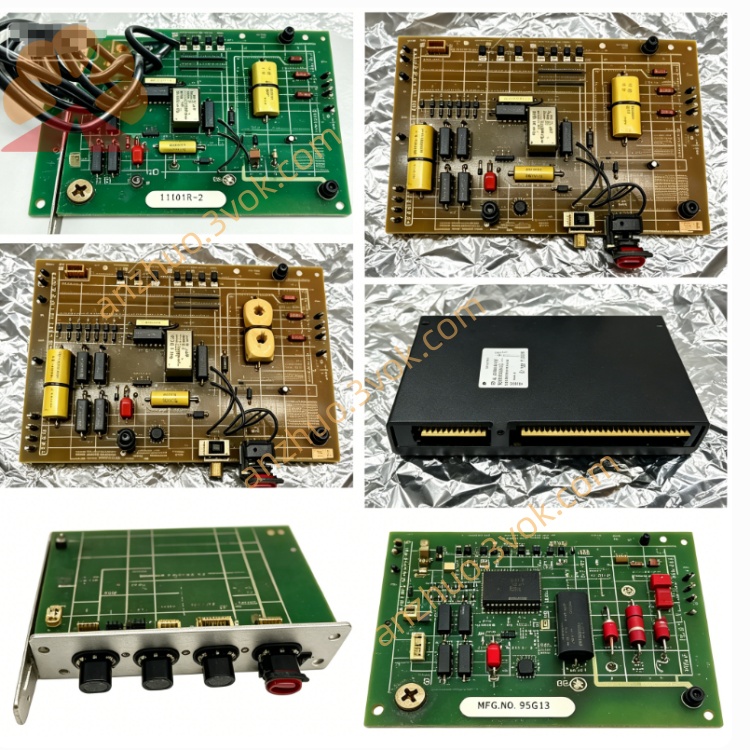
RELIANCE 61C-544A upgraded 16-channel RTD input module
61C-544A is an upgraded 16-channel RTD input module within Reliance AutoMax/AutoMate 61C distributed I/O series, upgraded from standard 61C-544 base model for Pt100 thermal resistance temperature measurement. Original production has been permanently discontinued. Available market supplies consist of unused surplus original units and fully calibrated refurbished modules for maintenance replacement and control system retrofitting on legacy metallurgical, chemical, papermaking and thermal power automation facilities.
Description
Product Introduction
61C-544A is an upgraded 16-channel RTD input module within Reliance AutoMax/AutoMate 61C distributed I/O series, upgraded from standard 61C-544 base model for Pt100 thermal resistance temperature measurement. Original production has been permanently discontinued. Available market supplies consist of unused surplus original units and fully calibrated refurbished modules for maintenance replacement and control system retrofitting on legacy metallurgical, chemical, papermaking and thermal power automation facilities.
Model Definition
61C is the unified series identifier for Reliance rail-mounted distributed I/O modules. Numeral 544 defines core specification of exclusive 16-channel RTD temperature input design. Suffix A indicates revised hardware version featuring optimized constant-current excitation circuit, upgraded 14-bit A/D conversion and improved wiring fault diagnosis, which is fully pin-to-pin interchangeable with original 61C-544 without rack or wiring modification during field replacement.
Technical Specifications
The module contains 16 independent measurement channels configurable for 2-wire,3-wire and 4-wire standard Pt100 sensors via upper controller programming, and supports multi-standard Pt100 temperature characteristic curves selection. Effective measurement range covers -200℃ to +850℃ with 14-bit A/D resolution and overall accuracy better than ±0.2% full scale. Each channel is equipped with individual constant-current excitation source, and module operating power is fully sourced from backplane bus without external auxiliary power requirement. Built-in hardware detects open or short circuit of field sensor wiring, and users may set sampling average cycles from 1 to 60 times plus four groups of independent temperature alarm thresholds per channel. Dielectric isolation voltage between field circuit and internal control bus reaches 2500VAC. Continuous operating ambient temperature ranges from -20℃ to +55℃, storage temperature spans from -40℃ to +85℃, and working relative humidity is limited between 5% and 95% under non-condensing environment. The product complies with UL and CE industrial certification and follows unified DIN mounting dimension of full 61C series modules. Full channel scanning cycle is 16.6ms under 60Hz power supply and 20ms under 50Hz power supply.
Interface and Communication Configuration
A dedicated proprietary gold-plated backplane connector is arranged on module rear for rack insertion, realizing digital temperature data exchange with host CPU via manufacturer exclusive internal bus protocol. Detachable screw terminal block on front panel is designed for field Pt100 sensor wiring and allows connection with external terminal adaptors for long-distance centralized wiring expansion. One global RUN and communication status LED is fitted on front face while no individual channel status indicators are equipped. No onboard RS485 or Modbus external communication port is pre-installed, and all data interaction depends entirely on rack internal backplane bus transmission.
Core Functions
It provides stable constant-current excitation to field-mounted Pt100 RTD sensors, converts resistance changes caused by temperature variation into analog electrical signals and suppresses power frequency interference through internal analog filter circuit. After high precision A/D conversion, processed digital temperature data is cyclically uploaded to upper AutoMax PLC controller over backplane bus. The module automatically generates fault codes and transmits alarm information to control system once open or short circuit occurs on sensor cables. Configurable sampling averaging effectively reduces measurement jitter from field disturbance, and independent over-limit temperature warning is available per channel. This unit supports mixed installation with other 61C series digital and analog I/O modules on identical mounting rail to build flexible distributed multi-point temperature acquisition system.
Application Scenarios
This module is widely adopted for heating furnace wall temperature monitoring in metallurgical plants, reactor and pipeline temperature pickup for chemical production lines, drying roller temperature detection of papermaking machinery and multi-point thermal parameter measurement for boiler and heat exchanger equipment in thermal power stations. It serves as common spare part for cabinet upgrade projects of outdated production lines with large amounts of scattered field temperature measuring points away from central control room.
Operation and Maintenance Instructions
Cut off total power supply of control rack and wait more than 15 minutes for complete residual charge release of internal capacitors before module disassembly, replacement or field terminal rewiring. Implement semi-annual routine maintenance including tightening terminal screws, removing internal accumulated dust with dry low-pressure compressed air and checking terminal pins for oxidation or corrosion. In case of abnormal temperature reading or irregular indicator status, inspect external sensor wiring and Pt100 parameters first to eliminate peripheral circuit faults before module replacement. Avoid overvoltage input on signal terminals to prevent permanent damage to internal constant-current source and A/D conversion components. Complete full-channel precision calibration once per year for modules running continuously over long periods to guarantee consistent measurement accuracy.
Get a Quote