
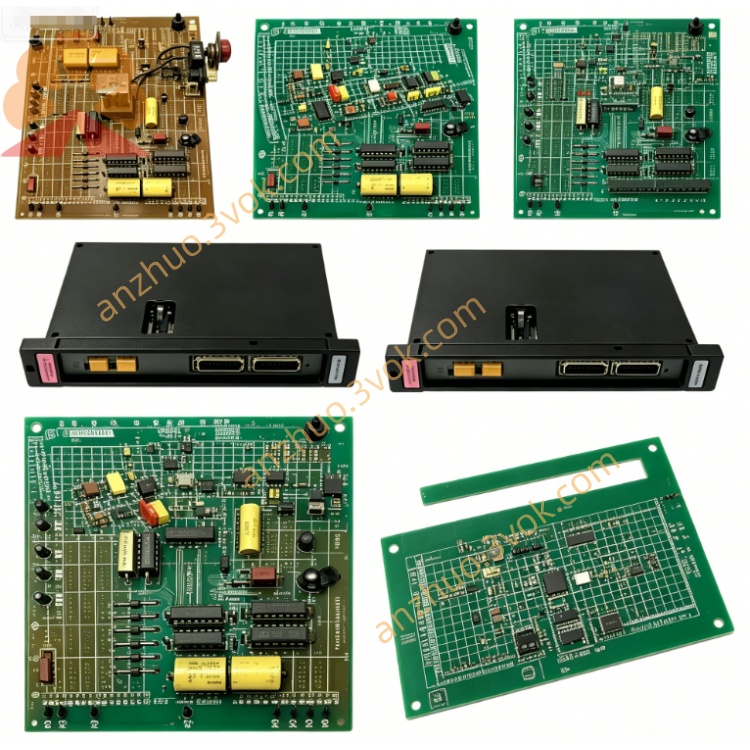
RELIANCE 57C-413B upgraded common memory module
The RELIANCE 57C-413B is an upgraded common memory module tailored for AutoMax and DCS 5000 industrial control systems. It features a standard single-slot rack mounting design. As an enhanced revision of the common memory module series, it adopts optimized circuits and upgraded components to deliver better stability and anti-interference capability. It is responsible for data sharing and bus arbitration in multi-processor racks, and supports long-term data retention after power loss to ensure steady operation of the whole control system in industrial sites.
Description
Product Overview
The RELIANCE 57C-413B is an upgraded common memory module tailored for AutoMax and DCS 5000 industrial control systems. It features a standard single-slot rack mounting design. As an enhanced revision of the common memory module series, it adopts optimized circuits and upgraded components to deliver better stability and anti-interference capability. It is responsible for data sharing and bus arbitration in multi-processor racks, and supports long-term data retention after power loss to ensure steady operation of the whole control system in industrial sites.
Model Definition
RELIANCE is the brand of industrial control products. 57C refers to the system and I/O module series for the AutoMax control platform. 413 is the base model code for common memory modules. The hyphen is part of the standard part number format, and the suffix B represents the second hardware revision. This module maintains full mechanical and functional compatibility with earlier versions of the same series, as well as standard AutoMax racks and system firmware.
Technical Parameters
This module is configured with 256 KB shared memory for data storage and exchange. It draws power from the rack backplane with a working current of approximately 1.05 A at 5 VDC. It applies a dual backup solution with 3.6 V lithium battery and super capacitor. The built-in data can be retained for 600 to 2000 days with normal battery power, and 130 to 400 minutes relying solely on the capacitor. The operating temperature ranges from 0 degrees Celsius to 60 degrees Celsius, and it works properly under relative humidity between 5 percent and 90 percent without condensation. Two status indicators on the front panel show the system operating state and battery condition in real time. It is generally installed in slot 0 to manage bus access for multi-processor configurations.
Interface and Communication Configuration
The rear connector connects to the rack backplane to receive power and conduct high-speed parallel data communication with all processor modules inside the rack. All data transmission complies with the proprietary bus protocol of the AutoMax system. The module executes bus arbitration to coordinate access requests from multiple processors and prevent signal conflicts. No external wiring terminals or additional communication ports are arranged on the front panel, only status indicators for operational monitoring. All data and signal interactions are completed via the rack backplane.
Core Functions
It provides global shared memory resources to realize real-time data exchange and parameter synchronization among multiple processors in one rack. It carries out bus arbitration to avoid backplane access conflicts during parallel operation of multiple modules. The battery and capacitor backup system protects stored data from loss when the system is powered off. It integrates a system watchdog function to monitor the overall running status of the control rack. It also continuously checks battery health and reminds users to replace the battery when performance degrades.
Application Scenarios
This module is mainly deployed in multi-processor control racks built on AutoMax and DCS 5000 platforms. It is widely used in steel production, papermaking, chemical processing, power generation, machinery manufacturing and other industrial fields. It is ideal for complex automation systems that require coordinated operation of multiple controllers and long-term preservation of configuration data and operating parameters.
Operation and Maintenance Instructions
Disconnect the system power before installing or removing the module. Insert the module into the designated slot and confirm a solid connection with the backplane. Use standard 3.6 V lithium batteries for data backup, and replace the battery promptly when the abnormal indicator is triggered. Take proper anti-static measures during maintenance and battery replacement. Keep the working environment clean, dry and well ventilated, and keep away from dust, moisture and corrosive substances. Inspect indicator lights and connection points regularly. Do not disassemble or modify the module without permission. Replace it with the identical model once faults occur to ensure stable system operation.
Get a Quote