
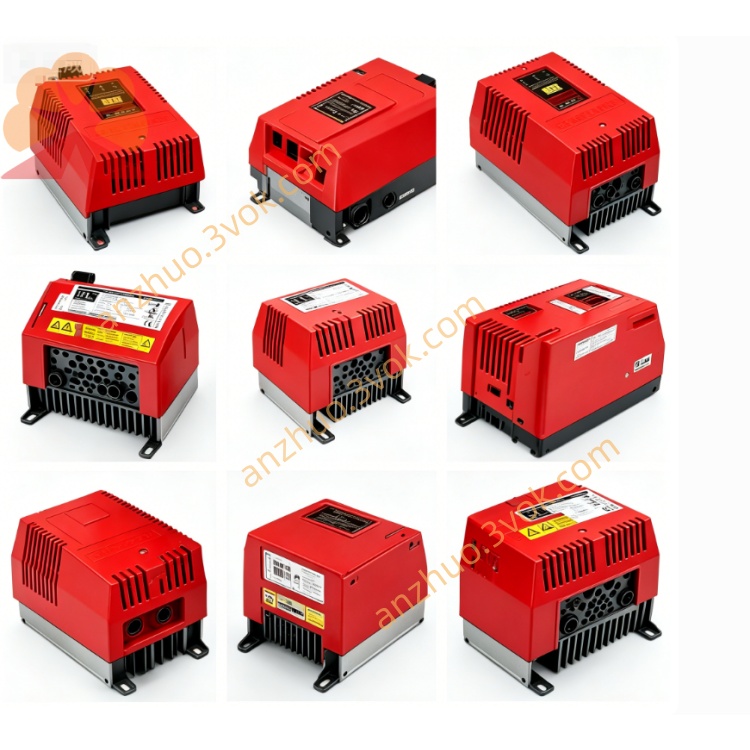
SEW WF37-AQH80 SPIROPLAN Right-Angle Gear Unit
Description
1.1 Product Overview
1.2 Model Code Definition
WF37: Parallel shaft gear unit, frame size 37, foot-mounted, hollow output shaft.
AQH80: Input flange for IEC frame size 80 standard motors.
1.3 Safety Instructions
Installation, commissioning, and maintenance must be performed by qualified personnel.
Disconnect power before any service; never operate beyond rated torque/speed.
Avoid heavy impact, corrosive environments, and excessive dust.
Factory-sealed for lifetime lubrication; do not disassemble.
Ensure rigid mounting to prevent vibration.
2. Technical Specifications
2.1 Performance Data
Type: Parallel shaft helical gear unit
Max Output Torque: 110 Nm
Gear Ratio: 3.20 – 69.05
Input: IEC 80 flange (AQH80)
Output: Hollow shaft (standard)
Protection Class: IP54
Efficiency: ≥ 96% (single stage)
2.2 Mechanical & Environmental
Housing: Cast aluminum alloy (lightweight, good heat dissipation)
Weight: Approx. 12 kg
Mounting: Foot-mounted (M1–M6 orientations)
Ambient Temperature: -10 °C to +40 °C
Lubricant: Long-life synthetic oil (factory-filled, no replacement needed)
3. Installation
3.1 Mechanical Mounting
Mount on a flat, rigid base; tighten all fasteners securely.
Select orientation per site layout; reserve space for cooling and inspection.
3.2 Motor Installation
Align IEC 80 motor with AQH80 flange; ensure precise coaxiality.
Fasten motor with standard bolts; avoid extra radial/axial loads on shafts.
Verify all connections before trial run.
4. Operation
4.1 Commissioning
Run no-load for 5–10 minutes; check for abnormal noise, vibration, or leaks.
Gradually apply load only after stable no-load operation.
4.2 Operating Rules
Operate strictly within rated parameters.
Avoid frequent start-stop under full load.
Stop immediately if overheating, noise, or leakage occurs.
5. Maintenance
Lifetime lubrication: No oil changes required.
Every 6 months: Check bolt tightness and housing for leaks; clean surface dust with a dry cloth.
Do not use high-pressure water for cleaning.
For internal faults, contact the manufacturer’s service team.
6. Troubleshooting
Abnormal noise: Loose mounting, misalignment, or overload.
Oil leakage: Damaged seals; replace seals professionally.
Excessive vibration: Loose fasteners or unbalanced load.
Overheating: Overload or insufficient cooling; reduce load and check ventilation.
Get a Quote