
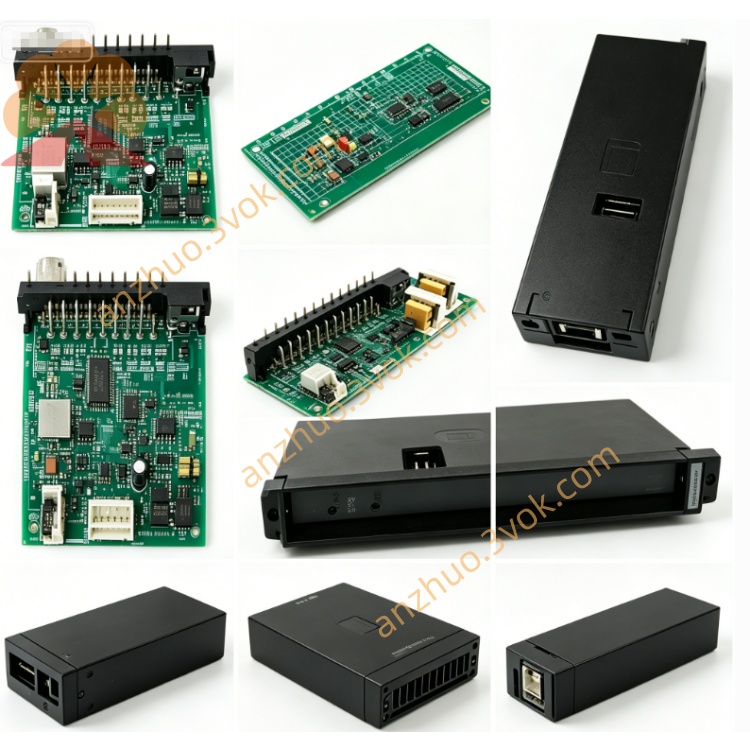
Reliance 45C224 Industrial PLC Module
Description
Product Description
Model Number Interpretation
45C: Unified prefix for Reliance AutoMate 45C series control and I/O components.
224: Designates a 4-channel RTD temperature input module for AutoMate 20 systems.
No revision letter indicates the original hardware version, optimized for standard RTD sensor compatibility.
Technical Specifications
Input Channels: 4 isolated RTD input channels (2-wire or 3-wire connection).
Supported Sensors: Pt100, Pt1000, Cu50, Cu100, Ni1000 (industrial standard thermal resistances).
Temperature Range: -200°C to +850°C (Pt100, depending on sensor type).
Resolution: 16-bit analog-to-digital conversion, 0.1°C typical resolution.
Accuracy: ±0.1% of reading ±0.1°C (Pt100, 0–400°C range).
Power Supply: 5 VDC from backplane, 0.8 A typical current consumption.
Isolation: 2500 Vrms channel-to-backplane isolation for noise immunity.
Operating Temperature: 0°C to 55°C; humidity 20%–90% non-condensing.
Mounting: DIN-rail or panel mount via AutoMate 20 series backplane.
Weight: ~0.9 kg; rugged metal enclosure for industrial durability.
Interface and Communication Configuration
Sensor Input Terminals: 12-pin removable terminal block (3 pins per channel: R+, R–, compensation).
Backplane Interface: Proprietary AutoMate 20 series edge connector for power and digital data exchange with the host CPU (e.g., 45C20A).
Status LEDs:
PWR: On when 5 VDC backplane power is present.
RUN: Flashes during normal operation; steady on for fault.
CH1–CH4: On for active channel; flashes for sensor open/short circuit.
Configuration: DIP switches for sensor type selection (Pt/Cu/Ni) and wire mode (2/3-wire) per channel.
Core Functions
High-Precision Temperature Acquisition: Converts RTD resistance changes to accurate temperature data for process monitoring and control.
Multi-Sensor Compatibility: Supports common industrial thermal resistance sensors with configurable 2/3-wire connections.
Fault Detection: Monitors each channel for sensor open/short circuit, with LED indication and diagnostic codes for quick troubleshooting.
Noise Filtering: Built-in digital filters to suppress electrical interference, ensuring stable measurements in harsh industrial environments.
Data Integration: Transmits temperature data to the PLC CPU for PID control, data logging, and HMI display.
Application Scenarios
Legacy AutoMate 20 Temperature Control Systems: Direct replacement for aging RTD modules in manufacturing lines.
Process Automation: Widely used in food & beverage, pharmaceutical, chemical, and water treatment plants for temperature monitoring of tanks, pipes, and reactors.
HVAC and Building Automation: Measures temperature in large facilities for climate control and energy management.
Industrial Ovens/Furnaces: Precise temperature monitoring in heat treatment and metalworking processes.
Retrofit Projects: Ideal for upgrading older AutoMate 20 systems to add temperature monitoring without full hardware replacement.
Usage and Maintenance Instructions
Installation: Insert the module into an available slot on the AutoMate 20 backplane, ensuring secure connection; set DIP switches for sensor type and wire mode per channel.
Wiring: Connect RTD sensors to the terminal block, using shielded cable; for 3-wire mode, ensure equal wire lengths for compensation accuracy.
Power-On Check: Apply power to the backplane; confirm PWR and RUN LEDs are on, with no CHx fault indication.
Routine Maintenance: Quarterly inspections; clean dust from terminal block and enclosure; check cable tightness and sensor connections; verify LED status during operation.
Safety: Disconnect all AC power to the backplane and wait 5 minutes for discharge before servicing; avoid live maintenance; use only shielded RTD cables to minimize noise.
Get a Quote