
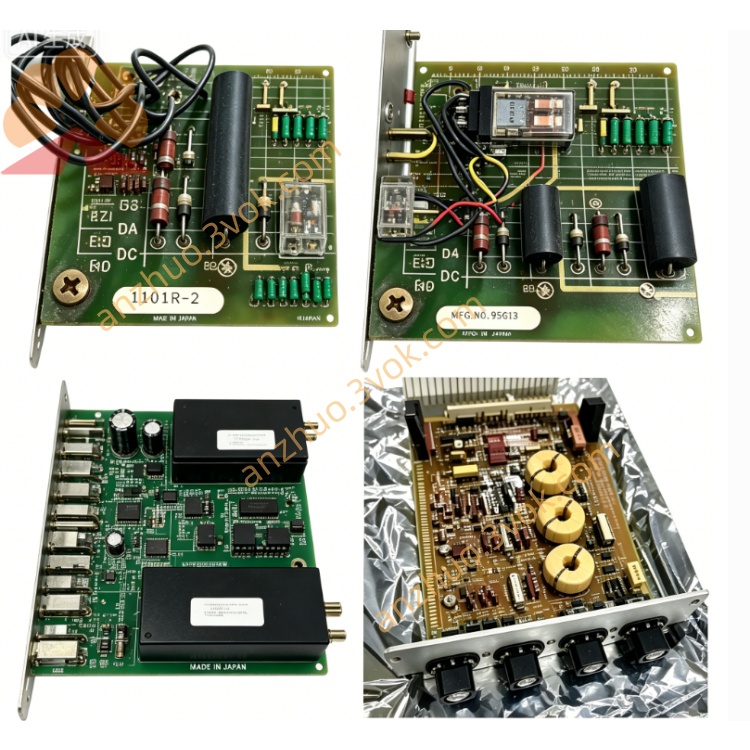
Reliance Electric 1AC4103G
Description
Product Description
Model Number Interpretation
1: First‑generation GP‑1200 series platform
AC: AC variable‑speed drive
4: 460VAC voltage class (380–460VAC for global version)
103: 3HP power rating
G: Global version, 380–460VAC wide input range
Technical Specifications
Input: Three‑phase 380–460VAC ±10%, 50/60Hz; maximum input current 5.5A
Output: Three‑phase 380–460VAC; maximum output current 4.8A; rated capacity 3.9kVA
Power: 3HP (2.2kW) continuous
Control: Open‑loop V/Hz; speed ratio 20:1; output frequency 0–400Hz
Enclosure: NEMA 1, IP20 (indoor use only)
Protection: Overcurrent, overvoltage, undervoltage, overtemperature, short circuit, ground fault, motor stall
Ambient: 0–45°C, 5%–95% RH (non‑condensing)
Weight: Approximately 11.8kg
Interface and Communication Configuration
Power Terminals: L1/L2/L3 (three‑phase input), U/V/W (motor output), PE (protective earth)
Control Terminals: Digital inputs for start/stop, forward/reverse, fault reset; analog input 0–10VDC for speed reference; relay output for fault indication (250VAC/5A)
Communication: No onboard communication ports; hardwired control only
Core Functions
Open‑loop V/Hz control provides stable speed regulation for standard induction motors
Wide 380–460VAC input range accommodates global power grids
0–10VDC analog speed input compatible with potentiometers and PLCs
Comprehensive electrical and thermal protection safeguards drive and motor
Direct drop‑in replacement for legacy 1AC series drives, ensuring compatibility with existing systems
Application Scenarios
Small conveyors, fans, pumps, mixers, and processing machinery with 3HP motors
Light manufacturing equipment and commercial ventilation systems
Retrofit and maintenance of older industrial and commercial AC drive installations
Usage and Maintenance Instructions
Mount vertically in a clean, dry, well‑ventilated indoor area with sufficient clearance for cooling airflow
Use rated copper conductors; separate power and control cables to minimize electromagnetic interference
Inspect all connections before power‑up; check terminals and wiring periodically for looseness or corrosion
Disconnect power before cleaning; use a dry cloth only—do not use liquids or chemical cleaners
Routinely monitor heat sinks and terminals for signs of overheating
Diagnose faults via onboard indicators; resolve all issues before restarting the drive
Avoid static electricity discharge; do not disassemble the unit without professional guidance
Store spare units in a cool, dry, dust‑free environment
Get a Quote