
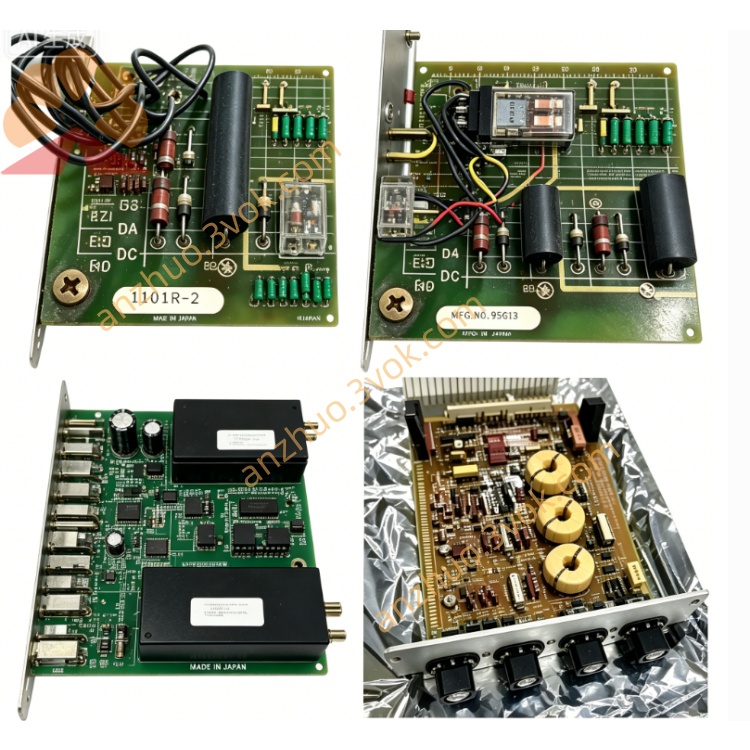
Reliance 3GA694728
The 3GA694728 is a high-power PWM AC drive of Reliance Electric GV3000/SE series. It is designed for three-phase AC induction motors and supports V/Hz control and vector control to achieve accurate speed and torque regulation for heavy industrial loads. This model has been discontinued by the manufacturer, and refurbished and surplus units are widely used for maintenance and replacement of legacy automation systems.
Description
Product DescriptionThe 3GA694728 is a high-power PWM AC drive of Reliance Electric GV3000/SE series. It is designed for three-phase AC induction motors and supports V/Hz control and vector control to achieve accurate speed and torque regulation for heavy industrial loads. This model has been discontinued by the manufacturer, and refurbished and surplus units are widely used for maintenance and replacement of legacy automation systems.
Model Number Interpretation3 represents the GV3000 product platform. G refers to GV3000/SE series. A stands for 460 VAC input voltage class. 69 indicates the rated power of 69 horsepower. 4 means chassis type enclosure. 7 denotes software version. 2 shows compliance with UL, C-UL and CE standards. 8 is the code for specific hardware revision and configuration.
Technical SpecificationsThe three-phase input voltage ranges from 380 VAC to 460 VAC plus or minus 10 percent, with an operating frequency of 50/60 hertz. The rated power is 69 HP, and the rated full-load input current is 85 amperes. It allows 150 percent overload operation for one minute and 200 percent overload for five seconds. The output frequency is adjustable from 0 hertz to 400 hertz. It adopts IGBT PWM modulation, equipped with V/Hz, sensorless vector and closed-loop vector control modes. The speed regulation ratio reaches 1000 to 1 when using encoder feedback. It accepts ±10 volt and 4 to 20 milliampere analog signals. This unit adopts open chassis structure and forced-air cooling. The operating ambient temperature is between 0 degree Celsius and 40 degree Celsius. The overall weight is approximately 80 kilograms. The product meets UL 508 and CE industrial safety standards.
Interface and Communication ConfigurationMain circuit terminals include L1, L2, L3 for AC power input, U, V, W for motor output, and DC bus terminals for connecting braking resistors. Control terminals provide 24 VDC auxiliary power, signals for start, stop, forward and reverse, analog speed reference and fault relay output. The front panel is fitted with a keypad and multi-language LCD display for parameter setting, status monitoring and fault query. It is built with RS-232 and RS-485 serial communication interfaces. Optional communication modules such as DeviceNet, Profibus and Ethernet/IP are available for network connection.
Core FunctionsSwitchable V/Hz and vector control modes adapt to different motor and load requirements. High-performance vector control provides fast dynamic response and precise torque control. Excellent overload capacity ensures stable operation during heavy load start and sudden load changes. It integrates complete protection functions including overcurrent, overvoltage, undervoltage, overtemperature, ground fault and short circuit. Built-in DC braking and optional dynamic braking improve braking performance. The automatic motor tuning function simplifies on-site commissioning and optimizes operating parameters.
Application ScenariosIt is applied to heavy-duty industrial equipment including extruders, mixers, large conveyors, cranes and machine tools. It fits working conditions that require low-speed high torque, accurate speed regulation and reliable braking performance. It can be used as a direct replacement for old GV3000 series high-power AC drives in legacy production lines.
Usage and Maintenance InstructionsInstall the drive in a clean, dry and well-ventilated cabinet, and reserve sufficient clearance around the unit for heat dissipation. Separate power cables and control cables during wiring to prevent electromagnetic interference, and fasten all terminals tightly. Check input voltage and wiring status carefully before powering on, and set parameters according to the motor nameplate information. Perform regular quarterly maintenance to clean dust on cooling fans and heat sinks, and inspect terminals, display and operation components. Disconnect all power sources and wait for internal capacitors to fully discharge before conducting inspection and maintenance work.
Get a Quote