
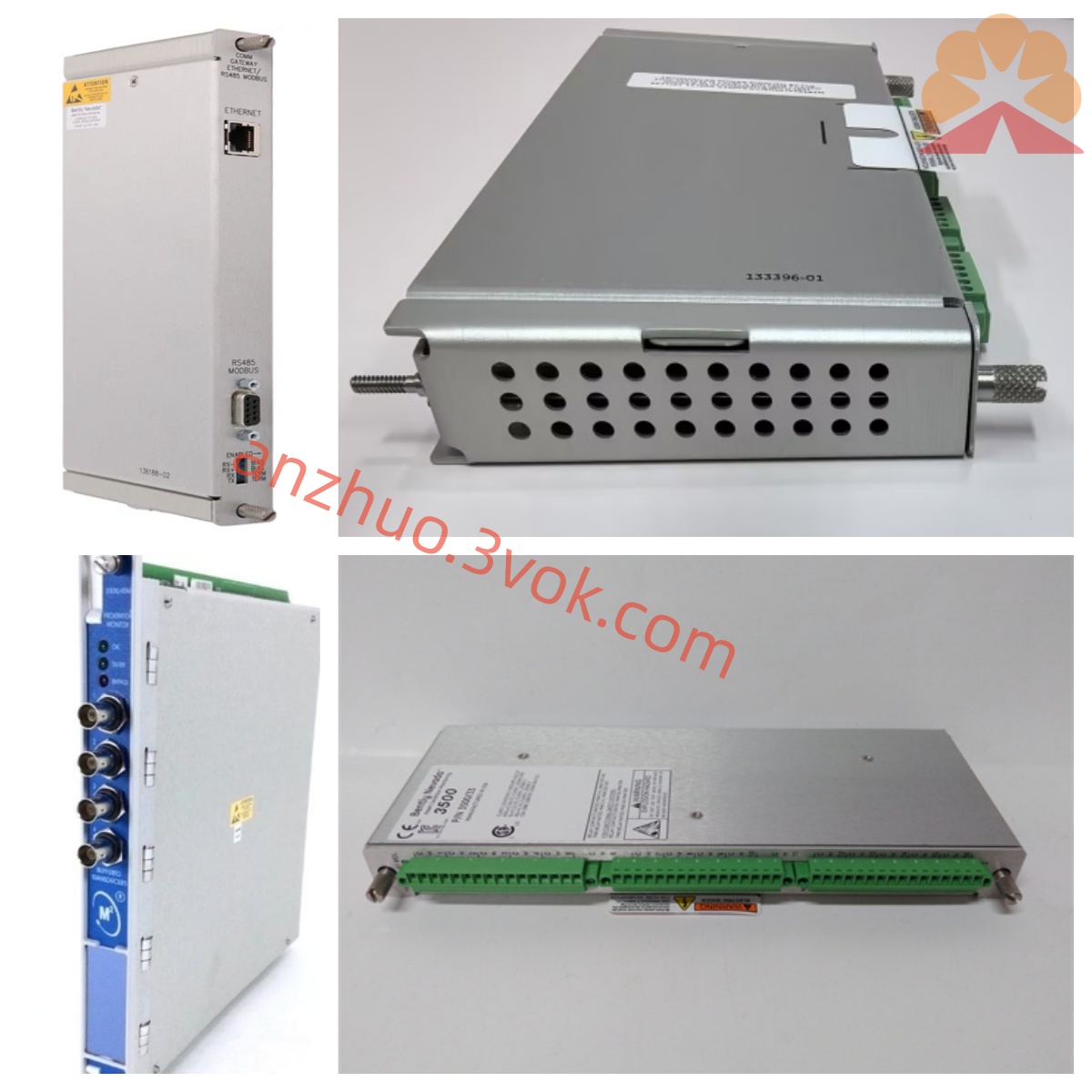
Bently Nevada 330101-00-60-10-02-00 Eddy Current Proximity Probe
Description
Bentley 330101-00-60-10-02-00 Electromagnetic Eddy Current Probe Detailed Description
I. Product Introduction
330101-00-60-10-02-00 is a 3300 XL 8mm standard non-armored eddy current probe of Bentley Nevada under Baker Hughes. It is an end sensing component of the rotating machinery TSI condition monitoring system. When used, it must be combined with the same series extension cable and preamplifier to form a complete measurement circuit. The product adopts full-length threads and a 6.0-inch medium-long housing structure, suitable for medium-depth installation holes and full-thread fixed measurement points scenarios. It realizes non-contact high-precision detection based on the eddy current principle and is mainly used for radial shaft vibration, axial displacement, shaft eccentricity, key phase, and rotational speed monitoring of large rotating machinery. The product performance complies with API 670 industry standards, has strong structural rigidity, stable measurement, and excellent anti-electromagnetic interference ability, and is suitable for conventional non-explosion-proof industrial areas in the power, petrochemical, metallurgy, and coal chemical industries.
II. Basic Information
This model belongs to the 330101 series and is a standard non-armored probe, different from the 330102 armored version. It is equipped with 3/8-24 UNF American fine-thread, with strong versatility. Model code interpretation: 00 represents no exposed rod section, the whole is a full-length threaded structure; 60 represents the total length of the probe housing 6.0 inches, belonging to a medium-long housing; 10 represents the probe's built-in cable length 1 meter; 02 represents the configuration of the miniature ClickLoc coaxial connector and standard non-armored cable; 00 represents no explosion-proof, special certification, and is a conventional industrial configuration.
The probe housing is made of AISI 303/304 stainless steel material, the sensing end uses high-temperature resistant PPS material, and the patented TipLoc one-piece molding process is used. The end and the housing are closely combined, can withstand long-term vibration of the equipment, and is not prone to loosening. The cable is a non-armored flexible structure, flexible for wiring bending. The miniature ClickLoc connector supports tool-free plug-in connection, and disassembly and assembly are convenient. The product has passed CE, UL industrial safety and electromagnetic compatibility certifications, no explosion-proof qualification, and can only be used in non-flammable and non-explosive environments. The probe body protection level is IP54, can adapt to dry, less dust, and no strong corrosive medium on-site working conditions. The entire machine is fully compatible with the 3300 XL full series preamplifiers, extension cables, and 3300, 3500 series TSI monitoring cards, and can be connected to mainstream PLC, DCS data acquisition equipment.
III. Electrical Parameters
The standard measurement sensitivity of the probe is 7.87V/mm, corresponding to 200mV/mil in imperial units. The full-scale linear error is no more than ±1% in the entire range, and the sensitivity fluctuation in the entire working temperature range is ≤±1.5%. The effective linear measurement range is 2.0mm, and the standard effective working range is 0.25mm to 2.3mm. The system frequency response range is 0Hz to 10kHz, which can cover various conventional vibration frequencies of rotating machinery. When working with the preamplifier, the system outputs -1VDC to -17VDC standard DC voltage signals.
This probe is equipped with 1-meter cable, the standard value of the entire machine's DC resistance is 7.59Ω, with a deviation of ±0.50Ω. The minimum diameter of the measured metal target surface requires 8.9mm, and in engineering applications, it is recommended that the measured shaft diameter be no less than 50.8mm to ensure stable measurement data. The product's electromagnetic compatibility performance meets the standard, can resist electromagnetic interference generated by frequency converters, large-power motors, contactors, etc., and the signal transmission is stable without distortion. The total electrical length of the sensing link must be consistent with the factory calibration parameters of the preamplifier and must not be randomly cut or connected.
IV. Environment and Mechanical Parameters
Environmental Parameters
The standard operating temperature range is -52°C to +177°C, and it can withstand a maximum temperature of +218°C for a short period; the storage temperature range is -52°C to +260°C. The relative humidity requirement for the operating environment is 5% to 95%, and no condensation, water accumulation, or strong corrosive gases are allowed. The product does not have an explosion-proof certification, and it is prohibited to install and use it in flammable and explosive hazardous areas.
Mechanical Parameters
The length of the probe without threaded section is 0 inches. It adopts a full-length threaded design, with uniform force during fixation; the total length of the housing is 6.0 inches, and the mid-long housing structure has sufficient rigidity, suitable for medium-depth installation holes. It comes with a 1-meter standard non-armored flexible cable, with oil-resistant and aging-resistant properties. The recommended tightening torque for on-site installation and fixation is 1.1N・m to 1.4N・m. Excessive torque can cause thread slippage and shell deformation. The minimum bending radius of the non-armored cable should be no less than 3 times the outer diameter of the cable, and sharp-angle bending, dragging, and crushing of the cable are prohibited to avoid damaging the internal wires.
V. Core Functions
1. Non-contact Precision Detection
The probe is equipped with an induction coil that receives the 0.5MHz to 2MHz high-frequency excitation signal output by the preamplifier and forms an alternating magnetic field. When the probe approaches the rotating metal shaft, the surface of the shaft induces an eddy current, and the reverse magnetic field generated by the eddy current will change the inductance and impedance of the coil. The electrical parameters change of the probe are transmitted to the preamplifier, converted into a linear voltage signal, and accurately converted into the gap value between the probe and the shaft, completing the collection of static displacement and dynamic vibration signals simultaneously. There is no mechanical contact throughout the process, and there are no wear problems.
2. Mid-long Shell with Full-length Thread Suitable for Deep Hole Installation
The full-length threaded design combined with a 6.0-inch mid-long shell is specifically adapted for medium-depth installation holes and points that require full-thread locking fixation. The stainless steel shell has strong resistance to deformation and vibration, good installation coaxiality, and will not cause position deviation during long-term operation. The fixation effect is stable and reliable.
3. Standard Cable Suitable for Conventional Wiring
The 1-meter non-armored flexible cable is suitable for medium-distance connection scenarios between the probe and the preamplifier, extension cables, and other components. It is flexible and can be laid in narrow spaces normally. The original factory length can ensure impedance matching. It is not allowed to cut the cable privately.
4. Wide Temperature Operation and Temperature Compensation
The induction coil inside the probe is supplied with high-frequency alternating current, generating a stable electromagnetic field. This electromagnetic field passes through the air gap and acts on the measured metal shaft. An enclosed eddy current is induced on the metal surface. The intensity of the eddy current changes with the gap size between the probe and the shaft, thereby inversely affecting the electrical parameters of the probe coil, such as inductance and impedance. The probe transmits the changing signals to the preamplifier, which converts the physical gap quantity into a continuous DC voltage according to a fixed ratio of 7.87V/mm. The larger the gap between the probe and the shaft, the closer the output voltage is to -17VDC; the smaller the gap, the closer the output voltage is to -1VDC.
VI. Working Principle
After the induction coil inside the probe is supplied with high-frequency alternating current, a stable electromagnetic field is generated. This electromagnetic field passes through the air gap and acts on the measured metal shaft. An enclosed eddy current is induced on the metal surface. The intensity of the eddy current changes with the gap size between the probe and the shaft, thereby inversely affecting the electrical parameters of the probe coil, such as inductance and impedance. The probe transmits the changing signals to the preamplifier, which converts the physical gap quantity into a continuous DC voltage according to a fixed ratio of 7.87V/mm. The larger the gap between the probe and the shaft, the closer the output voltage is to -17VDC; the smaller the gap, the closer the output voltage is to -1VDC. The upper-level monitoring system analyzes the voltage values and converts them into key parameters such as shaft vibration amplitude, axial displacement, rotational speed, and phase, enabling online monitoring of equipment status and safety interlock protection.
VII. Installation and Wiring Specifications
When installing, insert the probe into the dedicated installation base to ensure that the end face of the probe is parallel to the surface of the measured shaft, avoiding measurement errors caused by installation tilt. When installing in medium-depth holes, ensure that the hole is clean and free of debris, operate the insertion process at a uniform speed to prevent thread jamming. It is recommended to set the initial installation gap at the midpoint of the linear range, corresponding to a preamplifier output voltage of approximately -9VDC, to achieve optimal linear measurement performance.
Strictly follow the recommended torque for thread tightening and avoid over-tightening. The cable laying should be separated from high-voltage cables and power cables to reduce electromagnetic interference; strictly comply with the minimum bending radius requirements to protect the cables in good condition. When connecting the joints, insert them into the slots accurately, and the connection is considered complete when you hear the locking sound of the latch. Regularly perform dust protection for the joints. The probe should not be immersed in oil or water for a long time, keep the cable at the original factory length, and do not cut or splice.
VIII. Typical Application Scenarios
In the power industry, it is mostly used for medium-depth measurement points of auxiliary equipment such as steam turbine generators, boiler feed pumps, induced draft fans, and supply fans, to monitor shaft vibration and axial displacement, and to predict faults such as bearing wear and rotor friction in advance. In the petrochemical industry, it is applicable to centrifugal compressors, gas turbines, process pumps, and mixing units in conventional non-explosion-proof factory areas, to monitor vibration and displacement in real time and ensure the long-term stable operation of chemical plants.
In the metallurgical industry, it can be deployed in blast furnace fans, large transmission motors, and rolling mill supporting rotating mechanisms, to monitor the operating status of equipment, avoid abnormal vibrations and equipment overload-related safety hazards. At the same time, this probe can be used for phase acquisition, rotational speed measurement, and eccentricity analysis of various large rotating machinery, providing basic data for equipment dynamic balance correction, fault diagnosis, and condition-based maintenance. As a standard front-end component of the 3300 XL system, it is widely combined with TSI monitoring cards to build a complete unit safety monitoring system.
IX. Product Advantages
The full-length thread is combined with a 6.0-inch medium-long housing, perfectly adapting to medium-depth installation holes, providing firm and uniform fixation, and applicable to a wide range of scenarios. The 1-meter standard non-armored cable wiring is flexible, with a low overall usage cost. The measurement accuracy is high, the linearity is good, it operates stably in wide temperature conditions, and fully meets the API 670 heavy industrial equipment monitoring standards. The standard thread and universal connector design ensure strong product interchangeability, and the spare parts management and on-site maintenance are simple and convenient. Industrial-grade materials are resistant to aging and vibration, supporting 7×24-hour continuous operation, with a long service life. It has complete industrial certifications and can be directly applied to most conventional industrial production sites.
Get a Quote