
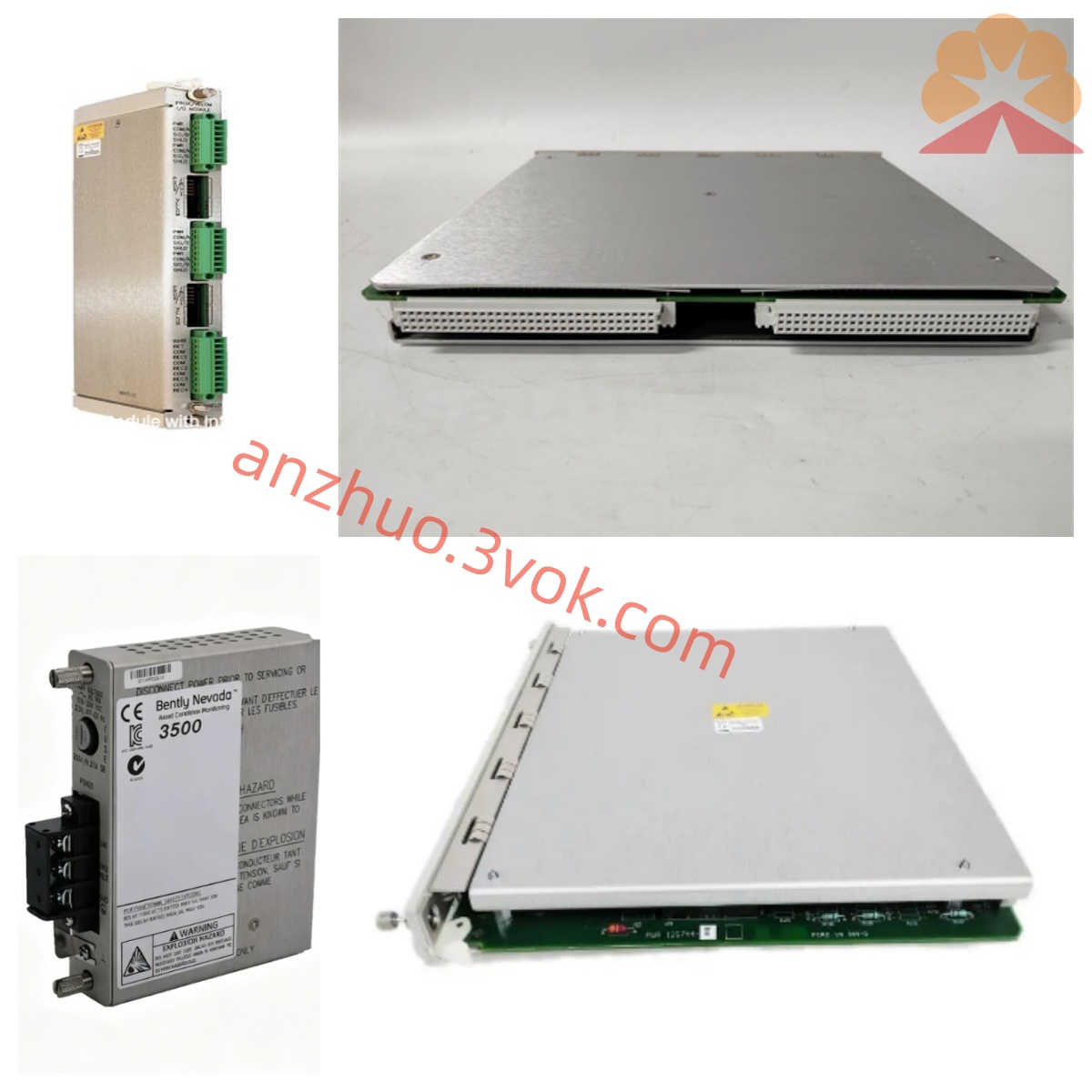
Bently Nevada 330101-26-40-10-02-00 Eddy Current Proximity Probe
Description
Bentley 330101-26-40-10-02-00 Eddy Current Probe Product Description
I. Product Overview
330101-26-40-10-02-00 is a 3300 XL 8mm standard non-armored eddy current probe under the Bently Nevada brand, belonging to the core sensing component of the 3300 XL sensor system. It must be combined with the same series extension cable and preamplifier to form a complete measurement chain. The product adopts a design of long non-threaded section + standard long housing + 1-meter cable, suitable for medium and deep hole, industrial scenarios with long optical rod installation requirements. Based on the eddy current effect, it realizes non-contact high-precision measurement, used for rotational machinery's shaft vibration, axial displacement, phase angle, and speed monitoring, in accordance with API 670 industry standards. It has the characteristics of a sturdy structure, stable measurement, strong anti-interference, and suitability for special installation spaces, and is widely used in large-scale units in the power, petrochemical, and metallurgical industries for the monitoring of medium and deep hole measurement points' status.
II. Basic Information
Model: 330101-26-40-10-02-00
Brand: Bently Nevada
Series: 3300 XL 8mm Eddy Current Sensor System
Type: Standard non-armored proximity eddy current probe (330101 is non-armored version, different from 330102 armored version)
Thread Specification: 3/8-24 UNF American fine thread
Model Code Meaning: 26 represents the length of the non-threaded section of 2.6 inches; 40 represents the total length of the housing of 4.0 inches (standard long housing); 10 represents the length of the probe's built-in cable of 1 meter; 02 represents the micro ClickLoc coaxial connector and standard non-armored cable; 00 represents no special configuration
Structural Features: Stainless steel housing (AISI 303/304), the probe end is made of PPS heat-resistant material; non-armored flexible cable, length of 1 meter, suitable for conventional distance laying; patented TipLoc forming process, the end is firmly bonded to the housing, resistant to vibration loosening, long optical rod design suitable for medium and deep hole installation
Connector Type: Micro ClickLoc coaxial connector, reliable connection, convenient plug and unplug
Certification: CE, UL, compatible with industrial safety and electromagnetic compatibility specifications (no explosion-proof certification)
Protection Grade: IP54 (probe body), suitable for dry, low dust, and non-corrosive working conditions
Compatible Systems: 3300 XL full series preamplifiers (such as 330100 series), 3500/3300 TSI systems
III. Electrical and Mechanical Parameters
Electrical Parameters
Sensitivity: 7.87V/mm (200mV/mil), linear error ≤ ±1%
Linear Range: 2.0mm (80mil), effective range 0.25mm–2.3mm
Output Signal: Cooperates with preamplifier to output - 1VDC to - 17VDC standard DC voltage
Frequency Response: 0–10kHz (+0/-3dB), covering the full vibration frequency band of rotating machinery
Probe DC Resistance: 7.59Ω ± 0.50Ω (1 meter cable)
Minimum Target Diameter: 8.9mm (0.35 inches), recommended shaft diameter ≥ 50.8mm (2 inches)
Environmental Parameters
Probe Working Temperature: Standard - 52℃ to + 177℃; High-temperature version can reach + 218℃
Storage Temperature: -52℃ to + 260℃
Relative Humidity: 5%–95% (no condensation)
Interference Resistance: Complies with CE EMI/RFI standards, tolerant to variable frequency drives, motors, etc. strong electromagnetic interference
Mechanical Parameters Non-threaded section length: 2.6 inches (suitable for deep holes and installation scenarios requiring long optical rods to extend into the equipment)
Total shell length: 4.0 inches (standard long shell, balancing installation strength and space compatibility)
Cable specification: 1-meter standard non-armored flexible cable, resistant to oil and aging, suitable for conventional distance laying
Installation torque: Recommended 1.1–1.4N・m, avoid damage to the threads
Cable bending radius: ≥3 times the cable diameter, to avoid excessive bending and damage to the core wire
IV. Core functions
1. Non-contact precise measurement
Based on the eddy current effect, the end coil of the probe receives the 0.5–2MHz high-frequency excitation signal from the preamplifier, generating an alternating magnetic field; when close to the metal shaft body, the surface of the shaft induces eddy currents, reversing the impedance of the coil, combined with the preamplifier to convert it into a linear voltage signal, accurately reflecting the gap change between the probe and the shaft, achieving synchronous measurement of static displacement and dynamic vibration.
2. Long non-threaded section suitable for deep hole installation
2.6-inch non-threaded section + 4.0-inch total shell length, specially designed for deep holes and scenarios requiring longer optical rods to extend into the equipment interior, addressing the installation space issue that conventional short optical rod probes cannot accommodate; the stainless steel shell has high strength, resistance to vibration and deformation, and the long optical rod design ensures coaxiality during installation, with no loosening over the long term.
3. 1-meter standard cable suitable for conventional laying
1-meter non-armored flexible cable, suitable for the connection of the probe and preamplifier / extension cable at an intermediate distance, balancing wiring flexibility and signal stability; the flexible material facilitates bending and laying in narrow spaces, reducing on-site cable redundancy and interference.
4. Wide temperature stability and temperature compensation
Built-in high-temperature coils and insulating materials, combined with the system's automatic temperature compensation circuit, in the -52℃ to +177℃ wide temperature range, sensitivity stability ≤±1.5%, capable of withstanding temperature fluctuations in working conditions, ensuring accurate long-term monitoring data.
5. Fault diagnosis and system compatibility
Cooperates with the preamplifier to achieve self-check of the line, identifying probe breakage, short circuit, cable damage, etc., outputting fault signals for alarm; compatible with 3500/3300 TSI systems, PLC, DCS, supporting real-time data acquisition, over-limit alarm and fault recording.
V. Working principle
The core of the probe is the end high-frequency coil, the preamplifier injects high-frequency alternating current into the coil, generating a stable alternating magnetic field; when the probe approaches the rotating metal shaft (conductor), the magnetic field induces a closed eddy current on the shaft surface, the eddy current-generated reverse magnetic field will change the inductance and impedance of the probe coil; the probe transmits the impedance change signal to the preamplifier, the preamplifier converts it into a standard DC voltage signal at a fixed ratio of 7.87V/mm, the larger the gap, the closer the voltage is to -17V, the smaller the gap, the closer it is to -1V, thus accurately measuring dynamic parameters such as shaft vibration and axial displacement.
VI. Installation and wiring requirements
Installation position: Vertically installed on the radial or axial direction of the measured shaft, the end of the probe is parallel to the shaft surface, avoiding tilt causing measurement errors; when installing a long optical rod, ensure the coaxiality of the hole position, prevent the shell from bending and deforming.
Gap setting: Recommended to set at the midpoint of the linear range (approximately 1.27mm), corresponding to -9VDC output from the preamplifier, achieving the best linearity and stability.
Threaded installation: 3/8-24 UNF threads screwed into the bottom of the deep hole base, torque controlled within 1.1–1.4N・m, avoiding over-tightening and damaging the threads or squeezing the cable.
Cable laying: 1-meter non-armored cable bending radius ≥3 times the cable diameter, avoid sharp-angle bending; separate wiring from power cables, protected by conduit to prevent mechanical damage; do not cut随意ly, maintain the original factory length. Connection method: Align the micro ClickLoc connector with the slot and insert it. A "click" sound indicates locking. Ensure that the connection area is dust-proof and collision-resistant, and the signal transmission is stable.
VII. Typical application scenarios
Power industry: Monitoring of deep-hole shaft vibration and axial displacement in steam turbine generator sets, suitable for medium-depth measurement points within the equipment, preventing rotor friction and bearing wear.
Petrochemical industry: Medium-depth bearing vibration monitoring in centrifugal compressors and gas turbines, ensuring continuous production and predicting shaft system faults; preferred for dry and less corrosive areas.
Metallurgical industry: Deep-hole rotating component vibration and displacement monitoring in blast furnaces and large transmission motors, avoiding overload damage to the equipment.
Industrial drives: Medium-depth key phase, speed, and eccentricity measurement in large motors and high-speed rotating equipment, providing data for dynamic balance correction and fault diagnosis.
TSI system support: As the front-end sensing component of the 3300 XL system, it is equipped with a preamplifier and monitoring card to build a safety protection and condition monitoring system for deep-hole measurement points in rotating machinery.
VIII. Product advantages
Long shaft adapter: 2.6-inch threaded-free section + 4.0-inch housing, suitable for medium-depth and long shaft installation scenarios, solving the blind area of conventional probe installation.
Standard cable design: 1-meter non-armored cable, suitable for medium-distance connections, balancing wiring flexibility and signal stability.
High precision and stability: 7.87V/mm standard sensitivity, small linear error, strong wide-temperature stability, meeting API 670 high-precision requirements.
Convenient connector design: Micro ClickLoc connector can be plugged and unplugged without tools, ensuring reliable connection and simplifying on-site maintenance.
High interchangeability: Components can be replaced on-site without secondary calibration, reducing spare parts management costs.
Get a Quote