
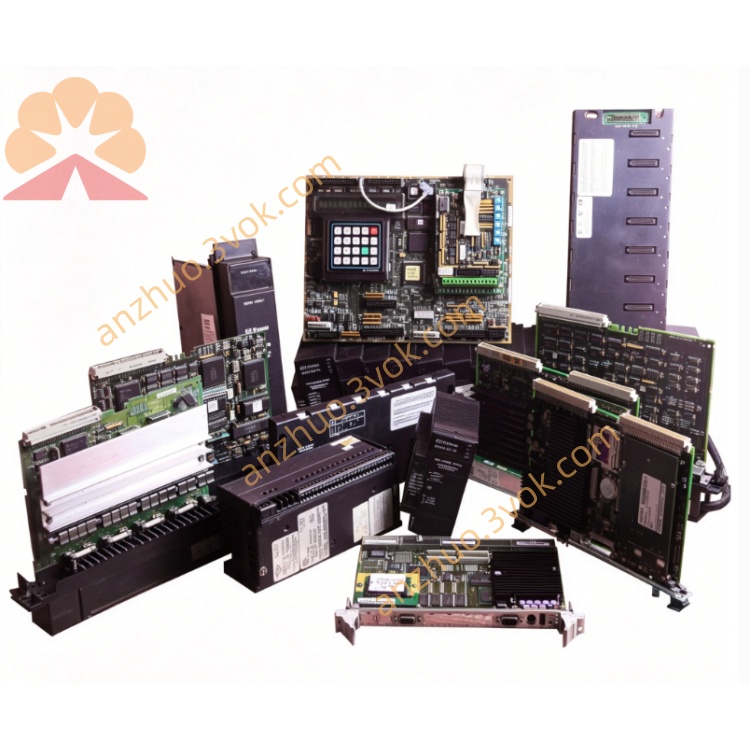
XYCOM XVME-976 VME Communication Board
Description
XYCOM XVME-976 Product Detailed Description
I. Product Overview
XYCOM XVME-976 (now belonging to Acromag/Xembedded) is a 6U single/double high-profile VMEbus expansion adapter module, specifically designed for Xycom XVME-653/654/655/689/690 series PC/AT architecture VME processors. Its core function is to integrate PC/104 and PMC dual expansion slots, serving as a dedicated bridge between the VME main processor and PC/104, PMC standard expansion modules, enabling flexible expansion of functions such as industrial communication, data acquisition, and I/O control. It is suitable for system function upgrade scenarios in harsh environments such as industrial automation, embedded measurement and control, military aviation, energy transportation, etc., and is the core unit for high-density expansion of the VME system.
II. Core Hardware Configuration
(1) Form Factor and Bus Specifications
Size Specifications: Standard 6U VME module, offering two versions: single-height (1 slot) / double-height (2 slots), compatible with standard 6U VME chassis P1 (power / signal) and P2 (expansion I/O) connectors, flexibly matching the slot resources of the chassis.
Bus Compatibility: Strictly follows the VMEbus IEEE 1014 standard, directly connecting to XVME-654 (direct connection), XVME-655 (requires XVME-978/1 or 978/100 adapter board) and other processor modules to achieve seamless conversion of VME signals with PC/104 and PMC signals.
(2) Dual Expansion Stations (Core Configuration)
1. PC/104 Expansion Station
Standard Compatibility: Compliant with ISA standard, supporting two types of PC/104 modules: Type A (Xycom original, 4.010" × 5.091") and Type B (generic, 3.550" × 3.775").
Function Expansion: Can directly plug in Ethernet, SCSI, serial, parallel, etc. PC/104 modules to quickly supplement communication and peripheral interfaces.
Signal Buffering: All PC/104 signals, except data lines, are buffered to ensure signal integrity in long-distance and strong-interference environments.
2. PMC Expansion Station
Standard Compatibility: Compliant with IEEE P1386 (PMC 2.0), supporting third-party PMC module expansion.
Power Supply Design: Board-mounted DC-DC regulator, providing 3.3V stable power supply for PMC stations, no need for additional power adapters.
Function Expansion: Can plug in high-speed data acquisition, FPGA processing, ATM, FDDI, SCSI, etc. PMC modules, suitable for high-speed and high-performance expansion requirements.
(3) Power Supply and Power Consumption
Power Supply Method: Obtain +5V and ±12V power supply from the VME backplane P1 connector, only supplying power to the modules themselves and the control circuits of the expansion stations, no need for external power supply.
Power Consumption Parameters: Single-height version: idle ≤ 4W, full load ≤ 8W; double-height version: idle ≤ 6W, full load ≤ 12W. Low power consumption design, reducing the heat dissipation pressure of the chassis.
(4) Physical and Front Panel Design
Size: 6U single-height 165mm × 20mm × 115mm; 6U double-height 165mm × 50mm × 115mm, compatible with all mainstream 6U VME chassis.
Weight: Single-height approximately 280g, double-height approximately 350g, industrial-grade reinforced design, shockproof and anti-drop.
Front Panel: Equipped with expansion module fixing screws, status LED indicators (power, communication, fault), supporting real-time monitoring of the operation status of the expansion stations; interfaces with shielding and dust-proof design, suitable for industrial dust, damp environments.
III. Environmental Adaptability and Reliability
(1) Temperature Range
Operating Temperature: Standard industrial grade 0℃~55℃; wide temperature customized version -25℃~70℃, suitable for outdoor, vehicle-mounted, military-grade, etc. harsh conditions without air conditioning.
Storage Temperature: -40℃~+85℃, no risk of component damage during long-term storage or transportation, ensuring the reliability of spare parts.
(2) Protection and Anti-interference
Protection Grade: Front panel IP30, dust-proof, splash-proof water-resistant, suitable for industrial sites with dust, oil, and damp conditions; all interfaces with shielding layers to suppress external electromagnetic interference.
Vibration / Shock Resistance: Industrial-grade reinforced welding, working state resistant to vibration 5~500Hz, 2g acceleration, shock resistance 20g peak; Non-working state shock resistance: 50g. Suitable for strong vibration scenarios such as machine tools, production lines, and vehicles.
Electromagnetic Compatibility (EMC): Compliant with IEC 61000-6-2 standard. Board-mounted EMI filtering circuit, effectively suppressing static electricity, surges, and high-frequency electromagnetic interference, enabling stable operation near frequency converters and high-voltage equipment.
(III) Hardware Reliability
Industrial-grade components: Core chips and connectors use military-grade / industrial-grade components. Fully welded process reduces the risk of false soldering and detachment. MTBF ≥ 120,000 hours. Supports 15-year long-term continuous operation.
Signal integrity optimization: Board-line impedance matching design. VME, PC/104, PMC signal transmission without attenuation. Avoids data read/write errors.
Overvoltage / Overcurrent Protection: Board-mounted power filter and transient suppression circuit. Protects the module itself and expansion modules from voltage fluctuations and surge impacts.
IV. Core Functions and Features
(1) Dual-site High-Density Expansion
Single module integrates 1 PC/104 + 1 PMC expansion site. Supports both general I/O and high-speed high-performance types of expansion, balancing flexibility and performance. Single slot achieves dual-protocol expansion, saving chassis resources.
(2) Standard Protocol Plug-and-Play
Fully compatible with VMEbus, PC/104, and PMC industrial standards. No additional drivers or configurations required. After plugging in the expansion module, the system automatically recognizes it. Compatible with mainstream operating systems such as MS-DOS, VxWorks, embedded Linux, and QNX, reducing the threshold for secondary development.
(3) Flexible Adaptation to Multiple Processors
Directly compatible with XVME-654. Compatible with XVME-655 through adapter board. Also compatible with mainstream VME processor modules such as XVME-653/689/690. Strong adaptability, covering all Xycom PC/AT architecture processors.
(4) Jumpers for Custom Configuration
Supports custom signal routing, terminal matching, interrupt mapping, etc. Parameters such as jumpers, adaptable to different expansion modules and system architecture requirements. Flexible configuration, adaptable to differentiated expansion in various scenarios.
(5) Long Lifecycle Support
As a classic VME expansion module, Acromag/Xycom provides long-term spare parts supply and technical support. Compatible with industrial equipment for 10-15 years of service life. Widely used for upgrading and maintenance of existing VME systems.
V. Typical Application Scenarios
Industrial Automation: Expansion of Ethernet communication for production line control systems, serial I/O modules; High-speed data acquisition PMC module for DCS systems; I/O expansion unit for PLC replacement systems.
Embedded Measurement and Control: PMC interface expansion for high-speed data acquisition systems; PC/104 serial/parallel port expansion for instrument control units; Upgrade of communication modules for laboratory automation devices.
Military / Aviation: FPGA processing PMC module for vehicle measurement and control systems; Multi-serial port expansion for airborne ground test equipment; High-speed SCSI interface expansion for radar preprocessing systems.
Transportation / Energy: Ethernet expansion for rail transit vehicle control units; Data acquisition modules for wind power / photovoltaic on-site equipment; High-speed communication interface expansion for smart grid monitoring devices.
Maintenance of Existing Equipment: Expansion of communication and I/O functions for old VME industrial equipment (such as CNC machines, industrial robots), solving the problem of insufficient native interfaces, extending the service life of the equipment.
VI. Selection and Adaptation Instructions
(1) Model Definition
Basic model: XVME-976 (6U single high, PC/104 + PMC dual sites). Variant types: XVME-976/202 (double high, double expansion slots), XVME-976/209 (single high, two PMC slots).
Temperature versions: Standard temperature (0℃~55℃), wide temperature (-25℃~70℃).
(II) Compatible processor modules
Direct connection: XVME-654.
Adapter connection: XVME-655 (requires XVME-978/1 or 978/100 adapter board).
Compatible adapter: XVME-653, XVME-689, XVME-690.
(III) Compatible expansion modules
PC/104 modules: Xycom Type A, universal Type B (Ethernet, SCSI, serial port, parallel port, etc.).
PMC modules: Conforming to IEEE P1386 standard (high-speed data acquisition, FPGA, ATM, FDDI, SCSI, etc.).
VII. Maintenance and Precautions
Before installation, the power supply of the chassis must be cut off. Do not perform hot-plugging of modules or expansion modules to avoid instantaneous current shock that damages the onboard circuit or expansion interface; during installation, gently insert and push to ensure that the P1/P2 connectors are fully engaged, and tighten the fixing screws to prevent vibration loosening.
When installing expansion modules, strictly distinguish between PC/104 and PMC slots to avoid incorrect insertion; evenly tighten the fixing screws to prevent uneven force from causing interface deformation or poor contact.
Regularly check the LED indicators on the front panel: a constantly lit power indicator indicates normal power supply, a flashing communication indicator indicates normal data transmission, and a constantly lit fault indicator requires power-off troubleshooting for expansion module contact or hardware failure.
During long-term operation, keep the chassis well-ventilated, regularly clean the dust on the module surface, expansion interface, and chassis cooling channels to avoid interface contact failure or communication abnormalities due to high temperature or dust.
Avoid using in strong corrosive or strong magnetic environments. Strong magnetic fields may cause data transmission errors of the expansion module; during handling, avoid severe collisions to prevent damage to connectors and components.
Get a Quote