
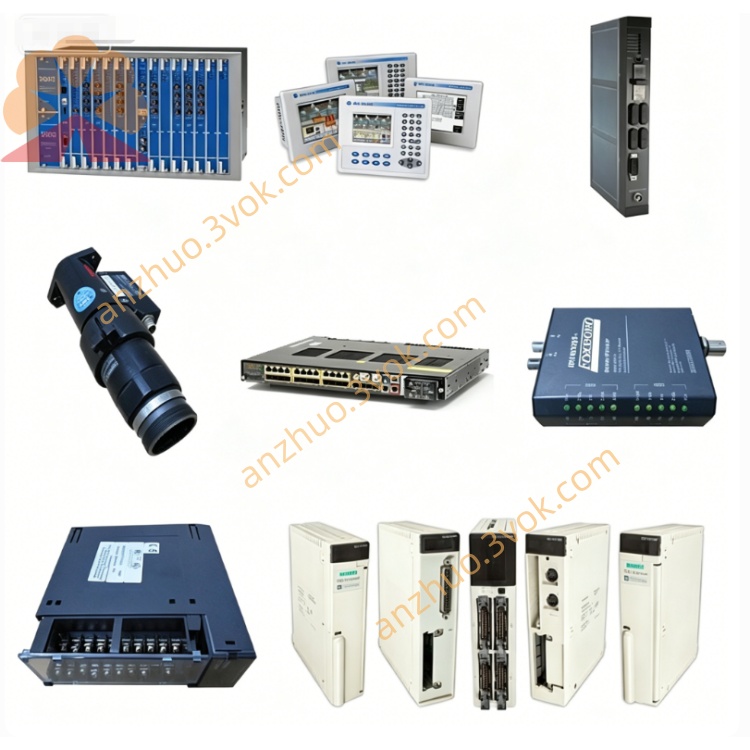
XYCOM XVME-688 VME Single Board Computer
Description
XYCOM XVME-688 Product Detailed Description
I. Product Overview
XYCOM XVME-688 is a 6U VMEbus dual high-performance PC/AT compatible processor module launched by Xycom (now part of Acromag/Xembedded). It combines the industrial-grade reliability of the VME bus with the software ecosystem advantages of the PC/AT architecture, specifically designed for industrial automation, embedded measurement and control, real-time data processing, and control scenarios in harsh environments. The module adopts a low-power CMOS design, is installed in a single slot, integrates complete processors, graphics, storage, and I/O functions, and can directly run standard PC/AT software. It is the core computing platform for small and medium-sized embedded control systems.
II. Core Architecture and Hardware Configuration
(1) Processor Core
Equipped with Intel 80386SX processor, with a main frequency of 25 MHz, compatible with 32-bit PC/AT instruction set; a 80387SX math coprocessor slot is reserved, which can expand the floating-point computing capacity, meeting the requirements of industrial control, data processing and basic real-time computing, and suitable for lightweight embedded operating systems and applications.
(2) Memory System
Standard configuration is zero-wait interleaved DRAM memory, with options of 0MB, 1MB, and 4MB capacities, equipped with SIMM slots, supporting a maximum of 16MB memory expansion; using 60ns high-speed DRAM, supporting system and VGA BIOS shadow memory (Shadow RAM) function, enhancing system operation efficiency.
(3) Storage Interface
Built-in high-performance IDE hard disk controller + floppy disk controller, capable of directly connecting IDE hard disks and 3.5-inch floppy disks, supporting local system boot and data storage; compatible with DOC (DiskOnChip) flash drives, suitable for high-stability scenarios without mechanical moving parts, meeting long-term operation requirements.
(4) Graphics Display
Integrated Super VGA graphics controller, equipped with 512KB dedicated video memory, supporting standard VGA display output, resolution adapted to common industrial specifications, capable of directly connecting industrial displays and touch screens, meeting human-machine interface (HMI) display and operation requirements.
(5) Bus Interface
VMEbus bus: complies with VME64 standard, supports A16/A24 address space, 32-bit data transmission, compatible with multi-master/slave mode, has BLT block transmission capability; supports VME bus Slot 1 function, suitable for system master role.
VME interrupt: built-in VMEbus interrupt processing circuit, supports 7 levels of interrupts (I1-I7), programmable settings for interrupt enable, bus request and authorization level, suitable for multi-task real-time scheduling.
(6) I/O Interface
Serial port: 2 channels of 16550 compatible RS-232C serial ports, adjustable baud rate, capable of connecting sensors, Modbus modules, serial printers, etc. as external devices.
Parallel port: 1 channel Centronics compatible parallel port, compatible with parallel printers, data acquisition cards, etc. as parallel devices.
Keyboard / Mouse: PS/2 keyboard interface + PS/2 auxiliary port (compatible with mouse / trackball), compatible with standard PC peripherals.
Front panel: integrated power, operation, fault LED indicators, equipped with VMEbus SYSFAIL switch, facilitating status monitoring and fault reset.
(7) Power Supply and Power Consumption
Uses VME bus power supply, supports + 5V, ±12V input, low-power CMOS design, typical power consumption ≤ 13W, reducing heat dissipation pressure, suitable for fanless embedded scenarios, reducing system complexity and fault points.
(8) Physical Specifications
Form: 6U dual high-profile module, occupying 1 VME slot, compatible with standard 6U VME chassis P1, P2 connectors.
Size: 165mm × 25mm × 115mm (length × width × height), standard VME module size, compatible with mainstream chassis installation.
Weight: approximately 190g, lightweight design, facilitating installation and maintenance, suitable for various chassis layouts. Optional wide-temperature version, supporting extreme temperature environments of -40℃ to 85℃, suitable for outdoor, vehicle-mounted, and other scenarios without air conditioning.
Storage temperature: -55℃ to +85℃, no damage risk during long-term storage and transportation, ensuring the reliability of spare parts storage.
(II) Protection and Anti-interference
Protection level: Front panel IP65, dust-proof and splash-proof, suitable for harsh industrial sites with moisture, dust, and oil contamination.
Anti-vibration / Impact: Military-grade reinforced design, capable of withstanding vibration frequencies of 5 to 2000Hz and acceleration of 10g, and impact acceleration of 50g, suitable for vibrating scenarios such as machine tools, vehicles, and wind power.
Electromagnetic Compatibility (EMC): Compliant with IEC 61000-6-2/4 standards, with anti-static and anti-electromagnetic interference capabilities, suitable for industrial environments with strong electromagnetic interference (such as frequency converters and high-voltage equipment).
(III) Hardware Reliability
All-solid-state design: Core components have no mechanical moving parts, reducing failure points, supporting long-term continuous operation (MTBF ≥ 100,000 hours).
Hardware watchdog: Built-in independent watchdog circuit, automatically resets when the system freezes, ensuring continuous operation of the system and reducing the risk of downtime.
Battery backup: Supports CMOS RAM battery backup, allowing long-term preservation of system configurations and key parameters after power loss, avoiding data loss.
Real-time mode window: Supports accessing VME bus short I/O and standard address space when the processor is in real mode, improving data interaction flexibility.
Four. Core Functions and Features
(1) PC/AT Compatibility Ecosystem
Fully compatible with PC/AT architecture, supporting MS-DOS, Windows 3.x/95 (reduced version), embedded Linux, VxWorks, etc., allowing direct operation of mature development tools and applications on PC ends, significantly reducing the cost and cycle of secondary development.
(2) Single-slot Dual-high Compact Design
6U single-slot dual-high specification, occupying only 1 VME slot, saving chassis space, suitable for compact embedded systems, facilitating multi-module combination layout, and flexibly adapting to different scale control requirements.
(3) Rich Native I/O and Expansion Capability
Integrated serial ports, parallel ports, Super VGA, PS/2 keyboard/mouse interfaces, without the need for additional expansion modules to meet basic peripheral connection requirements; reserved coprocessor and memory expansion slots, supporting performance and capacity upgrades, suitable for customized requirements.
(4) Real-time Multi-task Processing
VME bus + 7-level programmable interrupt mechanism, supporting microsecond-level real-time response, suitable for scenarios with high real-time requirements such as industrial control, data acquisition, and equipment monitoring, ensuring timely execution of control instructions.
(5) Long Lifecycle Support
Xycom (Acromag) provides long-term technical support and spare parts supply, with a product lifecycle of up to 15 years or more, suitable for the long service cycle requirements of industrial equipment, avoiding system upgrade and replacement costs caused by product discontinuation.
Five. Typical Application Scenarios
Industrial Automation: Production line control, PLC replacement system, equipment monitoring unit, small DCS distributed control system.
Embedded Measurement and Control: Data acquisition system, instrument control, environmental monitoring equipment, laboratory automation device.
Military / Aviation: Vehicle measurement and control, onboard auxiliary control, radar data preprocessing, military communication terminal.
Transportation / Energy: Rail transit vehicle control, wind power / photovoltaic on-site control unit, smart grid monitoring equipment.
Medical Equipment: Medical imaging equipment control, automated detection instrument, critical control board of intensive care equipment.
Six. Selection and Adaptation Instructions
(1) Model Distinction XVME-688: Standard version, 25 MHz 80386SX, 4MB DRAM, industrial temperature (-20℃~70℃).
XVME-688/1: Low-end memory version, 1MB DRAM, suitable for basic control requirements.
XVME-688/W: Wide temperature version, -40℃~85℃ operating temperature, enhanced EMC protection.
Optional items: 80387SX coprocessor, battery backup module, DOC flash drive, heat sink assembly.
(II) Compatible chassis
Compatible with standard 6U VME chassis (such as VME64 chassis), requires 1 single-slot, supports P1 (data / power) and P2 (extended I/O) connectors, suitable for basic and extended VME systems.
(III) Operating system compatibility
Desktop simplified system: MS-DOS, Windows 3.x, Windows 95 (embedded simplified version).
Embedded system: Embedded Linux 2.0/2.4, VxWorks 5.x, QNX 4.x, pSOS.
VII. Maintenance and precautions
Before installation, the power supply of the chassis must be cut off. Do not perform hot swapping. Avoid sudden current impact that damages module connectors and chips; during installation, gently insert and push to ensure that the P1 and P2 connectors are fully engaged.
Regularly check the status of the front panel indicator lights. If the fault light is constantly on, power off to troubleshoot the power supply, peripheral connections, and module hardware status to avoid running with faults.
The battery backup module is recommended to be replaced every 3 years to prevent battery aging and leakage from damaging the circuit board, and to avoid loss of configuration data after power failure.
During long-term operation, keep the chassis ventilation good, regularly clean the dust on the module surface and the chassis heat dissipation channels to avoid frequency reduction or system freeze due to high temperature.
Avoid using in strong corrosive and strong radiation environments. If necessary, install a protective shell or shielding device to extend the module service life.
Get a Quote