
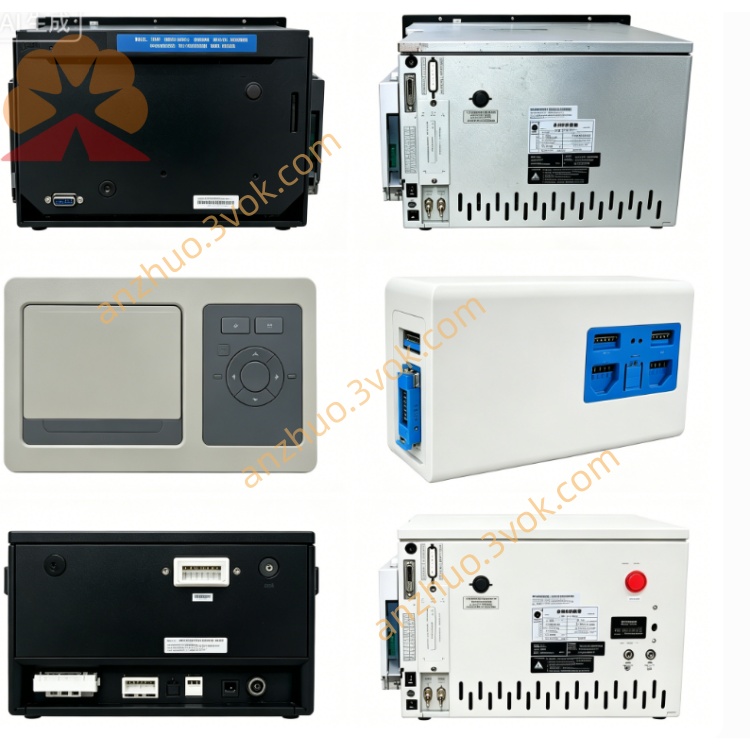
XYCOM XVME-956 VME Digital I/O Board
Description
XYCOM XVME-956 Product Detailed Description
I. Product Overview
XYCOM XVME-956 is a 6U dual-high VMEbus PC/AT I/O expansion carrier module launched by Xycom (now part of Acromag/Xembedded). It does not contain a processor on its own and is specifically designed to provide standardized I/O expansion capabilities for Xycom PC/AT architecture VME processor modules such as XVME-67x/1x and XVME-68x/1x. It adopts an open architecture design and realizes the expansion of functions such as Ethernet, serial ports, SCSI, and solid-state storage by installing PC/104 daughter cards. The single and dual high slots integrate various types of I/O, meeting the interface expansion requirements of industrial automation, embedded measurement and control, and data recording systems. It is a classic carrier for function expansion of existing VME systems.
II. Core Architecture and Hardware Configuration
(1) Carrier Board Design
Form and Specification: 6U dual-high VME module, occupying 2 consecutive VME slots, compatible with standard 6U VME chassis P1 (power / signal) and P2 (extended I/O) connectors.
Board Model: The basic carrier is XVME-956/1 (5V power supply), XVME-956/12 (3.3V/5V compatible, compatible with PMC), using pin-to-seat connection scheme, without vulnerable gold fingers, enhancing shock resistance and reliability.
Bus Interface: Compatible with VME64 standard, obtaining +5V, ±12V power supply through P1 backplane, communicating with the host processor module, transmitting PC/AT bus signals, without additional bridge chips, plug-and-play.
(2) Sub-card Expansion Capability (Core Features)
The board provides 2 PC/104 open architecture sub-card slots, supporting Xycom original and third-party standard PC/104 modules, flexible combination of functions. Common sub-card models are as follows:
XVME-956/101: Memory expansion sub-card, supporting EDO/SDRAM, maximum expandable to 64MB, suitable for large data cache and program running scenarios.
XVME-956/400: Serial / Parallel sub-card, providing 4 RS-232/422/485 serial ports + 1 EPP/ECP parallel port, suitable for sensors, printers, Modbus device connections.
XVME-956/402: AT-SCSI Host Adapter sub-card, 50-pin SCSI interface, supporting SCSI-2 protocol, can connect hard disks, tape drives, optical drives, etc., high-speed storage devices.
XVME-956/411: Ethernet sub-card, 10BASE-T RJ45 interface, supporting 10Mbps half / full duplex, suitable for industrial network communication and data upload.
XVME-956/412: Solid-state Storage sub-card, supporting IDE/CF card, providing non-volatile storage, suitable for high-stability scenarios without mechanical hard drives.
(3) Front Panel Interfaces and Status
I/O Interfaces: Sub-card function interfaces (network port, serial port, SCSI port, etc.) are all front-mounted, facilitating on-site wiring and debugging, without backplane conversion.
Status Indicators: Integrated power, bus communication, sub-card ready LED indicators, real-time monitoring of module operation status; equipped with reset button, supporting local fault reset.
Physical Protection: The front panel adopts industrial-grade reinforced design, interface with dust-proof covers, compatible with dust, oil-stained industrial sites.
(4) Power Supply and Power Consumption
Power Supply Method: Completely dependent on VME backplane power supply, +5V (core circuit), ±12V (interface driver), no need for external power adapter.
Power Consumption Range: Idle ≤ 5W, full load (dual-high load sub-card) ≤ 18W, low power consumption design, compatible with industrial chassis power supply specifications, reducing heat dissipation pressure.
(5) Physical Specifications
Size: 165mm × 50mm × 115mm (length × width × height), standard 6U dual-high size, compatible with mainstream 6U VME chassis installation.
Weight: Approximately 300g (excluding sub-card), lightweight reinforced design, facilitating installation and maintenance, compatible with various chassis layouts. (II) Protection and Anti-interference
Protection grade: Front panel IP30, dust-proof and splash-proof water-resistant, suitable for conventional industrial sites; interface terminals have shielding layers to reduce external interference.
Anti-vibration / Impact: Industrial-grade reinforcement, working state can withstand vibration at 5-500Hz and 2g acceleration, impact at 20g peak; non-working state can withstand impact at 50g, suitable for vibrating scenarios such as machine tools and production lines.
Electromagnetic Compatibility (EMC): Compliant with IEC 61000-6-2 standard, board-mounted EMI filtering circuit, suppresses static electricity, surges and electromagnetic interference, suitable for strong electromagnetic environments near frequency converters and high-voltage equipment.
(III) Hardware Reliability
Fully solid-state design: The substrate has no mechanical moving parts, core components use industrial-grade / military-grade devices, fully welded process, reduces the risk of false soldering and detachment.
Hot-swappable support: Supports on-the-fly replacement of sub-cards (requires cooperation of the host system), on-site maintenance does not require downtime, reduces system downtime time.
Long-term stability: MTBF ≥ 100,000 hours, suitable for industrial equipment with a 10-15-year long service cycle, Xycom (Acromag) provides long-term spare parts supply and technical support.
Four. Core Functions and Features
(1) Exclusive Expansion for Processor Module
Designed specifically for Xycom XVME-67x/1x, XVME-68x/1x series PC/AT architecture processor modules, seamlessly compatible with PC/AT bus protocols, no need for additional drivers, directly expand I/O capabilities, compensating for the shortcomings of insufficient interface of processor modules.
(2) Open Architecture Flexible Expansion
Uses standard PC/104 sub-card design, supports original equipment manufacturers and third-party modules, can be combined as needed for network, serial port, parallel port, SCSI, storage, memory expansion functions, "one card for multiple uses", suitable for different scenarios' interface requirements, reducing customization development costs.
(3) Single-slot High-density Integration
6U dual high single-slot design, integrates 2 sub-card slots, simultaneously expands multiple I/O, saves chassis slot resources, suitable for compact VME systems, avoiding complex wiring and increased fault points caused by stacking multiple modules.
(4) Simplified System Architecture
Directly through VME backplane power supply and communication, no need for external power supply, bridge, or complex wiring, reduces external cables and fault points, improves system stability, suitable for simplified deployment and maintenance requirements in industrial sites.
(5) Compatible with Mainstream Operating Systems
Adapts to all systems supported by XVME-67x/68x processor modules, including MS-DOS, VxWorks, embedded Linux, QNX, Windows XP Embedded, no need for additional drivers, plug-and-play, reduces the difficulty of secondary development.
VII. Typical Application Scenarios
Industrial Automation: I/O expansion for production line control systems, PLC replacement for system interface expansion, distributed control systems (DCS) communication and data acquisition modules.
Embedded Measurement and Control: Interface expansion for high-speed data acquisition systems, communication modules for instrument control units, peripheral connection units for laboratory automation devices.
Military / Aviation: Communication and storage expansion for vehicle measurement control systems, I/O modules for onboard auxiliary control units, interface units for radar data preprocessing equipment.
Transportation / Energy: Interface expansion for rail vehicle control units, communication modules for wind power / photovoltaic on-site control equipment, monitoring data acquisition units for smart grids.
Existing Equipment Maintenance: Interface upgrade and function expansion for old VME industrial equipment (such as early CNC machines, industrial robots), ensuring equipment continuous operation, extending service cycle.
VII. Selection and Adaptation Instructions
(1) Model Combination Rules Base Carrier: XVME-956/1 (5V, standard), XVME-956/12 (3.3V/5V, PMC compatible).
Function Sub-Cards: Complement as needed with XVME-956/101 (memory), XVME-956/400 (serial/parallel), XVME-956/402 (SCSI), XVME-956/411 (Ethernet), XVME-956/412 (solid-state storage), etc.
Temperature Versions: Standard temperature (0℃~55℃), wide temperature (-20℃~60℃).
(II) Compatible Processor Modules
Only compatible with Xycom PC/AT architecture VME processor modules:
XVME-67x series: XVME-675, XVME-677, etc.
XVME-68x series: XVME-686, XVME-688, XVME-690, etc.
(III) Compatible Enclosures
Compatible with standard 6U VME enclosures (VME64/VME64x), requiring 2 consecutive double-height slots, supporting P1 and P2 connectors, suitable for basic and extended VME systems.
VIII. Maintenance and Precautions
Before installation, cut off the power supply of the enclosure. Do not perform hot plugging of the carrier substrate (sub-cards support hot plugging). Avoid sudden current impact that damages the substrate connectors and chips; during installation, gently insert and push to ensure that the P1 and P2 connectors are fully engaged, and tighten the fixing screws.
Regularly check the status of the front panel LED indicators. A constantly lit power indicator indicates normal power supply, and a flashing communication indicator indicates normal bus interaction; if the fault indicator is constantly lit, power off and troubleshoot the contact of the sub-card, peripheral connections, and the hardware status of the substrate; during installation, align the sub-card with the slot, insert it evenly with force, and avoid violent installation that damages the slot; regularly clean the dust on the sub-card contacts and the substrate slots to prevent poor contact.
During long-term operation, keep the enclosure ventilation good, regularly clean the dust on the module surface and the enclosure heat dissipation channels to avoid interface failures or communication abnormalities caused by high temperature; the wide-temperature version can operate in a sealed environment, but the internal temperature of the enclosure needs to be controlled.
Avoid using in strong corrosive and strong magnetic environments. Strong magnetic fields may cause abnormal data storage on the sub-card; during transportation, avoid severe collisions to prevent damage to connectors, sub-cards, and substrate components.
Get a Quote