
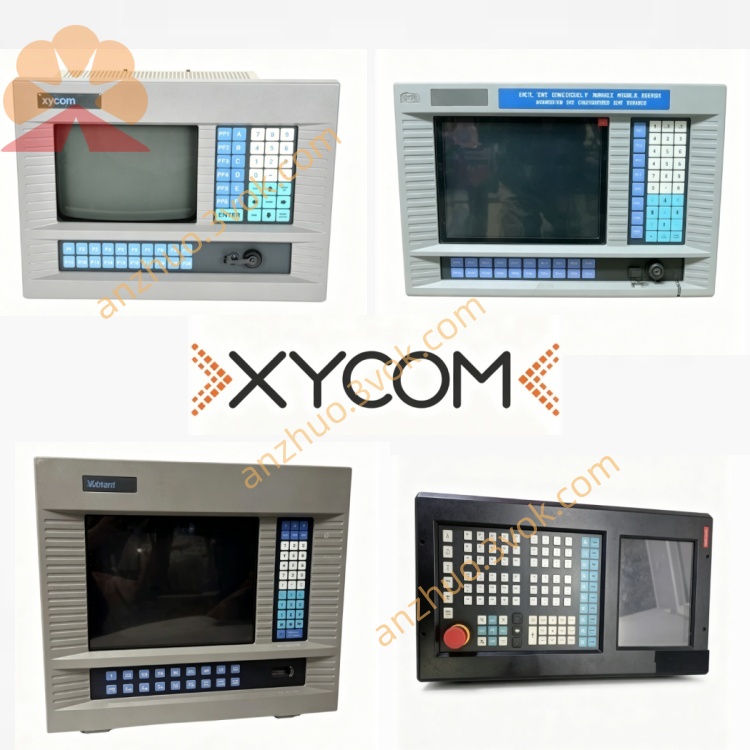
XYCOM XVME-690 VMEbus CPU Processor Module
Description
XYCOM XVME-690 Product Detailed Description
I. Product Overview
XYCOM XVME-690 is a 6U single-slot VMEbus high-performance processor module launched by Xycom (now part of Acromag/Xembedded). It adopts the Intel Pentium M/Celeron M architecture, integrating the reliability of VME64 industrial bus with the high-performance computing capabilities of PC level, specifically designed for industrial automation, real-time measurement and control, high-speed data processing, and embedded systems in harsh environments. The module integrates PCI-to-VME bridge, dual gigabit network, rich I/O and graphic display, and with a single slot deployment, it can handle complex control and computing tasks, making it the core preferred platform for mid-to-high-end VME systems.
II. Core Architecture and Hardware Configuration
(1) Processor Core
Equipped with **Intel Pentium M 1.8GHz (2MB L2 cache) or Celeron M 1.5GHz (1MB L2 cache)** processor, using low-power BGA packaging, supporting SpeedStep energy-saving technology, balancing high performance and low power consumption, meeting the requirements of industrial real-time control, big data processing and multi-task computing.
(2) Memory System
Configured with 200-pin DDR ECC / non-ECC SODIMM memory, supporting 256MB, 512MB, and 1GB capacities, operating frequency 266/333MHz, with maximum expansion to 2GB; ECC memory supports data error correction, enhancing data stability in harsh environments, suitable for high-reliability scenarios.
(3) Storage Interfaces
EIDE Ultra-DMA 100 controller: capable of connecting 3 IDE devices, supporting 2.5/3.5 inch hard drives, CD-ROMs, and floppy disks, compatible with XVME-977 floppy disk module.
Dual SATA 150 channels: through P2 connector expansion, supporting high-speed solid-state drives, enhancing system read and write performance.
On-board optional storage: supports 1.8-inch EIDE hard drives or CompactFlash cards, suitable for high-stability scenarios without mechanical moving parts, meeting long-term operation requirements.
(4) Graphics Display
Integrated Intel 855GM/E 2D/3D graphics controller, equipped with 4MB shared video memory, supporting up to 1600×1200@85Hz resolution, 24-bit true color; display output can be transferred through the front panel or P2 connector, suitable for industrial displays, touch screens, meeting high-definition human-machine interface (HMI) requirements.
(5) Bus Interfaces
VMEbus bus: compliant with VME64 standard, equipped with Tundra Universe II PCI-to-VME bridge chip, supporting A32/A24/A16 address space, D64/D32/D16/D8 data transmission, having MBLT64 block transfer and hardware byte exchange functions, compatible with multi-master / slave mode, suitable for high-speed data interaction.
PMC Expansion Slot: 1 32/64-bit, 33/66MHz PMC (PCI layer card) slot, supporting IEEE P1386/P1386.1 standard, can expand dedicated I/O, communication or data processing modules; through XVME-976 expansion module, it can be increased to 3 PMC slots, enhancing system expansion capability.
(6) Network Interfaces Integrated dual Intel 82546GB Gigabit Ethernet controllers (10/100/1000Base-TX), the front panel is equipped with dual RJ-45 interfaces, supporting link aggregation, redundancy backup and high-speed data transmission, suitable for industrial network communication, data upload and remote monitoring scenarios.
(7) I/O Interfaces
Serial Ports: 3 channels of 16550 compatible serial ports, COM1 (front panel, RS-232/422/485 optional), COM3 (front panel, RS-232), COM2 (rear connector, RS-232), baud rate adjustable, suitable for sensors, Modbus devices, serial printers, etc.
USB: 1 channel front panel USB 2.0 interface, 2 channels rear USB 2.0 interfaces, supporting USB drives, mobile hard drives, USB peripheral expansion.
Parallel Port: 1 channel EPP/ECP compatible parallel port (IEEE1284), suitable for parallel printers, data acquisition cards.
Audio: AD1981B AC97 codec, providing line-level stereo input/output through P2 connector, suitable for voice broadcasting, audio monitoring scenarios.
Keyboard/Mouse: Supports PS/2 keyboard/mouse, can be connected through front panel or rear interface, suitable for industrial site operation input.
Front Panel Status: Integrated power, operation, fault LED indicators, equipped with reset switch and VMEbus SYSFAIL button, facilitating status monitoring and fault reset.
(8) Power Supply and Power Consumption
Using VME bus + 5V, ±12V power supply, low power consumption design, Pentium M version typical power consumption ≤ 18W, Celeron M version ≤ 15W, supports fanless operation, suitable for enclosed, dust-proof industrial environments, reducing system complexity and fault points.
(9) Physical Specifications
Form: 6U single-slot VME module, occupying 1 slot of the chassis, suitable for standard 6U VME chassis P1, P2 connectors.
Size: 165mm × 25mm × 115mm (length × width × height), standard VME module size, compatible with mainstream chassis installation.
Weight: Approximately 220g, lightweight design, facilitating installation and maintenance, suitable for various chassis layouts.
III. Environmental Adaptability and Reliability
(1) Temperature Range
Operating Temperature: 0℃~55℃ (standard industrial grade); optional wide temperature version, supports **-40℃~85℃** extreme temperature, suitable for outdoor, vehicle-mounted, military, etc. environments without air conditioning.
Storage Temperature: -40℃~+85℃, no damage risk during long-term storage and transportation, ensuring reliability of spare parts storage.
(2) Protection and Anti-interference
Protection Grade: Front panel IP65, dust-proof, waterproof splashing, suitable for humid, dusty, oily, etc. harsh industrial sites.
Vibration/Impact Resistance: Military-grade reinforced design, working state resistant to vibration 5~2000Hz, 2.5g acceleration, impact resistant 30g peak acceleration (11ms); non-working state resistant to impact 50g, suitable for machine tools, vehicle-mounted, wind power, etc. highly vibrating scenarios.
Electromagnetic Compatibility (EMC): Compliant with IEC 61000-6-2/4 standards, with anti-static, anti-electromagnetic interference capabilities, suitable for industrial environments with strong electromagnetic interference (such as frequency converters, high-voltage equipment nearby).
(3) Hardware Reliability
All-solid-state design: Core components have no mechanical moving parts, reducing fault points, supporting long-term continuous operation (MTBF ≥ 120,000 hours). Hardware Watchdog: Built-in independent long-lasting watchdog circuit, automatically resets when the system freezes, ensuring continuous system operation and reducing the risk of downtime.
Support for less mode: Supports serial console mode (including BIOS settings), allowing remote debugging and management without a display or keyboard, suitable for unmanned scenarios.
RoHS compliance: Compliant with environmental standards, meeting the requirements of green industrial equipment.
Four. Core Functions and Features
(1) High-performance PC compatibility ecosystem
Fully compatible with x86 PC architecture, supporting Windows XP/XP Embedded, RTX, embedded Linux, QNX, VxWorks, etc., can directly run mature development tools and applications on PC, significantly reducing the cost and cycle of secondary development.
(2) Single-slot high-density integration
6U single-slot specification, integrating processor, memory, graphics, dual gigabit network, multiple serial ports/USB/parallel ports and PMC expansion, occupying only 1 VME slot, saving chassis space, suitable for compact embedded systems, facilitating multi-module combination layout.
(3) Flexible expansion capability
PMC slot: Supports custom function expansion, suitable for dedicated I/O, communication protocols or data processing requirements.
Storage expansion: Compatible with IDE/SATA/CF card/ onboard hard drive, flexibly adapting to different storage capacity and stability requirements.
Network redundancy: Dual gigabit network ports support link aggregation and redundancy backup, ensuring continuous network communication.
(4) Real-time multi-task processing
VME64 bus + high-performance processor + 7-level programmable interrupt mechanism, supporting microsecond-level real-time response, suitable for industrial control, high-speed data acquisition, equipment monitoring and other scenarios with high real-time requirements, ensuring timely execution of control instructions.
(5) Long lifecycle support
Xycom (Acromag) provides long-term technical support and spare parts supply, with a product lifecycle of over 15 years, meeting the long service cycle requirements of industrial equipment, avoiding system upgrade and replacement costs due to product discontinuation.
Five. Typical Application Scenarios
Industrial Automation: High-end production line control, PLC replacement system, distributed control system (DCS), intelligent equipment monitoring unit.
Embedded measurement and control: High-speed data acquisition system, instrument control, environmental monitoring equipment, laboratory automation device, industrial robot controller.
Military / Aviation: Vehicle measurement control system, onboard auxiliary control, radar data preprocessing, military communication terminal, weapon equipment control module.
Transportation / Energy: Rail transit vehicle control, wind power / solar energy on-site control unit, smart grid monitoring equipment, ship automation system.
Medical equipment: Medical imaging equipment control, automated detection instruments, core control board of critical care equipment, laboratory analysis instruments.
Six. Selection and Adaptation Instructions
(1) Model Distinction
XVME-690/812: Standard version, Pentium M 1.8GHz, 512MB ECC memory, industrial temperature (0℃~55℃).
XVME-690/C: Low-end version, Celeron M 1.5GHz, 256MB non-ECC memory, suitable for basic control requirements.
XVME-690/W: Wide-temperature version, working temperature -40℃~85℃, enhanced EMC protection, all-solid-state capacitors.
Optional items: 1GB ECC memory, onboard 1.8-inch hard drive, CompactFlash card, PMC expansion module, heat sink components.
(2) Adaptation of Chassis Compatible standard 6U VME chassis (VME64/VME64x), requires 1 single slot, supports P1 (data / power) and P2 (extended I/O) connectors, compatible with basic and extended VME systems.
(III) Operating System Compatibility
Desktop system: Windows XP, Windows XP Embedded.
Embedded real-time system: RTX, embedded Linux 2.6/3.x, QNX 6.x, VxWorks 6.x.
Classic system: MS-DOS, Windows 98 (reduced version).
VII. Maintenance and Precautions
Before installation, the power supply of the chassis must be cut off. Hot swapping is prohibited to avoid damage to module connectors and chips due to instantaneous current shock; during installation, gently insert and push to ensure that the P1 and P2 connectors are fully engaged.
Regularly check the status of the front panel indicator lights. If the fault light is constantly on, the power must be cut off to troubleshoot the power supply, peripheral connections, and module hardware status to avoid running with faults.
During long-term operation, ensure good ventilation of the chassis, regularly clean the dust on the module surface and the chassis cooling channels to avoid frequency reduction or system freeze due to high temperature; the wide temperature version can operate without a fan in a sealed environment.
The battery backup module (optional) is recommended to be replaced every 3 years to prevent battery aging and leakage from damaging the circuit board, and to avoid loss of configuration data after power failure.
Avoid using in strong corrosive and strong radiation environments. If necessary, install a protective shell or shielding device to extend the module service life; avoid severe collisions during handling to prevent damage to connectors and chips.
Get a Quote