
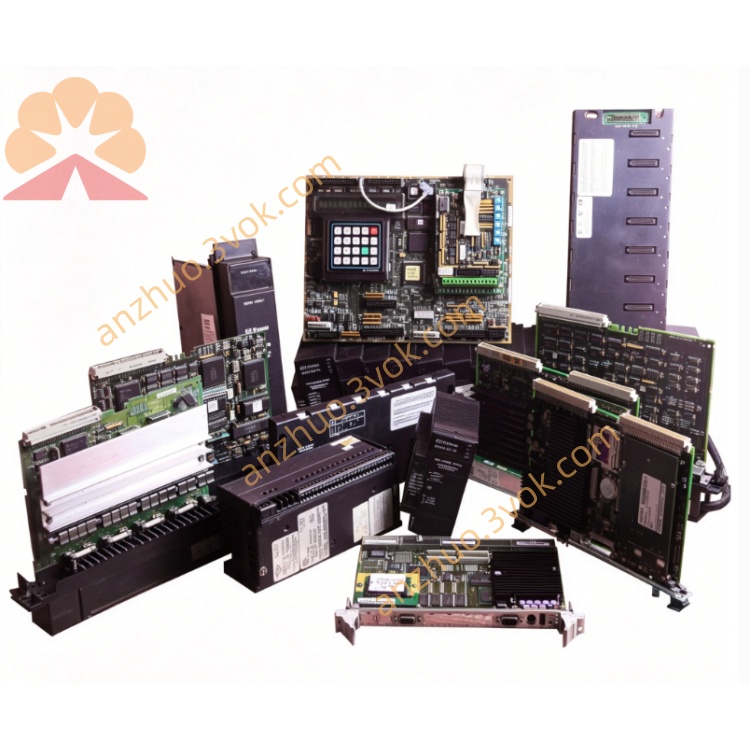
XYCOM XVME-684 VME Single Board Computer
Description
XYCOM XVME-684 Product Detailed Description
I. Product Overview
XYCOM XVME-684 is a 6U VMEbus dual-board PC/AT compatible processor module developed by Xycom (now part of Acromag/Xembedded). It is specifically designed for industrial automation, process control, embedded measurement and control, and high-reliability military/aerospace scenarios. The product is based on the VME64x bus standard, integrating the versatility of the traditional PC/AT architecture with the real-time and anti-interference capabilities of the VME bus, and can operate stably in harsh industrial environments for long periods. It is the core computing platform for embedded control systems.
II. Core Architecture and Hardware Configuration
(1) Processor Core
It adopts Intel 80486 series processors, providing two frequency configurations: 33MHz 80486DX and 66MHz 80486DX2. It includes a mathematical coprocessor to meet the performance requirements of industrial control, data processing, and real-time computing, and is compatible with the PC/AT instruction set, suitable for mainstream embedded operating systems.
(2) Memory System
It is equipped with high-speed DRAM memory, supporting three capacity configurations of 4MB, 16MB, and 32MB. It can also be optionally equipped with 2MB SRAM as a high-speed cache to improve data read and write efficiency. The memory has parity check / error check (ECC) capabilities, which can detect and correct data errors and is suitable for high-reliability scenarios.
(3) Storage Interface
It includes an IDE hard disk controller + floppy disk controller, which can directly connect IDE hard disks and floppy disks and supports local data storage and system booting; it is compatible with DOC (DiskOnChip) flash drives (such as XVME-992), with a maximum support of 72MB solid-state storage, suitable for high-stability scenarios without mechanical moving parts.
(4) Graphics Display
It integrates a VGA graphics controller and is equipped with 2MB VRAM, supporting standard VGA display output, with a maximum resolution of 1600×1200@85Hz. It can be directly connected to displays and industrial touch screens to meet the display requirements of human-machine interface (HMI).
(5) Bus Interface
VMEbus Interface: Compliant with VME64x standard, supporting 64-bit data transmission, A24/A16 address space, compatible with multi-master / slave mode, having BLT block transmission and DMA direct memory access capabilities, supporting hardware byte swapping, improving data throughput efficiency.
VME Interrupt: It includes a VMEbus interrupt circuit, supporting 7 levels of interrupts (I1-I7), programmable setting of interrupt priorities, suitable for multi-task real-time scheduling scenarios.
(6) I/O Interface
Serial Ports: 2 16550 compatible RS-232C serial ports, supporting adaptive baud rate, capable of connecting serial devices (such as sensors, Modbus modules).
Parallel Ports: 1 ECP/EPP compatible parallel port, suitable for printers and parallel peripherals.
Others: PS/2 keyboard / mouse interface, USB 1.1 interface (in some versions), compatible with standard PC peripherals.
(7) Power Supply and Power Consumption
It uses VME bus power supply, supporting + 5V, ±12V input, typical power consumption ≤ 15W, low-power design reduces heat dissipation pressure, suitable for fanless embedded scenarios.
(8) Physical Specifications
Form: 6U dual-board module, occupying 2 slots of the VME chassis, requires P1 and P2 connectors for use.
Size: 165mm × 25mm × 115mm (length × width × height). Weight: Approximately 200g. The lightweight design is suitable for installation in chassis.
III. Environmental Adaptability and Reliability
(1) Temperature Range
Operating temperature: -20℃~70℃ (industrial standard), optional -40℃~85℃ wide temperature version, suitable for extreme high and low temperature environments.
Storage temperature: -55℃~+85℃, no damage risk during transportation and long-term storage.
(2) Protection and Anti-interference
Protection level: IP65 (front panel), dust-proof, water-proof splash-proof, suitable for humid and dusty industrial sites.
Anti-vibration / Impact: Military-grade design, anti-vibration frequency 5~2000Hz, acceleration 10g, anti-impact acceleration 50g, suitable for scenes with intense vibration (such as machine tools, vehicle-mounted equipment).
Electromagnetic Compatibility (EMC): Compliant with IEC 61000-6-2/4 standards, anti-static, anti-electromagnetic interference, suitable for strong electromagnetic industrial environments.
(3) Hardware Reliability
All-solid-state design: no mechanical moving parts (optional fan cooling), reducing failure points.
Watchdog circuit: built-in hardware watchdog, automatically resets when the system freezes, ensuring continuous operation.
Battery backup: supports CMOS RAM battery backup, saves critical configuration data after power loss XYCOM.
IV. Core Functions and Features
(1) PC/AT Compatibility Ecosystem
Fully compatible with PC/AT architecture, supports mainstream embedded operating systems such as Windows XPE, Windows CE, Linux, and RTOS, can directly run mature software and development tools (such as LabVIEW, C++/C# compilers), reducing the cost of secondary development.
(2) Modular Expansion Capability
Based on VME bus, can flexibly expand I/O modules, communication modules, storage modules (such as XVME-540 analog module, XVME-951 adapter module), supports multi-module collaborative work, suitable for customized control requirements XYCOM.
(3) Real-time Multi-task Processing
VME bus + 7-level interrupt mechanism, supports real-time task scheduling, response time in microsecond level, suitable for scenarios with high real-time requirements such as industrial control, data acquisition.
(4) Wide Temperature Low Power Consumption
Wide temperature working range + low power consumption design, suitable for outdoor, vehicle-mounted, military, etc., environments without air conditioning and with limited space.
(5) Long Lifecycle Support
Xycom (Acromag) provides long-term technical support and spare parts supply, product lifecycle can reach more than 15 years, suitable for the long service cycle requirements of industrial equipment.
V. Typical Application Scenarios
Industrial Automation: production line control, robot control, PLC replacement system, DCS distributed control system.
Embedded Measurement and Control: data acquisition system, instrument control, environmental monitoring equipment, medical equipment control.
Military / Aviation: onboard control, vehicle-mounted measurement and control, radar data processing, military communication equipment.
Transportation / Energy: rail transit control, wind / solar power control system, smart grid monitoring equipment.
VI. Selection and Adaptation Instructions
(1) Model Distinction
XVME-684: standard version, 66MHz 80486DX2, 16MB DRAM, VGA display.
XVME-684/3: high-end version, 32MB DRAM, wide temperature (-40℃~85℃), enhanced EMC protection.
Optional items: DOC flash drive, battery backup module, fan cooling component XYCOM.
(2) Adaptation Chassis Compatible standard 6U VME chassis (such as VME64x chassis), requires 2 consecutive slots, and supports P1 (data / power) and P2 (extended I/O) connectors.
(III) Operating System Compatibility
Windows: Windows XPE, Windows CE 5.0/6.0, Windows 98 (reduced version).
Linux: Embedded Linux 2.6/3.x, RT-Linux (real-time extension).
RTOS: VxWorks, QNX, pSOS (mainstream industrial real-time operating systems).
VIII. Maintenance and Precautions
Before installation, cut off the power supply of the chassis to avoid damaging the module during hot plugging; during installation, gently insert and push to avoid damaging the connectors.
Regularly check the cooling components (fans / heat sinks), clean the dust, to avoid overheating, frequency reduction or system crash.
The battery backup module needs to be replaced regularly (suggested every 3 years / once), to avoid loss of configuration data in case of power failure XYCOM.
Avoid using in strong corrosive and strong electromagnetic radiation environments. If necessary, install a protective shell or shielding device.
Get a Quote