
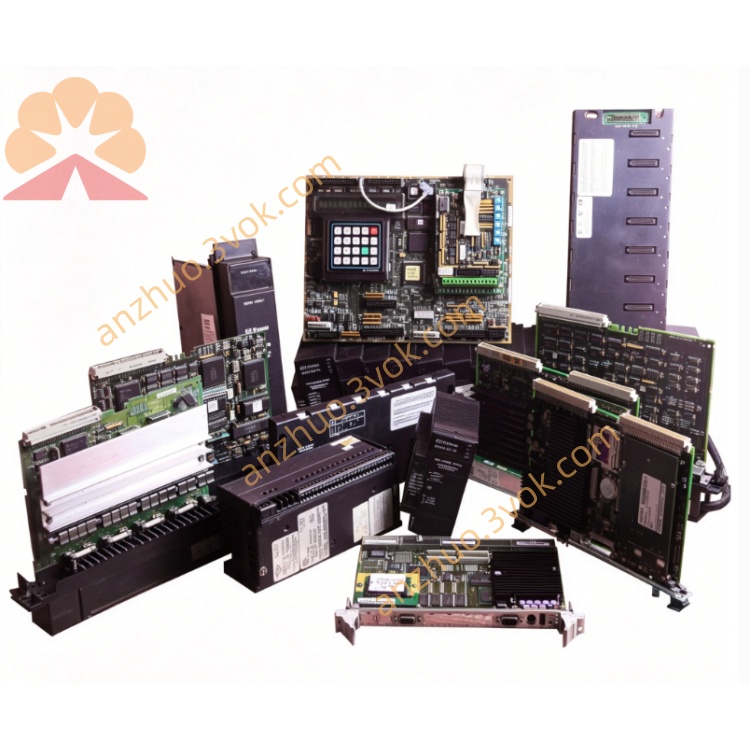
XYCOM XVME-682 VME SBC Processor Board
Description
XYCOM XVME-682 Industrial-grade VMEbus PC/AT Processor Module Detailed Product Description
I. Product Overview
XYCOM XVME-682 is a dual-board 6U VMEbus specification, PC/AT compatible classic embedded processor module. It was designed by XYCOM (now part of Acromag/Xembedded) and adopts a CPU + I/O separated dual-card architecture. It is targeted at industrial control, military / aerospace, upgrading of old VME systems, real-time data processing, etc. It is equipped with an Intel 80286 processor and integrates dual-port shared memory, complete VME master-slave interface, EGA/CGA graphics, and standard PC/AT peripheral interfaces. It is structurally robust, highly compatible, and has a long lifecycle. It is the mainstream model for legacy VME systems as a 286-level master controller.
II. Core Functions and Features
(1) Intel 80286 processor, three frequency options available, compatible with PC/AT
Equipped with an Intel 80286 processor. Software can select three frequency options of 10MHz/8MHz/6MHz, suitable for different real-time and power consumption requirements.
Supports real mode / protected mode switching, compatible with IBM PC/AT instruction set, can run DOS, Windows 3.x, and industrial-specific software.
Optional 80287 math coprocessor, enhancing floating-point operations, suitable for simple algorithms and data processing scenarios.
Mature CMOS process, low power consumption, high stability, suitable for 7×24-hour uninterrupted industrial site operation.
(2) 1MB/4MB dual-port DRAM, shared access, with 1 wait state
Onboard 1MB or 4MB dual-port RAM (optional), mapped simultaneously to VMEbus and PC/AT buses, supporting dual-host shared access.
Memory access with 1 wait state, balancing speed and stability, suitable for 286 processor timing; supports Shadow RAM mapping BIOS, accelerating system startup.
Dual-port interrupt mechanism: VME master device can trigger an interrupt by reading the low 16 bytes of the dual-port RAM, achieving efficient cross-module communication.
(3) Separated dual-card architecture: CPU module + I/O module, flexible deployment
CPU module: integrates processor, memory, VMEbus interface, interrupt controller, watchdog, and PC/AT bus logic, responsible for core computing and bus management.
I/O module: provides EGA/CGA graphics control, floppy drive / IDE hard disk interface, serial port / parallel port peripheral connections, achieving local display and storage expansion.
Installation is flexible: CPU and I/O modules can be stacked adjacent slots (short interconnection) or independently installed in non-adjacent slots (long interconnection), adapting to different cabinet wiring requirements.
(4) Complete VMEbus interface: master-slave, interrupt, arbitration, and Slot 1 function
Complies with VMEbus IEEE 1014-1994 standard, supports A16/A24/A32 addresses, D08/D16/D32 data transmission.
Has VME master / slave mode, programmable byte exchange, single-level arbitration, R0~R3 bus requests, capable of driving SYSCLK/SYSRESET system signals.
Provides 7-level VME interrupts and daisy chain processing, efficient response to multiple module events; supports Slot 1 system controller function, capable of managing the VME resources of the entire chassis. Unique Real Mode Window: The processor can directly access all VME address space in real mode, perfectly compatible with old PC/AT software and VME device drivers.
(5) Rich onboard I/O and graphics interfaces, ready to use without expansion cards
Graphics output: The I/O module integrates EGA/CGA controllers, supports standard resolution display, front panel interface directly connects to CRT display, suitable for local monitoring and debugging.
Storage interface: The I/O module is equipped with floppy disk controller (compatible with 360KB to 1.44MB floppy drives) and IDE hard disk interface, can connect 2.5-inch hard drives or SSD, used for system and data storage.
Serial port: 2 channels RS-232C, up to 115.2kbps, can connect terminals, PLC, serial port printers.
Parallel port: 1 channel Centronics compatible parallel port, suitable for printers, scanners or specialized industrial equipment.
Hardware monitoring: Onboard watchdog timer (WDT), system anomalies automatically reset to prevent system freeze; front panel status LED, real-time indication of power, operation, and fault status.
(6) Industrial-grade reinforced design, suitable for harsh environments
Wide temperature operation: Standard 0℃ to 55℃, reinforced version **-40℃ to +70℃**, suitable for extremely cold / hot, humid, dusty scenarios.
Anti-vibration / shock: Complies with MIL-STD-810 standard, vibration 5g, shock 50g, suitable for mobile applications such as vehicle-mounted, airborne, and ship-mounted.
High EMI resistance: Complies with CE/FCC/UL and EN 61000-6-2/4 standards, stable operation in strong electromagnetic interference environments.
Long service life: Military-grade component screening, firmware Flash supports remote upgrade, suitable for long-term project deployment of 10 years or more.
III. Technical Parameters
Processor: Intel 80286, 10/8/6MHz (software selectable); optional 80287 coprocessor
Memory: 1MB/4MB dual-port DRAM, 1 wait state; supports Shadow RAM
Graphics: EGA/CGA compatible, standard resolution display
Storage: Floppy drive (360KB to 1.44MB), IDE hard disk interface
Serial port: 2×RS-232C, up to 115.2kbps
Parallel port: 1×Centronics compatible parallel port
VMEbus: A16/A24/A32, D08/D16/D32, master / slave, 7-level interrupt, arbitration, Slot 1 function, real mode window
Expansion: CPU and I/O module separated, supports adjacent / non-adjacent slot installation
Power supply: +5V, ±12V (VME backplane power supply)
Operating temperature: 0℃ to 55℃ (standard); -40℃ to +70℃ (reinforced)
Storage temperature: -55℃ to +85℃
Humidity: 5% to 95% (non-condensing, 60℃)
Size: 6U dual-slot (CPU + I/O each 233mm×160mm)
Weight: Approximately 1.4kg (total weight of two modules)
IV. Typical Application Scenarios
Upgrade of old VME systems: Replace faulty 286/386-level CPU modules, compatible with existing VME I/O, chassis and software, low-cost restoration of system operation.
Industrial automation control: Small production lines, process control, DCS system core controller, manage I/O modules and simple control logic.
Military / Aerospace: Vehicle-mounted, airborne, ship-mounted and other mobile harsh environments, require wide temperature, anti-vibration, highly reliable control unit. Embedded Real-time System: Equipment monitoring, data acquisition, laboratory instrument control, suitable for low power consumption and high stability requirements.
Teaching and Experiment Platform: Industrial automation, embedded system teaching experiments, building a classic VME bus + PC/AT architecture experimental environment.
V. Product Advantages Summary
XVME-682 features Intel 80286 three-level main frequency, 1MB/4MB dual-port shared memory, separated dual-card architecture, complete VME master-slave interface, EGA/CGA graphics, floppy drive/IDE dual storage, dual serial ports + parallel ports, wide temperature resistance and rugged design as its core advantages. It is a benchmark product of the 286-level master control in legacy VME systems. It has a classic architecture, strong compatibility, complete interfaces, no need for additional expansion cards; dual-port memory realizes efficient cross-module communication; separated dual-card is suitable for flexible wiring; PC/AT compatibility makes ecological development simple and transplantation cost low; rugged design adapts to harsh industrial environments, making it an ideal choice for upgrading old systems, lightweight industrial control, and military strict scenarios.
Get a Quote