
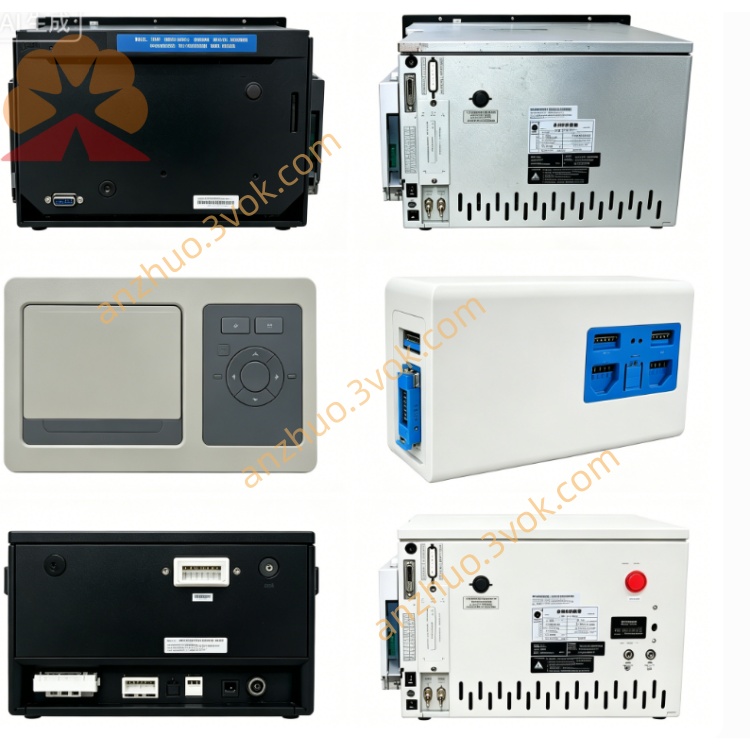
XYCOM XVME-678 VMEbus PC/AT Processor Module
Description
XYCOM XVME-678 Industrial-grade VMEbus PC/AT Processor Module - Detailed Product Description
I. Product Overview
XYCOM XVME-678 is a single-slot 6U VMEbus specification, PC/AT compatible low-power embedded processor module. It was introduced by XYCOM (now part of Acromag/Xembedded), featuring low cost, low power consumption, and high stability. It is targeted at lightweight industrial control, embedded front-end, data acquisition, and replacement of old VME systems. It uses a Cyrix 486SLC/e low-power processor, integrates SVGA display, IDE / floppy drive, dual serial ports, parallel ports, and complete VME master-slave interfaces. It has a compact structure, complete interfaces, wide temperature resistance, and is the mainstream main control unit for economical legacy VME systems.
II. Core Functions and Features
(1) Cyrix 486SLC/e Low-Power Processor, 25MHz Stable Operation
Equipped with a Cyrix 486SLC/e 25MHz processor, compatible with Intel 486SX instruction set, with 1KB on-chip cache, low-power CMOS process, suitable for long-term operation in non-fan, enclosed chassis.
It can be paired with an 80387SX math coprocessor to enhance floating-point computing capabilities, suitable for simple algorithms and data processing scenarios.
The architecture is mature, the circuit is simple, has strong resistance to electromagnetic interference and voltage fluctuations, and is suitable for 7×24-hour uninterrupted industrial sites.
(2) Flexible SIMM Memory Configuration, Up to 16MB Zero Wait Access
The board has 4 SIMM slots, factory default configuration is 0MB/1MB/4MB DRAM, expandable to 16MB.
Memory uses page interleaving mode, 60ns DRAM zero wait access, 1MB/4MB/16MB are bidirectional interleaving, improving system response speed.
Supports Shadow RAM, can map system BIOS and VGA BIOS, accelerating startup and call efficiency.
(3) SVGA Graphics Controller, 512KB Video Memory, High-Resolution Display
Integrated Super VGA controller, equipped with 512KB video DRAM, supports ** up to 1024×768 (16-color) ** display output.
Front panel DB15 interface directly connects to CRT or industrial touch screen, suitable for local monitoring, operation, and fault diagnosis.
(4) Dual Storage Interfaces: IDE + Floppy Drive, Compatible with Old Media
IDE Hard Disk Controller: Supports dual drive cascading, can connect 2.5-inch IDE hard drives, SSDs, for system and data storage.
Floppy Disk Controller: Compatible with 360KB/720KB/1.2MB/1.44MB standard floppy drives, suitable for old system recovery and data migration.
The board has 256KB EPROM to store system BIOS and configuration parameters, power-off saving, supports remote upgrade.
(5) Complete VMEbus Interfaces: Master-Slave, Interrupt, Arbitration, and Slot 1 Function
Complies with VMEbus IEEE 1014-1994, supports A16/A24/A32 addresses, D08/D16/D32 data transmission.
Supports VME Master/Slave mode, programmable byte exchange, single-level arbitration, R0~R3 bus requests, capable of driving SYSCLK/SYSRESET.
Provides 7-level VME interrupts and daisy-chain processing, efficient response to multiple module events; Supports the functionality of Slot 1 system controller, capable of managing the resources of the entire chassis.
It has a real-mode window, allowing the processor to access VME short I/O and the standard address space in real mode, which is suitable for old software.
(6) Rich onboard I/O, ready to use without expansion cards
Serial port: 2 RS-232C ports, up to 115.2 kbps, can be connected to terminals, PLCs, sensors, serial printers.
Parallel port: 1 Centronics-compatible parallel port, suitable for printers, scanners or specialized industrial equipment.
Keyboard / Mouse: PS/2 composite interface (keyboard + mouse), supports standard PC peripherals, convenient for local debugging.
Hardware monitoring: Onboard watchdog timer (WDT), abnormal automatic reset, preventing system from crashing; front panel SYSFAIL switch, supports manual fault indication.
(7) Low power consumption and rugged design, suitable for harsh environments
Ultra-low power consumption: +5V typical 1.9A, maximum 2.7A, ±12V only milliamp level, no additional heat dissipation required, suitable for enclosed, fanless chassis.
Industrial wide temperature range: standard 0℃~55℃, rugged version **-40℃~+70℃**, suitable for extremely cold / hot, humid, dusty environments.
Anti-vibration / shock: meets MIL-STD-810, vibration 5g, shock 50g, suitable for mobile scenarios such as vehicle-mounted, airborne, and ship-mounted.
High EMI anti-interference: meets CE/FCC/UL and EN 61000-6-2/4, stable operation in strong electromagnetic environments.
III. Technical parameters
Processor: Cyrix 486SLC/e 25MHz, 1KB L1 cache, compatible with 486SX; optional 80387SX coprocessor
Memory: 4×SIMM slots, default 0/1/4MB, maximum 16MB; 60ns zero wait, bidirectional interleaving
Graphics: Super VGA, 512KB VRAM, up to 1024×768 (16 colors)
Storage: IDE (dual drives), floppy drive (360KB~1.44MB), 256KB EPROM BIOS
Serial port: 2×RS-232C, up to 115.2 kbps
Parallel port: 1×Centronics-compatible parallel port
VMEbus: A16/A24/A32, D08/D16/D32, master / slave, 7-level interrupt, arbitration, Slot 1 function
Expansion: No additional expansion slots, complete onboard interfaces
Power supply: +5V (1.9A typ/2.7A max), +12V (2mA max), -12V (1mA max)
Operating temperature: 0℃~55℃ (standard); -40℃~+70℃ (rugged)
Storage temperature: -55℃~+85℃
Humidity: 5%~95% (non-condensing, 60℃)
Size: 6U single slot (233mm×160mm)
Weight: approximately 0.5kg
IV. Typical application scenarios
Lightweight industrial control: small production lines, building automation, HVAC (heating, ventilation, and air conditioning) and other low-complexity control scenarios;
Embedded data acquisition: multi-channel signal acquisition, sensor data aggregation, equipment status monitoring, suitable for low-cost, low-power requirements;
Upgrade of old VME systems: replacement of faulty or outdated CPU modules, compatible with existing VME I/O and chassis, low-cost restoration of system operation;
Front-end control in extreme environments: outdoor equipment, oil fields, mines, communication base stations, etc., unmanned, wide temperature, strong interference scenarios; Teaching and Experiment Platform: Industrial automation, embedded system teaching experiments, low-cost VME bus experimental environment setup.
V. Summary of Product Advantages
The XVME-678 features Cyrix 486SLC/e low-power 25MHz, maximum 16MB zero-wait memory, SVGA 512KB graphics memory, IDE/floppy dual storage, complete VME master-slave interface, dual serial ports + parallel ports + PS/2, ultra-low power consumption, wide temperature resistance and ruggedization as its core advantages. It represents an economical VME control module. It has a mature architecture, stable and reliable performance, complete interfaces, no need for additional expansion cards; its low-power design is suitable for fanless sealed enclosures, reducing operation and maintenance costs; wide temperature resistance is suitable for harsh industrial environments; the PC/AT compatibility ecosystem development is simple and the transplantation cost is low, making it an ideal choice for lightweight industrial control, upgrading old systems, and low-cost embedded scenarios.
Get a Quote