
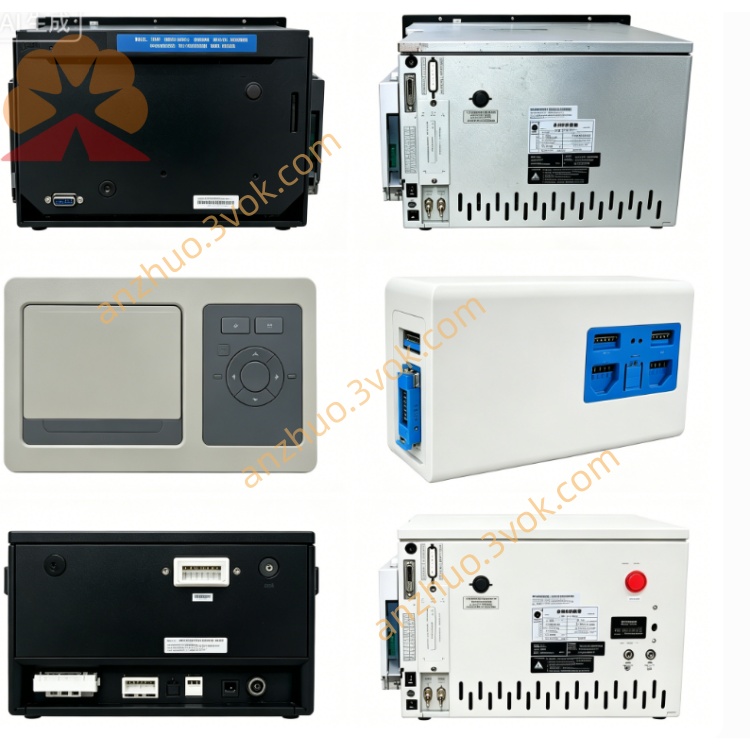
XYCOM XVME-661 VMEbus Pentium III SBC
Description
XYCOM XVME-661 Low-Power VMEbus Processor Module - Detailed Product Description
I. Product Overview
XYCOM XVME-661 is a single-slot 6U VMEbus specification, PC/AT compatible industrial-grade processor module, designed and manufactured by XYCOM (now under Xembedded/Acromag). The module is equipped with a low-power Intel Pentium III 700MHz CPU, an integrated Tundra Universe IID PCI-to-VMEbus bridge, balancing x86 software ecosystem compatibility with VME bus real-time control capabilities. It is specifically designed for high-reliability, low-power, and space-constrained embedded scenarios in industrial automation, test and measurement, military, aerospace, etc., and can serve as the core control unit of the VME system, operating stably in harsh industrial environments for long periods.
II. Core Functions and Features
(1) Low-Power Pentium III Processor, Efficient and Stable
Equipped with an Intel low-power Pentium III 700MHz processor, 100MHz front-end bus, and 256KB on-chip secondary cache. It offers excellent performance and energy efficiency balance, with typical power consumption far lower than that of similar CPUs, suitable for enclosed, high-density chassis cooling constraints.
Fully compatible with x86 architecture, it can directly run mainstream operating systems such as Windows, Linux, and VxWorks, and industrial control software, with low development and migration costs, and supports multi-task real-time scheduling.
(2) Large-capacity SDRAM and Flexible Storage Configuration
Memory: Equipped with 144-pin SODIMM slots, supporting up to 256MB SDRAM, meeting the requirements for large programs, data caching, and multi-task parallel processing, with no wait-state access to local memory, ensuring low-latency response for real-time tasks.
Storage: Integrated PCI EIDE controller, providing Type I/II IDE CompactFlash (CF) slots, allowing the solidification of the operating system and critical data, and no data loss upon power failure; supports connection of hard drives, floppy drives, or optical drives through XVME-977/XVME-979 expansion modules, enabling flexible expansion of local storage.
(3) PCI-VME Bridge, Native Compatibility with VMEbus Bus
Integrated Tundra Universe IID PCI-to-VMEbus intelligent bridge, supporting VMEbus A16/A24/A32 address space, D32/D64 data transmission, with sufficient bus bandwidth, suitable for high-speed data acquisition and multi-module parallel interaction.
Features VME bus master/slave control, bus arbitration, 7-level interrupt handling, and IACK daisy chain functions, capable of seamlessly managing all VME I/O modules within the chassis, compatible with the entire XVME series of boards, supporting hot swapping, facilitating system maintenance and upgrades.
Complies with VMEbus IEEE 1014-1994 standard, single-slot 6U structure, compatible with standard VME chassis, installation is convenient.
(4) Rich Built-in I/O, No Additional Expansion Cards Required
Graphics Display: Integrated 64-bit AGP high-performance graphics controller, equipped with 4MB SDRAM memory, supporting **1600×1200 (64K colors) or 1280×1024 (16 million colors)** resolution, front panel DB15 interface directly connects to the display, supporting local visualization operation and status monitoring. Network Communication: Equipped with dual 10/100Mbps Ethernet controllers, front panel with dual RJ-45 interfaces, supporting TCP/IP, UDP, and DHCP protocols, suitable for remote debugging, data upload, and system redundant networking.
Serial Interface: Provides 2 high-speed RS-232 serial ports (COM1 on the front panel, COM2 requires the XVME-974 expansion module), with a maximum baud rate of 115.2kbps, capable of connecting terminals, sensors, PLCs, and other serial peripheral devices.
Other Interfaces: Integrated 1 USB 1.1 port (P2 interface leads out), 1 EPP/ECP parallel port (requires XVME-974 expansion), PS/2 keyboard/mouse composite interface, compatible with standard PC peripherals; equipped with 32-bit PMC expansion slots (with electrical isolation), capable of expanding network cards, serial interface cards, motion control cards, etc., with strong customization capabilities.
(5) Industrial-grade rugged design, wide temperature range, high reliability
Wide temperature operation: Standard operating temperature 0℃~55℃, capable of withstanding industrial site vibrations, dust, humidity, and strong electromagnetic interference, suitable for long-term operation in harsh environments.
Hardware monitoring: Onboard voltage monitoring, temperature sensor, watchdog (WDT) circuit, combined with front panel status indicator lights, real-time feedback on module operation status, power-on self-test (POST) for rapid fault location, supports remote reset and fault alarm.
Anti-vibration shock: Complies with industrial-grade anti-vibration/impact standards, suitable for mobile harsh scenarios such as vehicle-mounted, airborne, and ship-mounted.
(6) Headless operation and flexible expansion
Supports headless operation mode, can be achieved through serial ports for system configuration and management, no need for external display devices, suitable for embedded unmanned值守 application scenarios.
Expansion capability: 32-bit PMC slots support various functional expansions; P2 interface can be combined with XVME-974, XVME-976, etc. expansion daughter boards, adding serial ports, USB, PC-104, etc., to meet complex system expansion requirements.
III. Technical Specifications
Processor: Intel low-power Pentium III 700MHz, 100MHz front-side bus, 256KB on-chip L2 cache;
Memory: 144-pin SODIMM slot, up to 256MB SDRAM;
Storage: PCI EIDE controller, Type I/II IDE CompactFlash slot, supports hard drives / optical drives expansion;
Graphics Controller: 64-bit AGP, 4MB SDRAM video memory, up to 1600×1200 (64K color);
Network: Dual 10/100Mbps RJ-45 Ethernet interfaces;
Serial Interface: 2×RS-232 high-speed serial ports (115.2kbps);
Other I/O: USB 1.1, EPP/ECP parallel port, PS/2 keyboard / mouse interface, 32-bit PMC slot (with isolation);
Bus Interface: Tundra Universe IID PCI-to-VMEbus bridge, VMEbus A16/A24/A32, D32/D64;
Power Supply: +5V (VME bus power supply, low power consumption);
Operating Temperature: 0℃~55℃;
Storage Temperature: -40℃~70℃;
Size: Standard 6U single-slot VME board card;
Weight: Approximately 0.4kg.
IV. Typical Application Scenarios Industrial Automation Core Control: Production lines, process control, DCS system main control units, managing I/O modules, and executing complex control logic;
High-speed Data Acquisition and Test Measurement: Multi-channel analog/digital signal acquisition, processing, and storage, suitable for product testing, equipment status monitoring, and laboratory precision instrument control;
Embedded Real-time Control System: Control units required for high real-time performance and high reliability in robotics, CNC machines, aerospace, rail transportation, etc.;
Military and High Reliability Scenarios: Mobile harsh environments such as vehicle-mounted, airborne, and ship-mounted, as well as critical fields requiring 7×24 uninterrupted operation;
Upgrade of Old VME Systems: Compatible with standard VMEbus architecture, low-cost replacement of old CPU modules, protecting existing I/O investment, and improving system performance.
V. Summary of Product Advantages
The XVME-661 has core advantages such as low-power Pentium III 700MHz, 256MB large-capacity memory, AGP high-definition graphics, dual network ports + multiple serial ports, PCI-VME high-speed bridge, industrial-grade wide temperature reinforcement, 32-bit PMC flexible expansion, and is the preferred low-power, high-reliability main control module under the VMEbus architecture. It is suitable for low-power, high-reliability control modules in various industrial real-time control, embedded measurement and control, and high-reliability application scenarios.
Get a Quote